16.03.2026 – Competition Results
The competition invited designers to reimagine a fragmented square marked by a steep level change and a lack of clear identity into an accessible and multifunctional civic landmark, one capable of serving both as a daily route for schoolchildren and families and as a vibrant gathering place for the broader community. At the core of the challenge was the redesign of the connection between the square’s two levels, replacing or integrating the existing staircase with a ramp system that could become a defining architectural feature. Embracing the principles of Tactical Urbanism, participants were encouraged to propose lightweight, adaptable and cost-effective solutions that combined functional improvement with a strong visual identity, while honoring the historic character of the village.
The awarded proposals were recognized for their ability to transform a simple infrastructural necessity into a powerful urban gesture. The jury praised projects that reinterpreted the ramp not merely as a connecting device, but as an inhabitable architectural element: a place for pause, play and social interaction that reconciles circulation with experience. Some designs stood out for condensing accessibility, public life and identity into a single multifunctional element, creating new vantage points and spaces for gathering. Others were commended for their sensitivity to context, carefully selecting materials that resonate with the historic surroundings while adopting a tactical and economically sustainable approach. Across the selected works, a strong coherence emerged between urban scale and architectural detail, activating neglected areas and reorganizing the square into flexible, engaging thematic zones that foster dialogue and community life.
Terraviva warmly congratulates all participants for their creativity and commitment, whose thoughtful proposals have contributed to redefining public space through accessible, contemporary and community-oriented design.
Get a Tailored Review on your Submitted Entry!
Request your “Project Feedback” and receive an analysis of your proposal, highlighting its strengths and identifying key aspects to refine. Download Example
Your project wasn’t selected among the finalists?
As it certainly still deserves to be seen, we’re offering you the chance to showcase your work through our Featured Publications. Discover More
1st PRIZE
The Knot
Van Tan Quyen Le, Thi Anh Nguyet Tran [Australia] – www.liveoutstudio.com
PROJECT DESCRIPTION
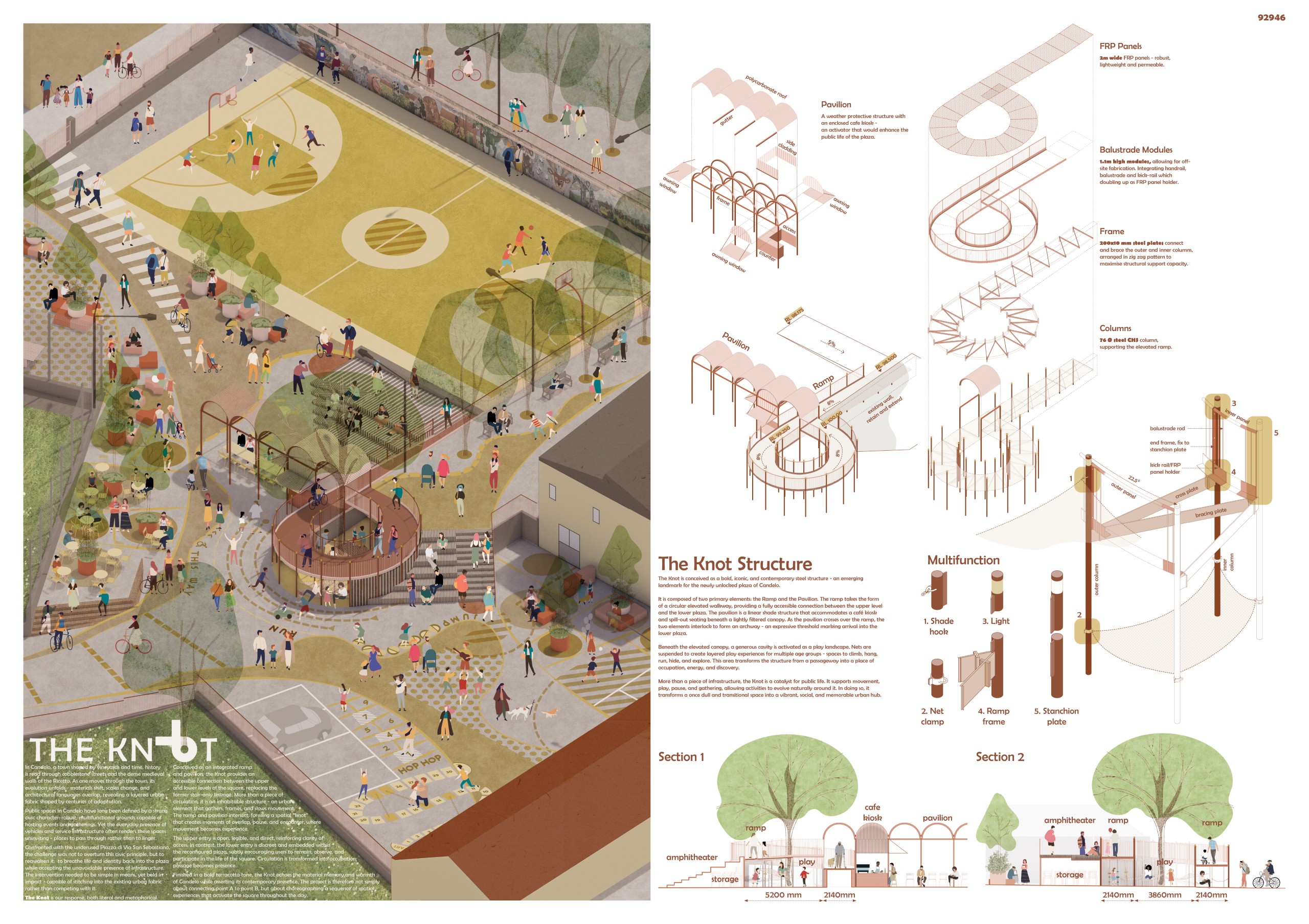
The Knot
In Candelo, a town shaped by vineyards and time, history is read through cobblestone streets and the dense medieval walls of the Ricetto. As one moves through the town, its evolution unfolds – materials shift, scales change, and architectural languages overlap, forming a layered urban fabric shaped by centuries of adaptation.
Public spaces in Candelo have long been defined by a strong civic character: robust, multifunctional grounds capable of hosting events and gatherings. Yet the everyday presence of vehicles and service infrastructure often renders these spaces uninviting – places to pass through rather than linger.
Confronted with the underused Piazza di Via San Sebastiano, the challenge was not to overturn this civic logic, but to reawaken it: to restore identity and vitality while accepting the realities of contemporary infrastructure. The intervention needed to be simple in means, yet bold in impact – capable of stitching into the existing urban fabric rather than competing with it.
The Knot is our response, both literal and metaphorical.
Conceived as an integrated ramp and pavilion, the Knot provides a fully accessible connection between the upper and lower levels of the square, replacing the former stair-only linkage. More than a circulation device, it is an inhabitable structure – an urban element that gathers, frames, and slows movement. The ramp takes the form of a circular elevated walkway, while the pavilion is a linear shade structure accommodating a café kiosk and spill-out seating beneath a lightly filtered canopy. Where these two elements intersect, they form a spatial knot – an expressive archway and threshold marking arrival into the lower plaza, where movement becomes experience.
The upper entry is open, legible, and direct, reinforcing clarity of access. In contrast, the lower entry is discreet and embedded within the reconfigured plaza, subtly encouraging users to pause, observe, and participate in the life of the square. Circulation is transformed into occupation; passage becomes presence.
Beneath the elevated canopy, a generous cavity is activated as a play landscape. Suspended nets create layered experiences for multiple age groups – spaces to climb, hang, run, hide, and explore – transforming the structure from a passageway into a place of energy, discovery, and social interaction.
Finished in a bold terracotta tone, the Knot echoes the material memory and warmth of Candelo while asserting a confident contemporary presence. More than a piece of infrastructure, it is a catalyst for public life – supporting movement, play, pause, and gathering.
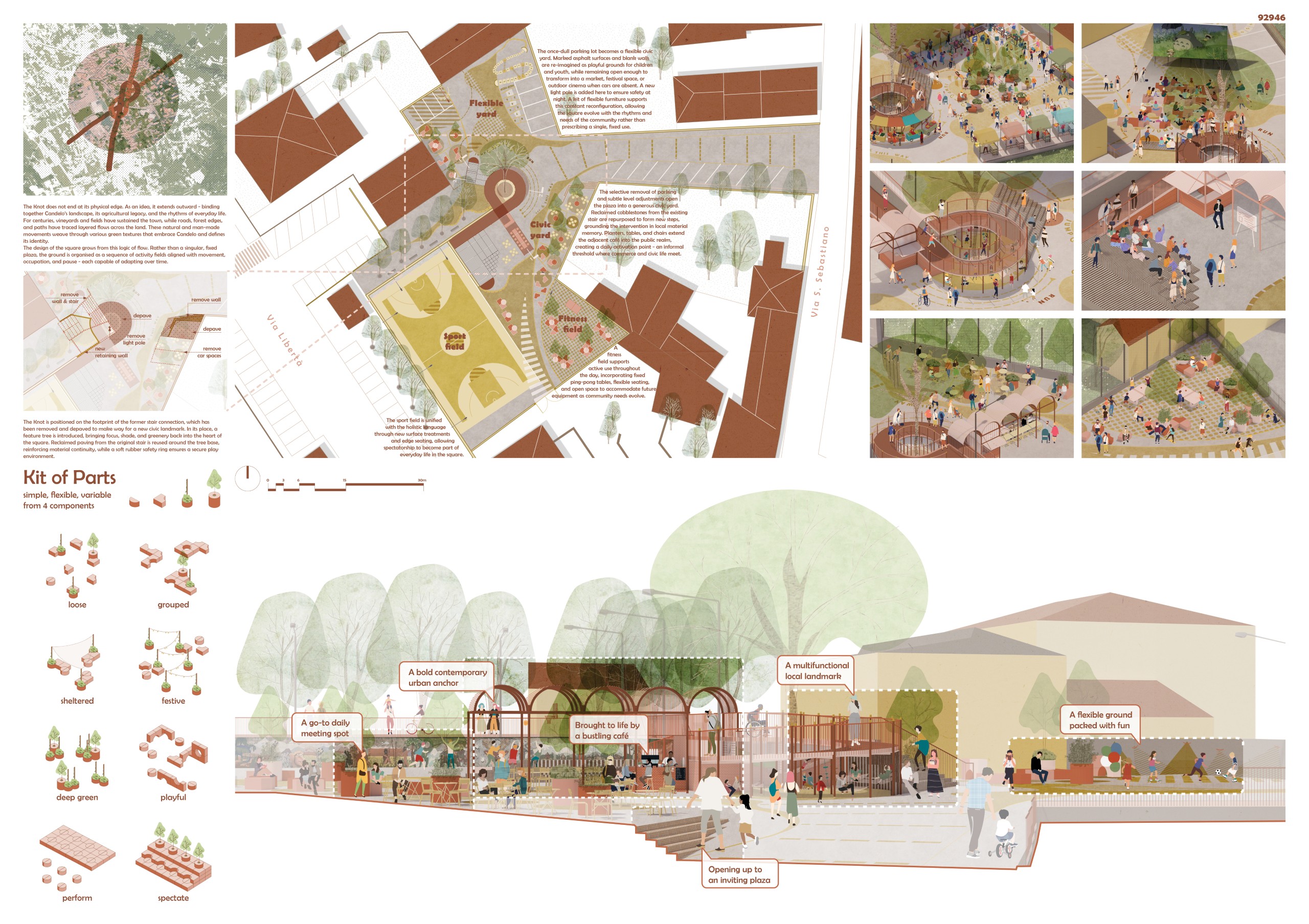
The design of the entire square grows from the idea of fields and yards, reflecting Candelo’s agricultural heritage. For centuries, vineyards and fields have sustained the town, while roads, forest edges, and paths have traced layered flows across the land. These natural and manmade movements weave through various green textures that embrace Candelo.
The vast grey asphalt ground is reorganised as a sequence of adaptable activity fields aligned with movement and use – the Flexible Yard, Civic Yard, Fitness Field, and Sport Field. Together, they transform a once dull and transitional space into a vibrant, social, and memorable civic ground evolving around the new iconic anchor – The Knot.
JURY COMMENT
“The proposal stands out for the strength of its architectural gesture, concentrating within the “Knot Structure” device a clear idea of threshold, landmark, and urban catalyst, while maintaining solid coherence between the urban scale and the architectural detail. The ramp and the pavilion are not merely functional elements, but instead construct an inhabitable node that transforms circulation into experience and connection into an opportunity for pause, play, and social interaction. The reorganization of the ground into flexible thematic fields reinforces this systemic and contemporary vision, generating a unified space in which all parts engage in dialogue with one another.”
Stefano Recalcati – Arup
“The ramp becomes more than a connection, transforming into a place of interaction, while the rest of the plaza is activated through tactical interventions that promote gathering, play and resting areas. The proposal reclaims spaces that are currently neglected, giving them new purposes and vitality.”
Lucía V. Bocchimuzzi – Mic-Hub
2nd PRIZE
CNDL – nuova centralità urbana: una piazza connessa.
Fabio Marchesi, Bea Fratus, Mariasole Facchi [Italy]
PROJECT DESCRIPTION
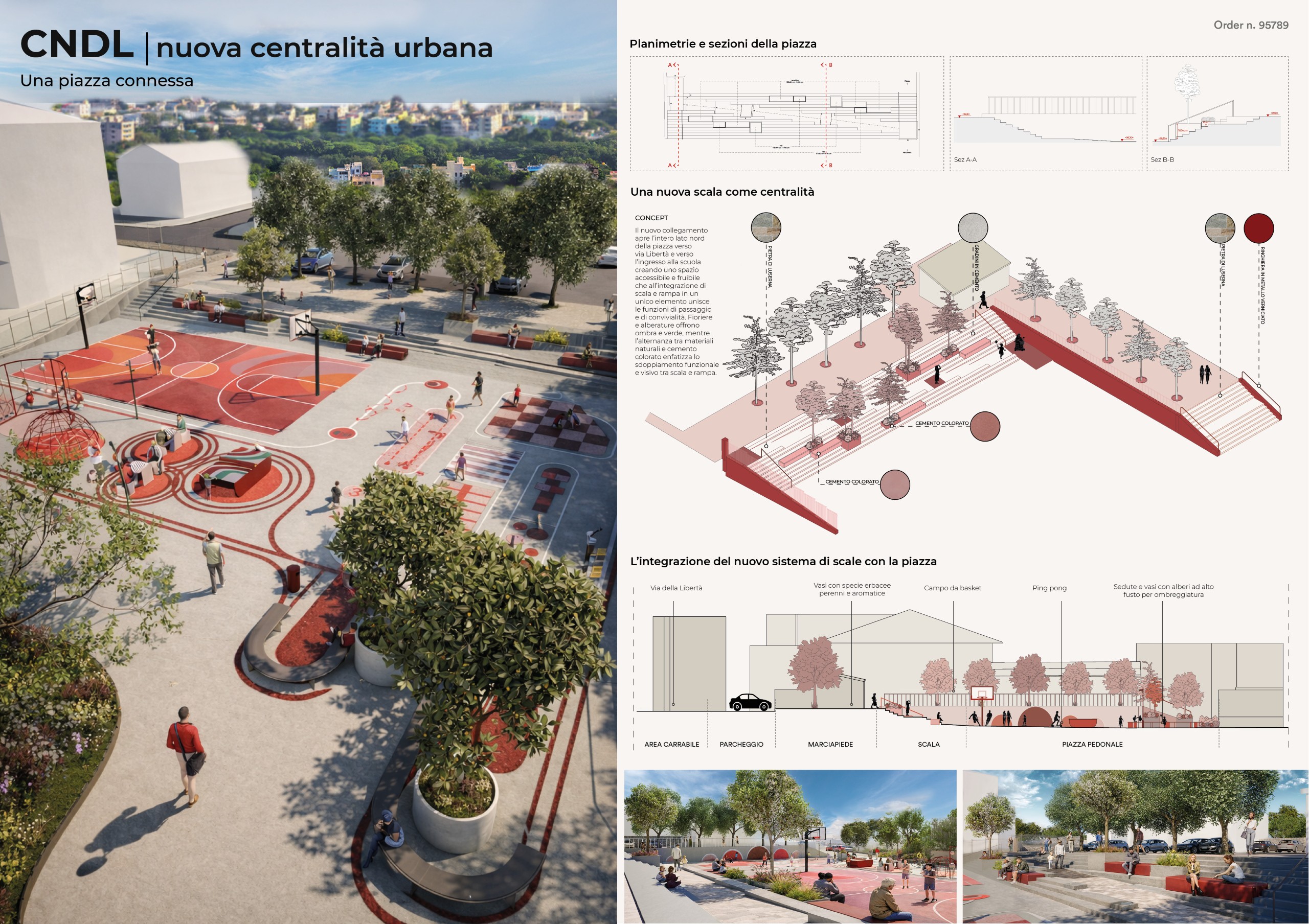
Il progetto di riqualificazione della nuova piazza di Candelo si colloca in una posizione strategica, a ridosso del centro storico del paese, adiacente alla scuola statale e a pochi passi dal Ricetto di Candelo. L’intervento nasce con l’obiettivo di trasformare uno spazio oggi frammentato e prevalentemente di passaggio in una nuova centralità urbana, capace di accogliere e rappresentare la vita quotidiana della comunità. La piazza viene ripensata come uno spazio multifunzionale, flessibile e inclusivo, in grado di rispondere alle esigenze di diverse fasce d’età: bambini, studenti, anziani e famiglie. Il concept progettuale si fonda sull’idea di apertura e connessione: il ridisegno della rampa pedonale, ribaltata e riposizionata lungo la parete che colma il dislivello tra la piazza e via Libertà, diventa l’elemento cardine dell’intervento. Questa scelta non solo migliora in modo significativo l’accessibilità, garantendo un percorso continuo per persone con disabilità e anziani, ma apre visivamente e fisicamente la piazza verso la città, rendendola più riconoscibile e attrattiva. La rampa, integrata con una scala, si trasforma in uno spazio di relazione e di sosta: un vero e proprio spalto urbano, ombreggiato dalle alberature esistenti e di progetto, da cui assistere alle partite di basket o semplicemente fermarsi ad osservare. I colori della nuova pavimentazione riprendono le sfumature del rosso, del terracotta e del bruciato tipiche delle vie del centro storico, rafforzando il legame identitario con il contesto di Candelo. Gli arredi mobili e modulari in metallo e cemento, materiali resistenti e a bassa manutenzione, contribuiscono alla flessibilità dello spazio, possono essere facilmente rimossi o riconfigurati in base alle esigenze.
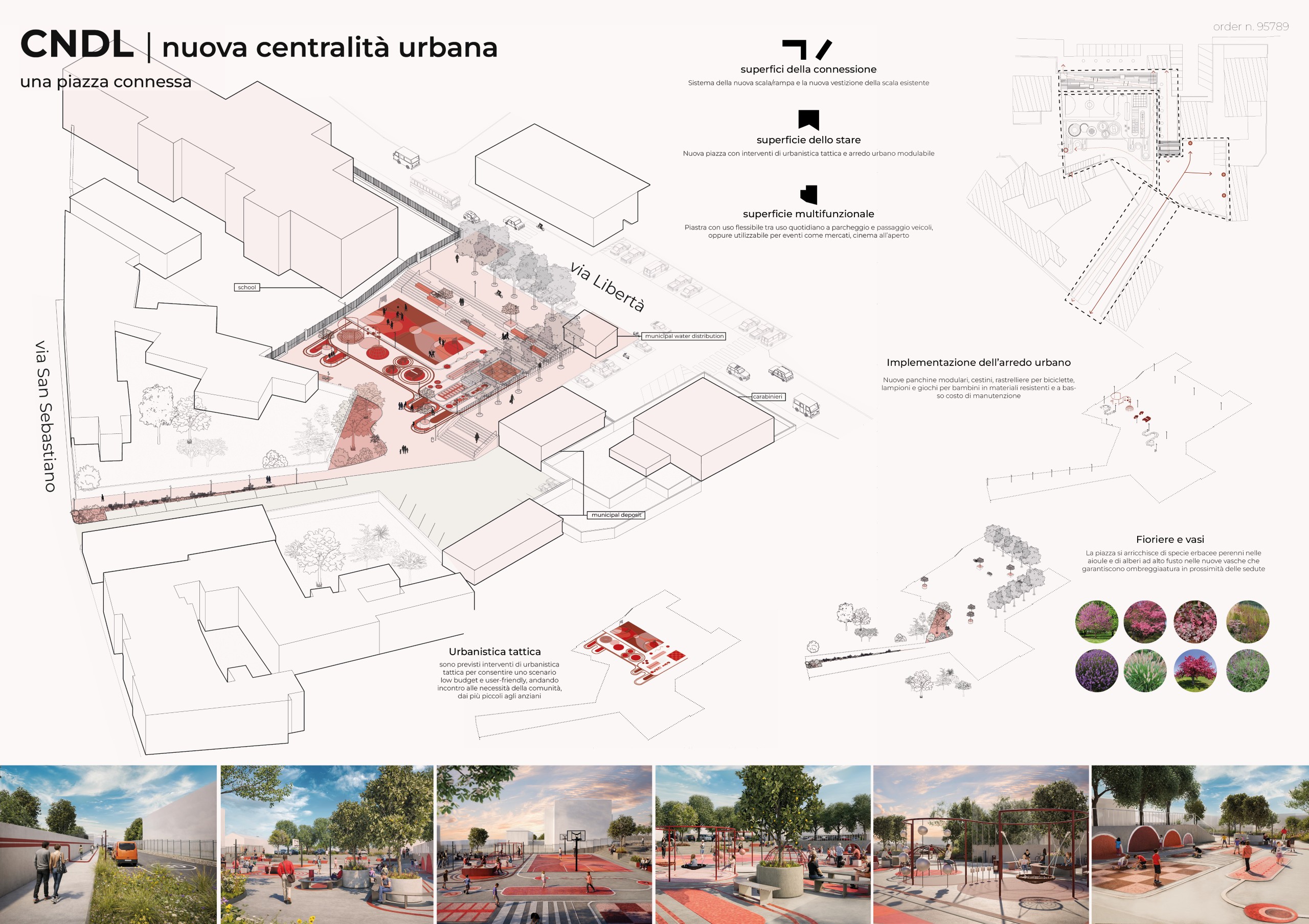
La piazza viene organizzata per settori funzionali, ciascuno riconoscibile non solo per l’uso ma anche per il disegno dello spazio e della pavimentazione. La nuova scala con rampa costituisce la principale connessione tra i livelli urbani e il fulcro visivo del progetto. Il campetto da basket viene rifatto e valorizzato come spazio sportivo e sociale, integrato nel disegno della piazza. Una zona dedicata all’urbanistica tattica, caratterizzata da segni grafici a terra e superfici colorate in cemento, favorisce il gioco libero e l’appropriazione informale dello spazio. L’area giochi è arricchita da panchine, vasi alberati e arredi mobili come lampioni, cestini, parcheggi per biciclette e una fontana d’acqua, creando un ambiente accogliente e sicuro. La scala, originariamente prevista per collegare i due livelli della piazza ma non fruibile da tutti, viene mantenuta e integrata nel nuovo assetto progettuale mediante la ripavimentazione con lo stesso materiale utilizzato per la rampa. Questa scelta permette alla scala di armonizzarsi con disegno dello spazio pubblico, rafforzando la continuità percettiva e garantendo un’ulteriore connessione tra le diverse quote.
Infine, un intervento di ridisegno della sezione stradale lungo lungo via San Sebastiano garantisce un collegamento pedonale sicuro e protetto alla nuova piazza. Sia la via che l’area di accesso ai depositi comunali vengono ripavimentate con asfalto drenante, mantenendo i parcheggi esistenti e dando la possibilità di ospitare eventi temporanei come il mercato, rendendola un’area modulabile, rafforzando ulteriormente il ruolo della piazza come luogo di incontro e identità urbana.
JURY COMMENT
“Through the ram, conceived as the pivotal element of the intervention, the project successfully mends the existing spatial fracture between the two parts of the city. Careful attention to materials, echoing those of the historic center, combined with a tactical urbanism approach, outlines an effective, context-sensitive, user-friendly, and economically sustainable scenario. The graphic representation becomes, in itself, an active narrative device, capable of conveying the renewed urban space in a dynamic and engaging manner.”
Lucia Paci – Operastudio
3rd PRIZE
CUNEO
Yi Lin, Andrea Staffolani [Italy]
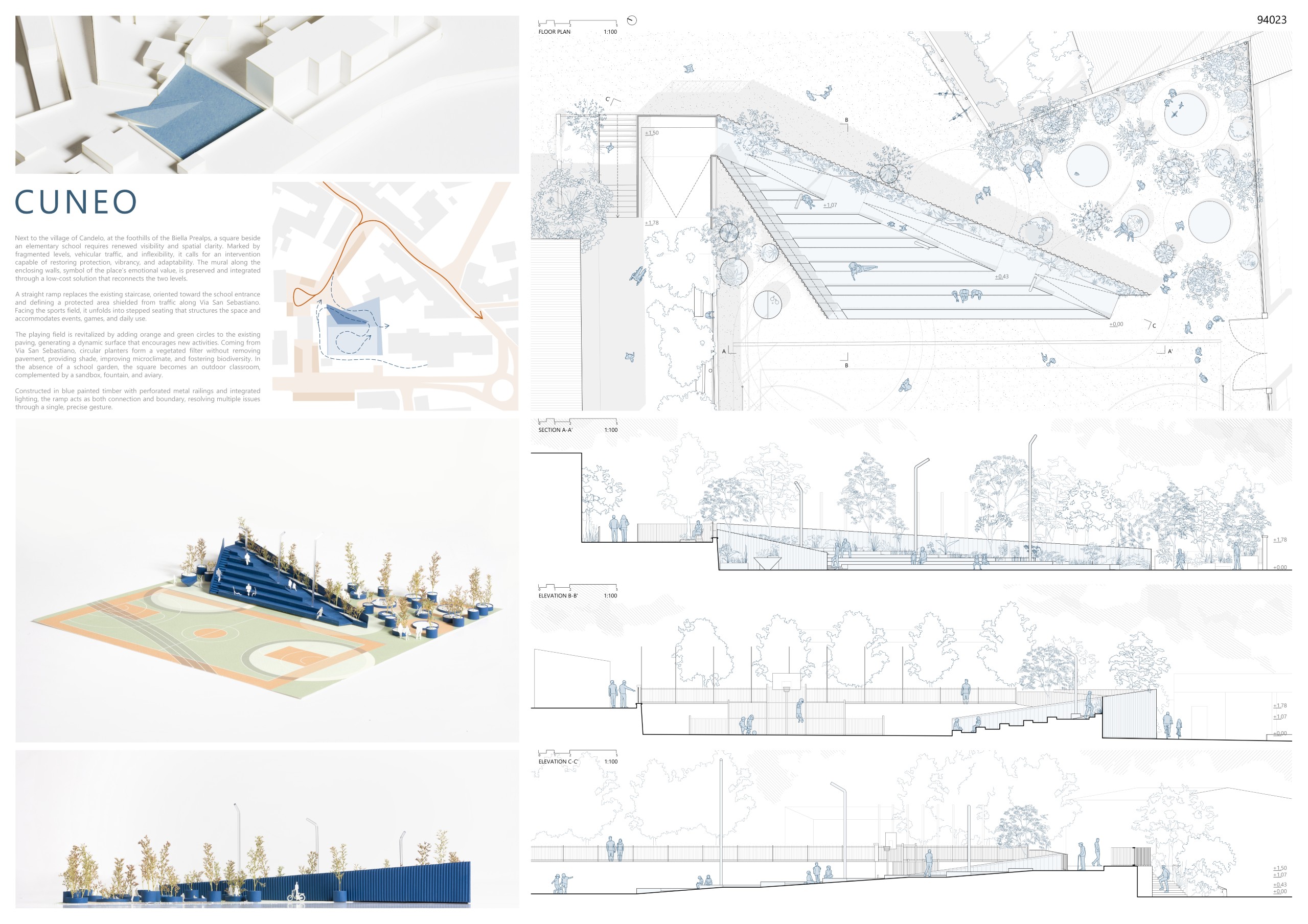
PROJECT DESCRIPTION
Next to the village of Candelo, defined by its strong historical and cultural identity, there is a square that, by contrast, needs to reclaim its own space and a renewed visibility.
Situated beside an elementary school and already including a sports field, the square is subject to issues caused by the fragmentation on the two different levels, vehicular traffic and general inflexibility. These conditions set the basis for reflections on possible improvements, aimed at restoring to this space a sense of protection, vibrancy, and greater flexibility. A strong argument in favor of a necessary intervention is the mural that runs along the walls enclosing the square. Created as an attempt to revitalize the space, it symbolizes the strong emotional value that, despite everything, this place still holds. It is thus fundamental to the project to preserve and integrate the existing artwork, while adopting a necessary connection between the two levels on a low-cost approach.
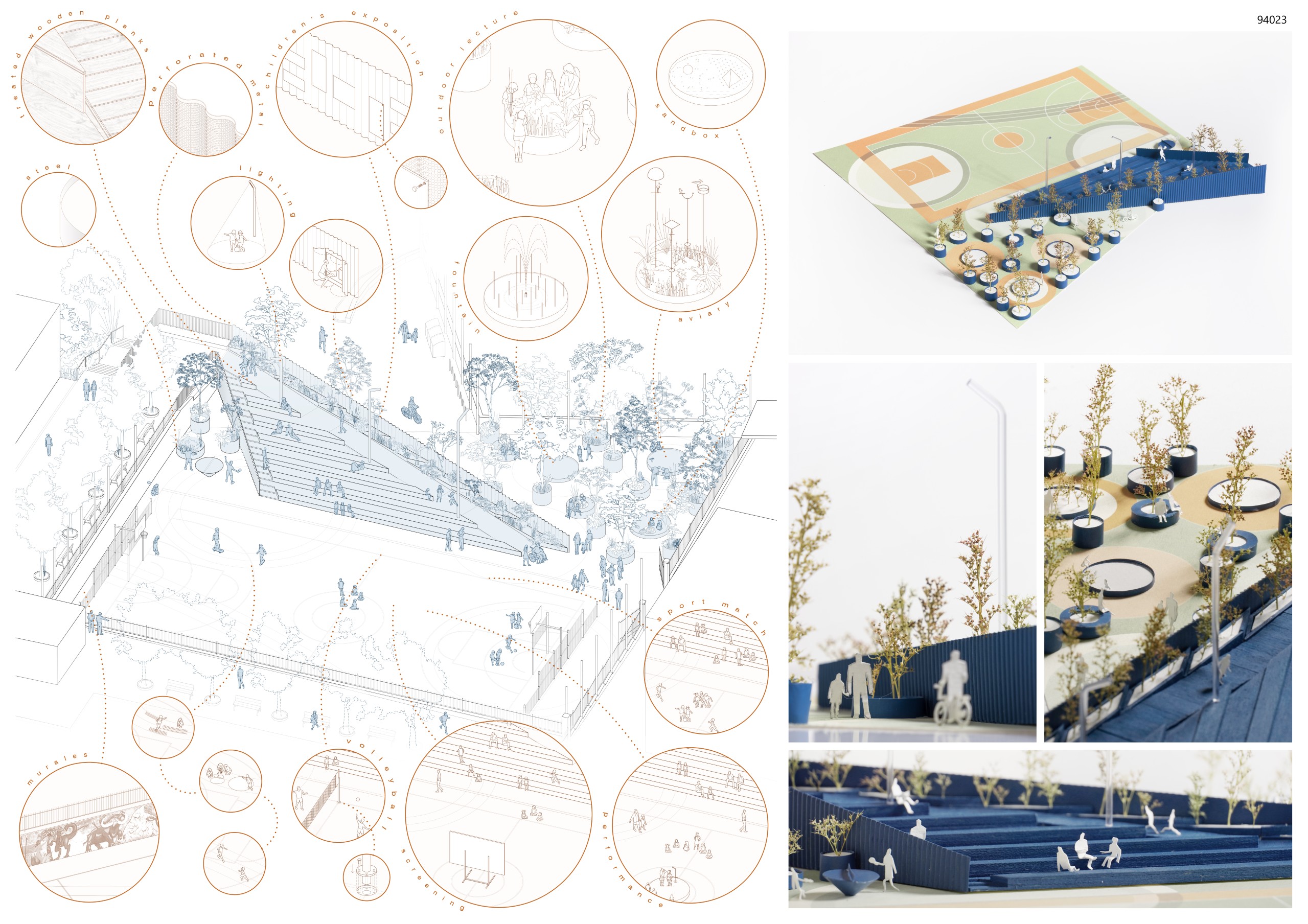
The intervention takes the form of an addition: a ramp is inserted punctually on the spot where the current staircase is located. It is straight and oriented toward the school entrance, allowing the creation of a protected area shielded from the vehicular circulation of Via San Sebastiano. The ramp unfolds into the sport field through a stepped seating system that defines the space and gives the place a strong degree of flexibility, creating bleachers suitable for screenings, performances, sports events, or simply waiting for one’s children.
The playing field gains renewed vibrancy through the recoloring of the paving, which enhances the existing surface by adding circles in the same orange and green tones. A dynamic ground is thus generated, where these new geometric figures encourage new games and activities.
In order to ensure greater protection of the newly defined space, a strong green component is introduced along the side facing Via San Sebastiano. Depaving is avoided through the use of circular planters of varying sizes, arranged to create a tree-filtered entrance toward both the square and the school. Beyond offering shade and improving microclimate, the selected planting promotes biodiversity and supports an educational function: in the absence of a school garden, the space becomes an outdoor classroom integrated into daily activities. A sandbox, a fountain, and an aviary further characterize the space.
The ramp element is constructed entirely of treated wooden planks painted blue, designed to be easily, economically, and sustainably built. With the same objectives, the railings are made of perforated corrugated metal sheets which, extending down to the ground, give unity to the architectural element. Lighting is implemented through three poles directly integrated into the body of the ramp.
The limited project area allows the existing space to be enhanced in an economical and strategic manner. The aim of this intervention is to address the site’s numerous critical issues through a single, decisive gesture, using the ramp both as a connection and as a boundary, set above a playful ground and filtered through dense vegetation.
JURY COMMENT
“The proposal identifies in the reconnection of the two levels the opportunity to introduce an element with three complementary values: replacing the existing stair to ensure accessibility, creating generous steps to watch the game, and establishing a new iconic presence. This multifunctional gesture condenses infrastructure, social space, and identity into a single architectural device, efficiently and convincingly responding to the brief.”
Emanuele Barili – ECÒL
Golden Mentions
(ordered by registration code)
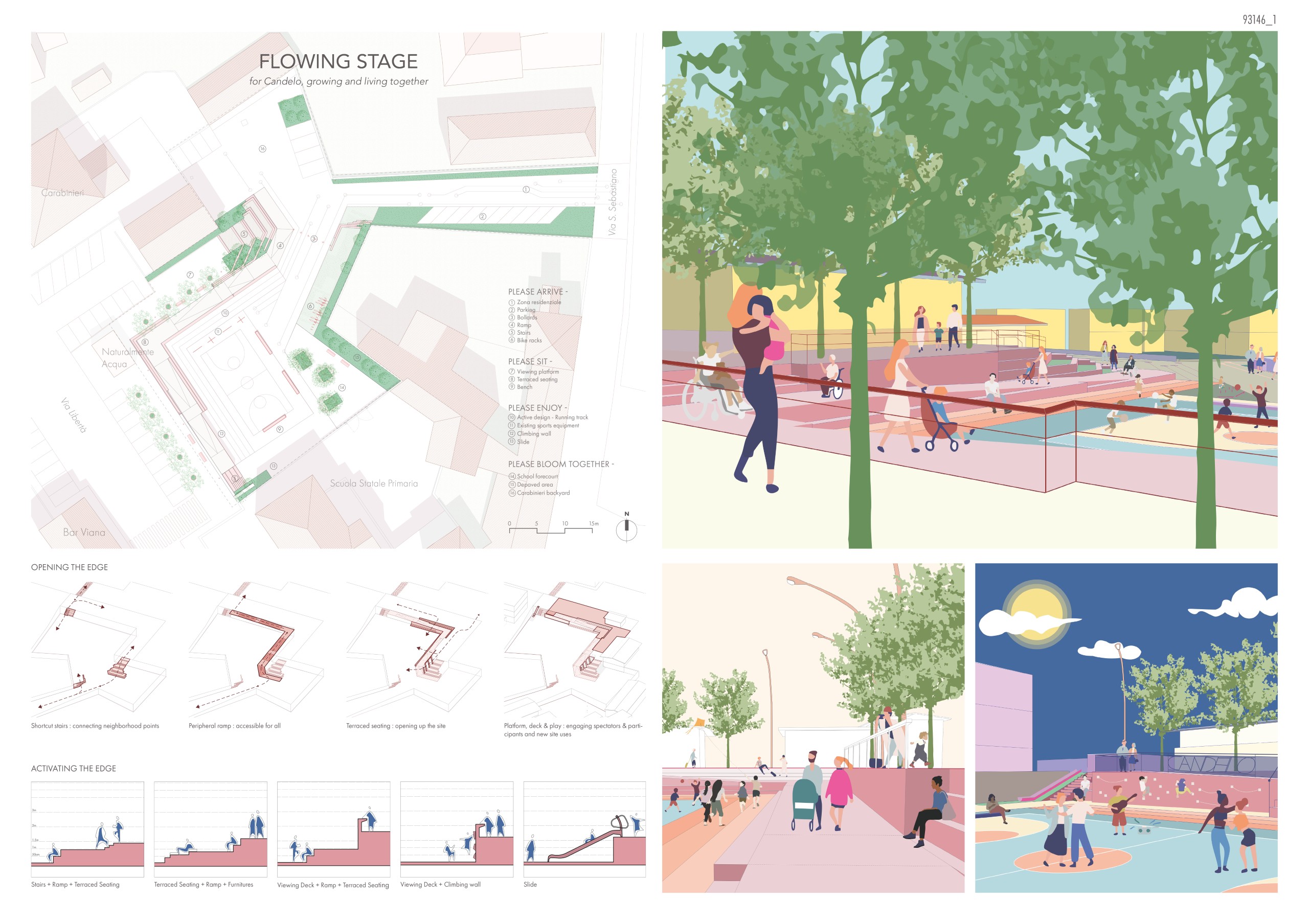
FLOWING STAGE
Jinyi Xiao, Danyan Liu, Shiying Wang [France – Netherlands – United States]
PROJECT DESCRIPTION
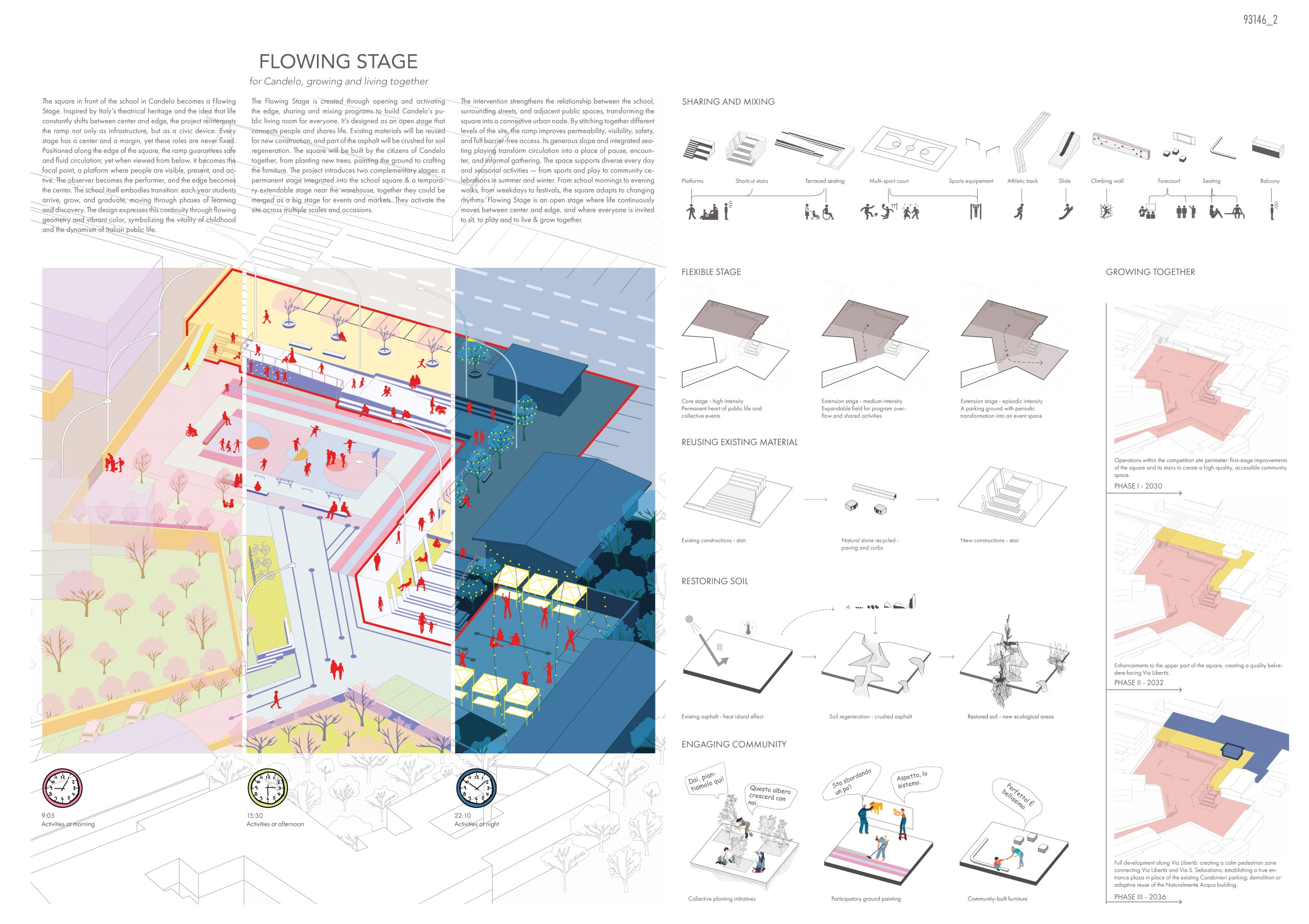
The square in front of the school in Candelo becomes a Flowing Stage. Inspired by Italy’s theatrical heritage and the idea that life constantly shifts between center and edge, the project reinterprets the ramp not only as infrastructure, but as a civic device. Every stage has a center and a margin, yet these roles are never fixed. Positioned along the edge of the square, the ramp guarantees safe and fluid circulation; yet when viewed from below, it becomes the focal point, a platform where people are visible, present, and active. The observer becomes the performer, and the edge becomes the center. The school itself embodies transition: each year students arrive, grow, and graduate, moving through phases of learning and discovery. The design expresses this continuity through flowing geometry and vibrant color, symbolizing the vitality of childhood and the dynamism of Italian public life.
The Flowing Stage is created through opening and activating the edge, sharing and mixing programs to build Candelo’s public living room for everyone. It’s designed as an open stage that connects people and shares life. Existing materials will be reused for new construction, and part of the asphalt will be crushed for soil regeneration. The square will be built by the citizens of Candelo together, from planting new trees, painting the ground to crafting the furniture. The project introduces two complementary stages: a permanent stage integrated into the school square & a temporary extendable stage near the warehouse, together they could be merged as a big stage for events and markets. They activate the site across multiple scales and occasions.
The intervention strengthens the relationship between the school, surrounding streets, and adjacent public spaces, transforming the square into a connective urban node. By stitching together different levels of the site, the ramp improves permeability, visibility, safety, and full barrier-free access. Its generous slope and integrated seating playing transform circulation into a place of pause, encounter, and informal gathering. The space supports diverse every day and seasonal activities — from sports and play to community celebrations in summer and winter. From school mornings to evening walks, from weekdays to festivals, the square adapts to changing rhythms. Flowing Stage is an open stage where life continuously moves between center and edge, and where everyone is invited to sit, to play and to live & grow together.
JURY COMMENT
“The proposal softens the edges to create a seamless transition between the surrounding urban fabric and the piazza, shaping a series of flexible spaces through low-impact interventions that encourage dynamic and adaptable use. It places the residents at the heart of the space, prioritizing pedestrians, cyclists, elderly people, children and people with disabilities, while reducing vehicular circulation to its minimum. The proposal’s features, with the ramp as its primary intervention and flexible spaces mainly articulated through asphalt painting and pop-up urban furniture, make it both feasible and implementable.”
Lucía V. Bocchimuzzi – Mic-Hub
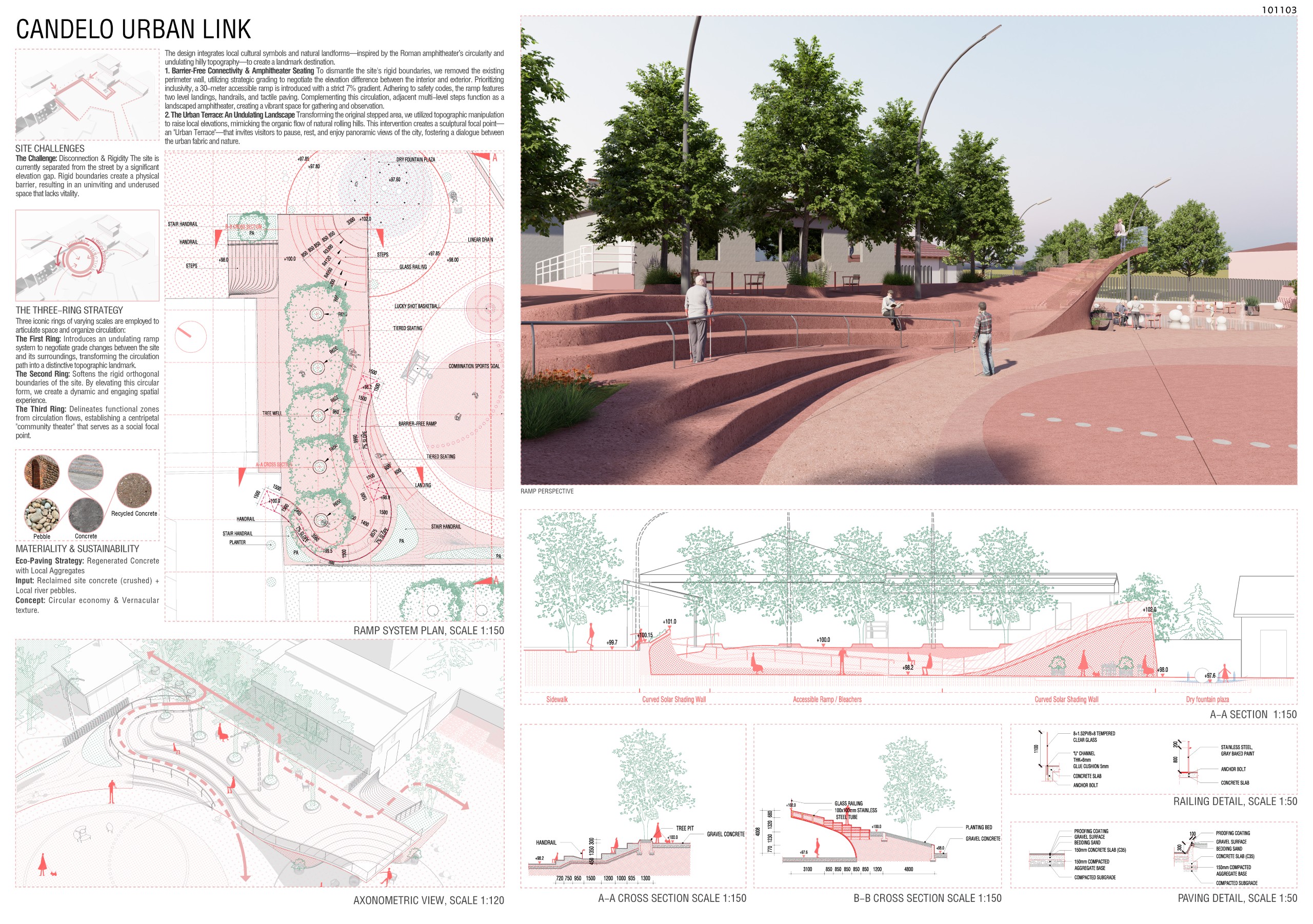
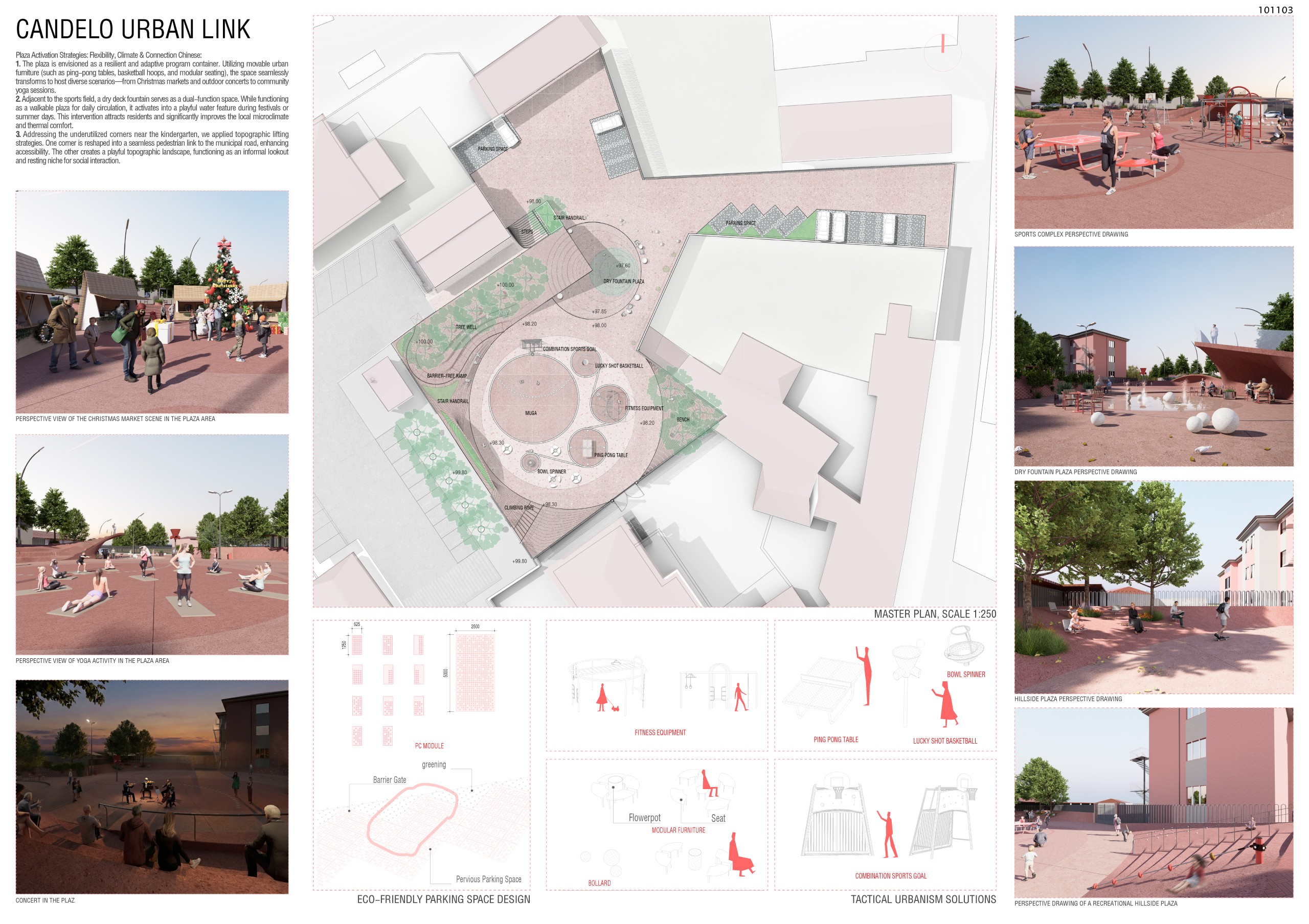
Candelo Urban Link
Daniele Barioglio, Luca Valentini, Davide Fiorenzo De Conti [Italy] – zonecreative.it – rightlight.it
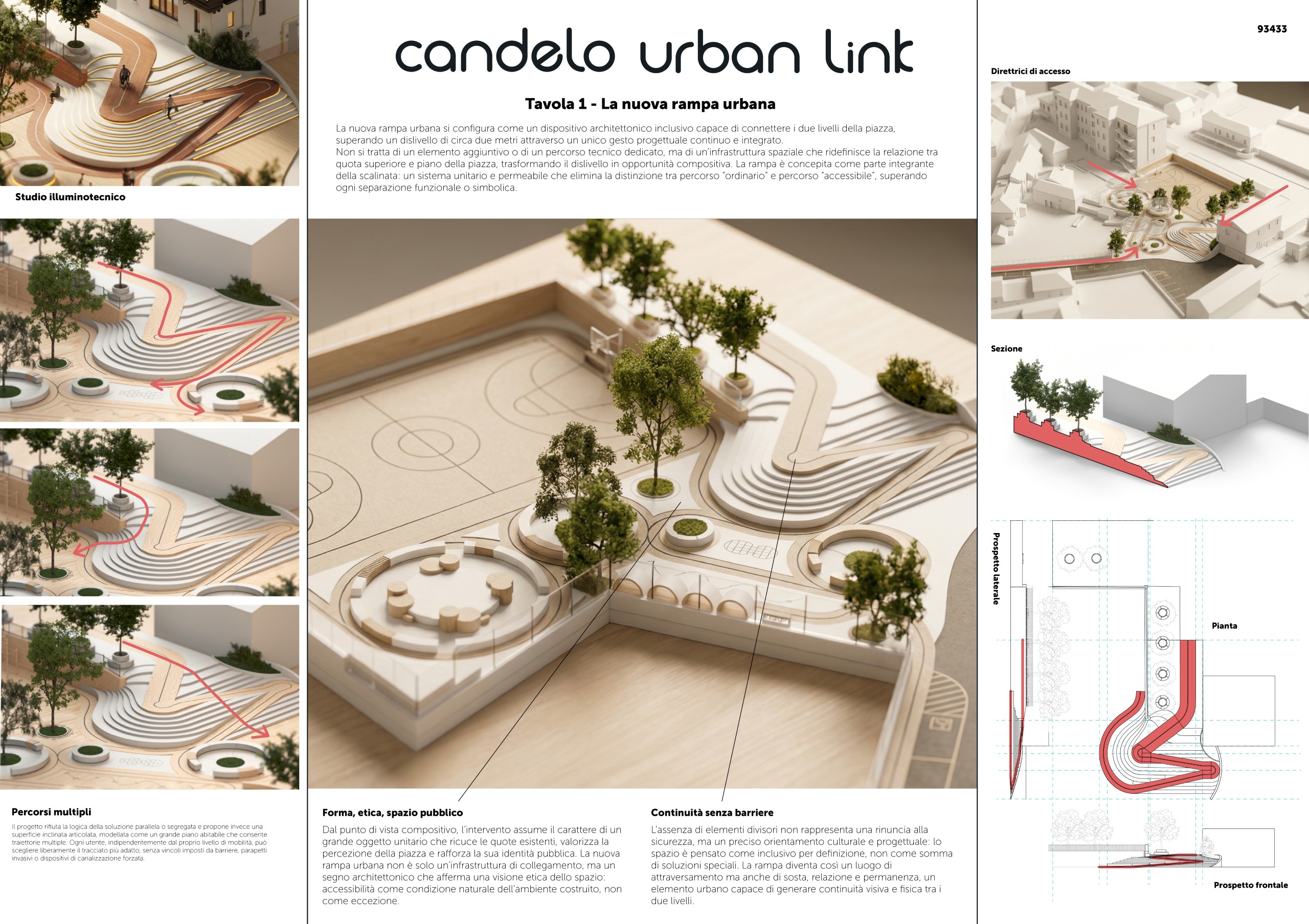
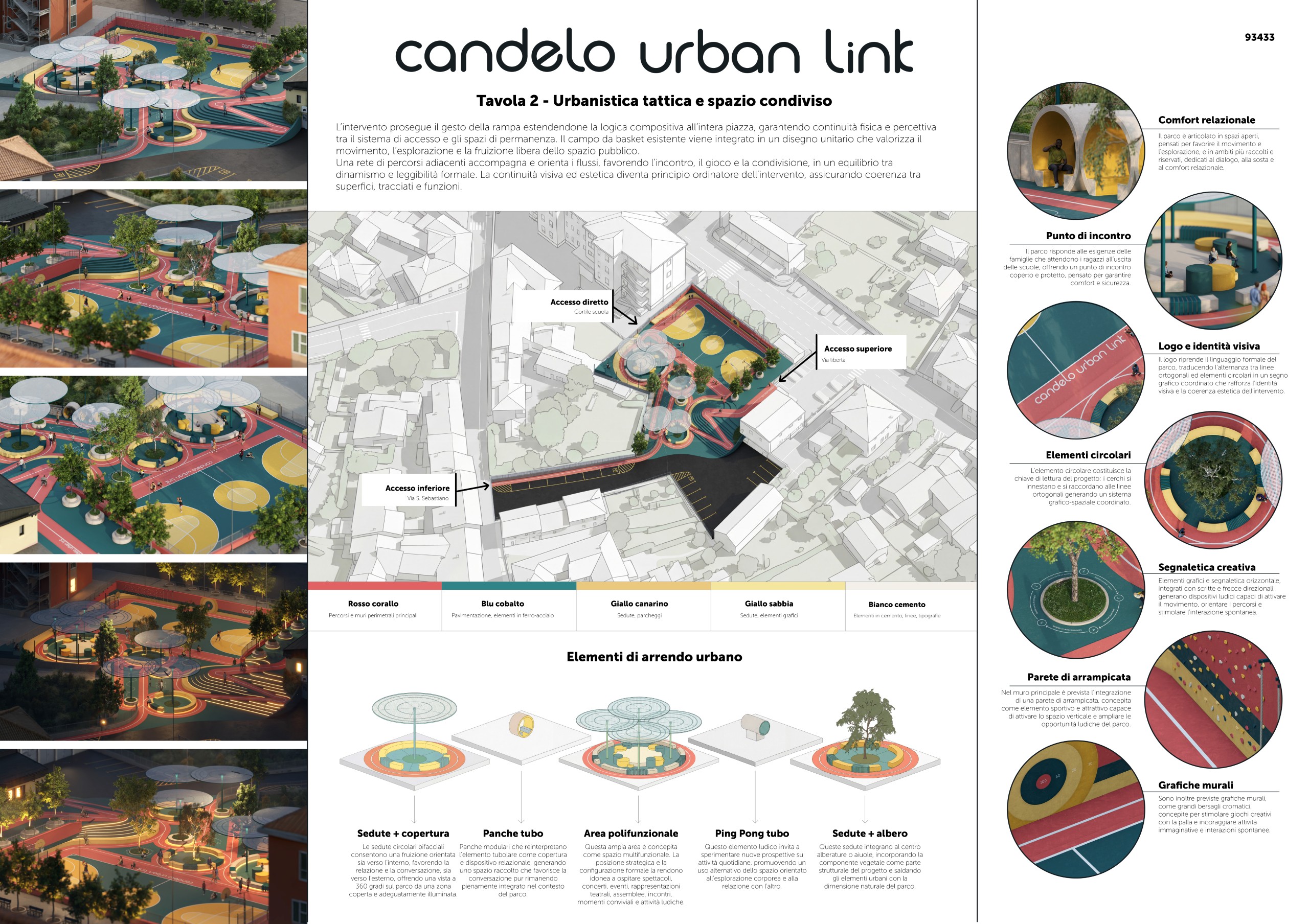
PROJECT DESCRIPTION
Il progetto nasce dalla volontà di trasformare un dislivello fisico in un’opportunità urbana, ridefinendo la piazza come spazio accessibile, inclusivo e identitario. Il concept si fonda sull’idea di continuità: tra quote, tra percorsi, tra funzioni e tra persone. L’intervento non si limita a risolvere un problema tecnico di collegamento tra due livelli separati da circa due metri, ma assume li dislivello come occasione per generare un nuovo dispositivo spaziale capace di attivare relazioni e qualità urbana.
La rampa rappresenta li cuore del progetto. Concepita come un elemento unitario integrato nella scalinata, supera la logica della separazione tra percorso per persone con mobilità ridotta e percorso ordinario, proponendo un’unica grande superficie articolata e permeabile. Ogni utente può scegliere liberamente il proprio tracciato, in base alle proprie esigenze e capacità, senza essere indirizzato verso soluzioni marginali o dedicate. L’accessibilità non è trattata come eccezione normativa, ma come principio generativo dell’intero impianto progettuale.
A partire da questo gesto, la riqualificazione della piazza estende la medesima logica di inclusione e continuità. Il disegno dello spazio integra il campo da basket esistente all’interno di una composizione unitaria, affiancando percorsi, sedute e dispositivi ludici capaci di favorire movimento, esplorazione e condivisione. Gli spazi sono articolati in aree aperte e dinamiche, dedicate al gioco e alle attività collettive, e ambiti più raccolti e protetti, pensati per la sosta, li dialogo e l’attesa, in particolare per le famiglie in prossimità dell’uscita delle scuole.
L’elemento circolare diventa la chiave formale del progetto, raccordandosi con linee ortogonali in un sistema coerente che unisce superfici, segnaletica e identità visiva. Questo linguaggio coordinato, ripreso anche nel logo e nella grafica orizzontale, rafforza la riconoscibilità dello spazio e consolida la sua identità urbana.
L’intervento si configura così come un’azione di ricucitura fisica e sociale: un’infrastruttura che diventa luogo, un dispositivo funzionale che assume valore civico. La nuova piazza non è solo uno spazio riqualificato, ma un ambiente inclusivo, capace di generare appartenenza, relazione e qualità urbana duratura.
JURY COMMENT
“A coherent and distinctive project in which the circular element and the basketball court strongly define the identity of the space. The graphic quality and color palette give the urban context a strong sense of identity and maintain a consistent reference to the principles of tactical urbanism.”
Alice Trematerra – Didacommunicationlab
Folded Lines: Urban Acupuncture
Lingyu Li, Shengfeng Gao, Zhuohan Zhou [China]
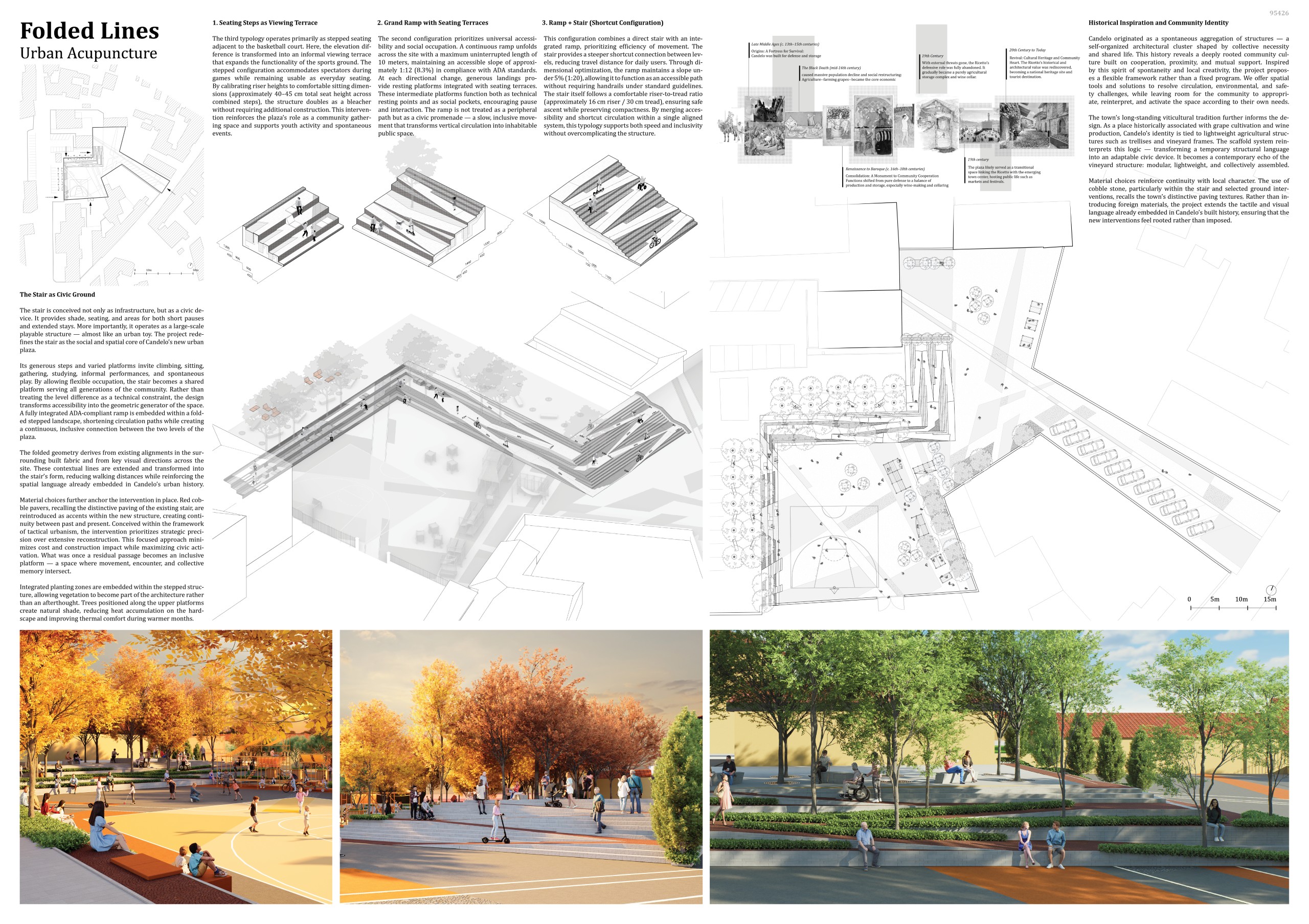
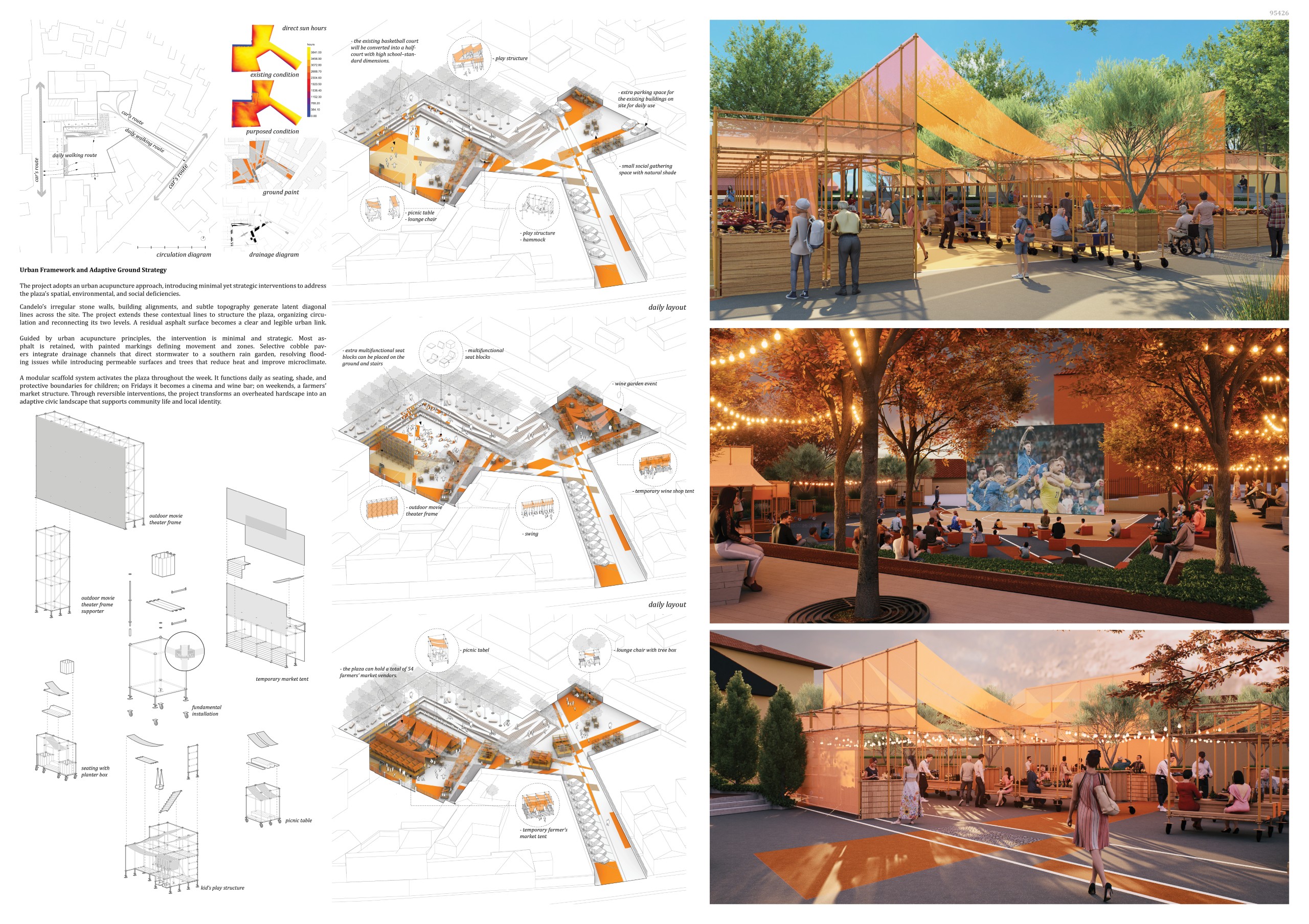
PROJECT DESCRIPTION
The project redefines the stair as the social and spatial core of Candelo’s new urban plaza. Rather than treating the level difference as a technical constraint, accessibility becomes the geometric generator of the space. A fully integrated ADA-compliant ramp is embedded within a folded stepped landscape, shortening circulation paths while creating a continuous and inclusive connection between the two levels. Conceived as both infrastructure and civic device, the stair provides shade, seating, and flexible platforms for gathering, studying, and play. Integrated planting zones introduce vegetation directly into the structure, reducing heat accumulation and improving microclimatic comfort.
The stair’s folded geometry derives from Candelo’s irregular stone walls, building alignments, and subtle topography. These latent diagonal lines are extended to structure the plaza, transforming a residual asphalt surface into a clear and legible urban link. Guided by urban acupuncture principles, the intervention remains minimal and precise. Most asphalt is retained, with painted markings organizing movement and zones. Selective cobble stone pavers integrate drainage channels that direct stormwater toward a southern rain garden, resolving flooding issues while introducing permeable surfaces and trees that mitigate urban heat island effects.
Historically, Candelo emerged as a spontaneous aggregation of structures — a self-organized architectural cluster shaped by collective necessity and shared life. This legacy of cooperation and adaptability informs the proposal as an open and flexible framework rather than a fixed composition. A modular scaffold system becomes the key affordable strategy: lightweight, reversible, and adaptable. During daily use, it provides seating, shade, and protective boundaries; on Fridays, it transforms into a cinema and wine bar; on weekends, into a farmers’ market. The scaffold echoes the town’s viticultural heritage, reinterpreting vineyard trellises as contemporary civic infrastructure.
Material continuity reinforces this rooted approach. Cobble stone paving, especially within the stair and selected ground interventions, recalls Candelo’s distinctive textures and extends its existing material language. Through low-cost, strategic, and reversible interventions, the project transforms an overheated asphalt field into an adaptive civic landscape shaped by both design and community life.
JURY COMMENT
“The proposal stands out for its extremely clear and explanatory graphic representation, capable of precisely demonstrating how the different activities can be reconfigured and relocated within the space according to daily and seasonal needs. The ground design, far from being a mere aesthetic element, emerges from an analysis of the existing conditions—particularly the study of direct sun hours—and becomes an active tool for organization, orientation, and comfort. The vision is coherent and legible at all scales: through a flexible and adaptive system, the square takes on a contemporary character and truly establishes itself as a new civic hub for Candelo.”
Stefano Recalcati – Arup
SI ACCENDONO I LUMI
Andrea Sbernini, Alessandro Biacca [Italy]
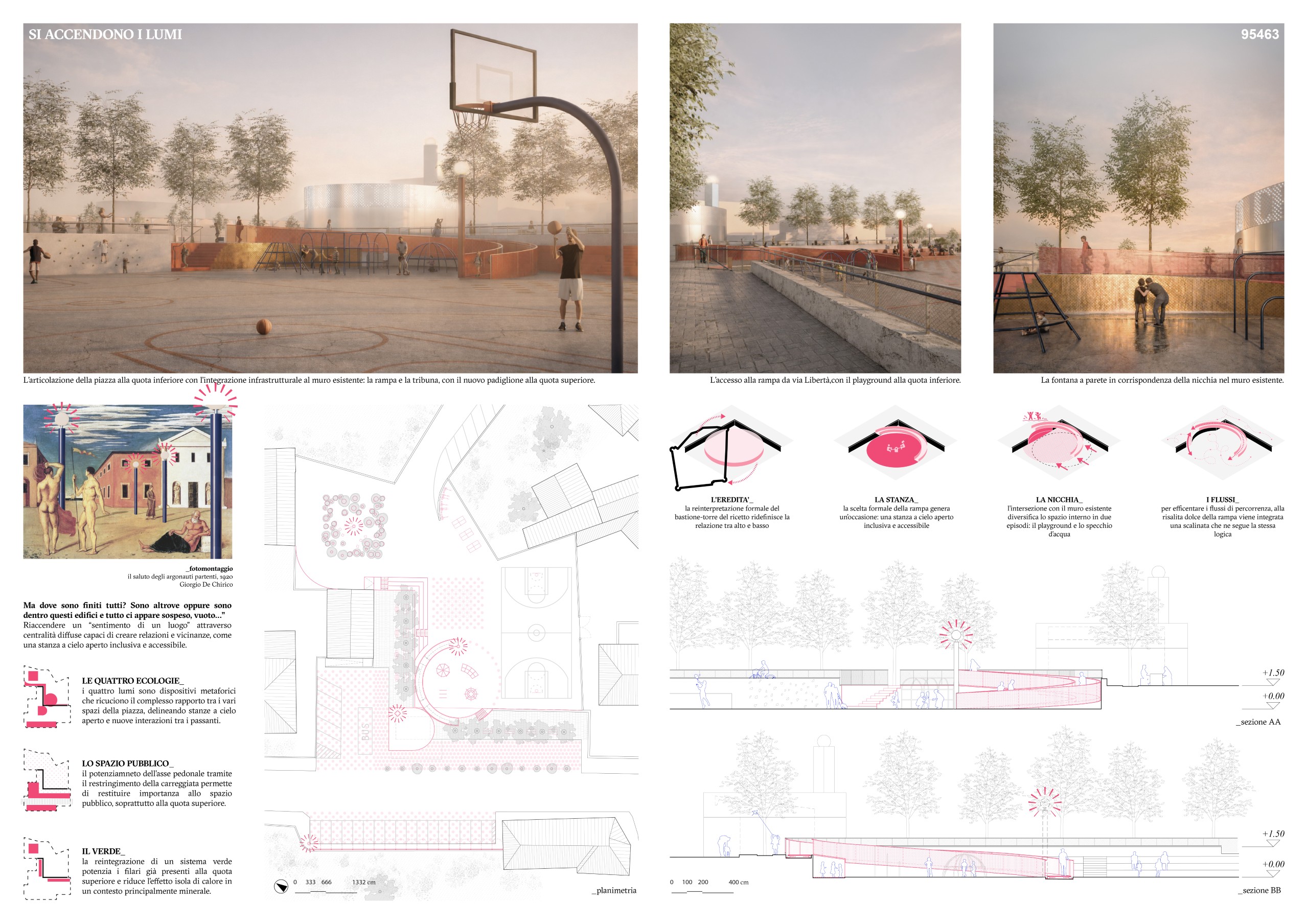
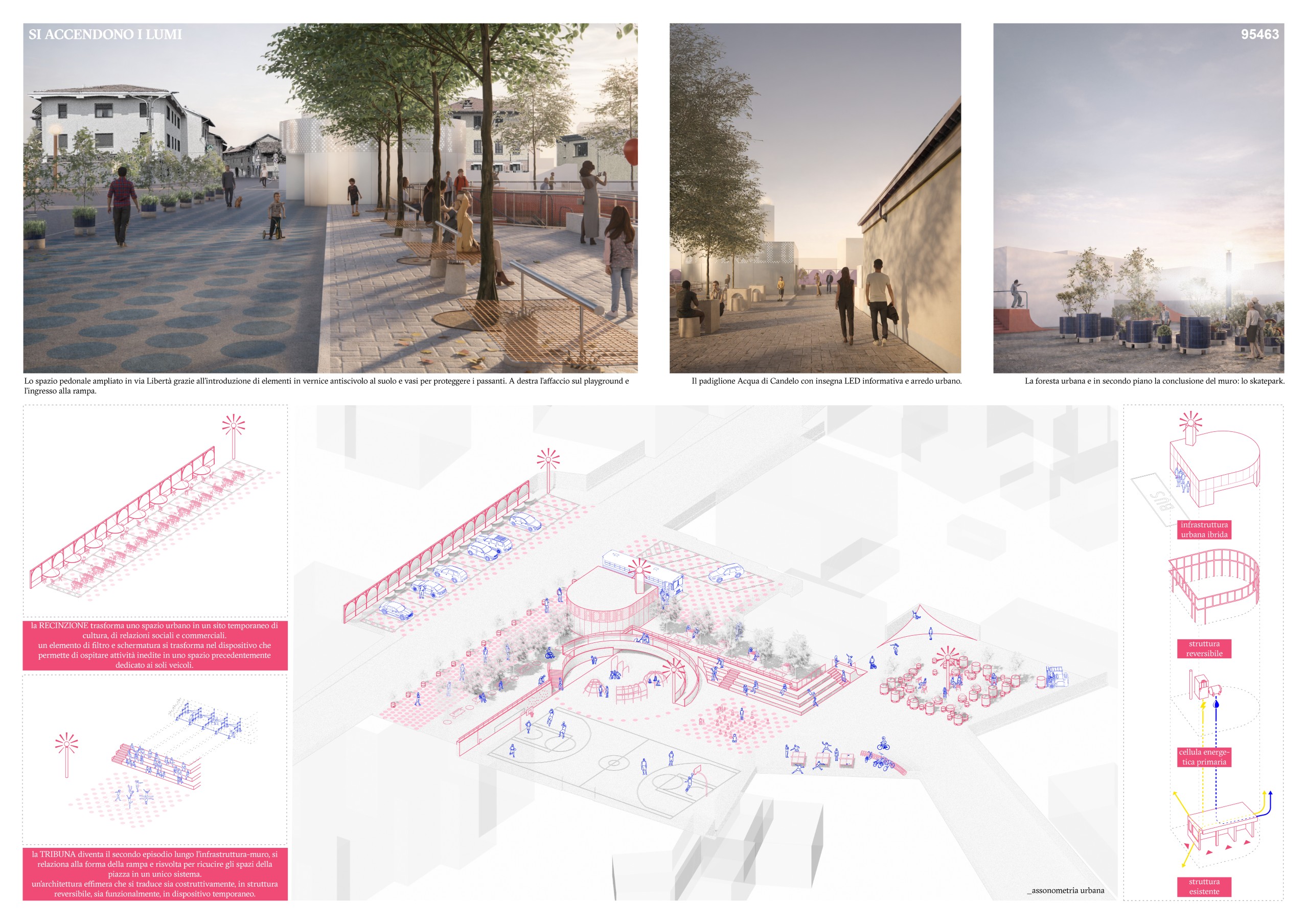
PROJECT DESCRIPTION
“S’accendono i lumi nella sera,
rapido cala il crepuscolo;
passa un’ombra leggera,
trema un ultimo frullo”
(G. Pascoli)
L’ambito di progetto si trova in uno spazio diaframma tra la periferia del centro storico e la più recente espansione residenziale e industriale della cittadina di Candelo, delimitato da proprietà private e da una scuola elementare, che definiscono il suo contorno.
Per ottenere una mutazione a livello del quartiere proponiamo di sfruttare lo stato del sito, ossia i limiti fisici della piazza, come il salto di quota che divide fisicamente due ambiti: sopra e sotto. Il progetto si basa su quattro ecologie strutturanti – la piazza-playground, la foresta urbana, il padiglione e l’estensione del bar – definite ciascuna da un elemento di luce verticale, i Lumi, ispirati all’etimologia e all’iconografia del comune stesso, che ricuciono la discontinuità visiva ed esperienziale della piazza esistente.
La piazza-playground reinterpreta le mura del ricetto, dove la rampa, nuova metafora del bastione-torre, diviene l’elemento ordinatore del progetto: un dispositivo di connessione che ridefinisce le relazioni tra alto e basso, riorganizzando i flussi di attraversamento e di uso dello spazio. La scala esistente, elemento di chiusura spaziale e visiva, viene eliminata a favore di una tribuna metallica, pur mantenendo il collegamento tra i due livelli di quota differenti.
La foresta urbana si configura come un dispositivo ecologico e spaziale capace di reintegrare il sistema del verde e dei microclimi all’interno di un contesto minerale, assumendo un ruolo strutturante nell’organizzazione dello spazio urbano. Essa guida e contiene la viabilità carrabile nell’unica porzione del livello inferiore accessibile ai veicoli, trasformando un’esigenza funzionale in un elemento integrato del paesaggio costruito.
Il nuovo padiglione “Acqua di Candelo” conserva integralmente la propria funzione originaria, ma viene reinterpretato come infrastruttura urbana ibrida. All’impianto esistente si innesta una pensilina, che estende il padiglione nello spazio pubblico e ne rafforza il ruolo di dispositivo di servizio alla scuola e alla piazza. Parallelamente, l’edificio assume il valore di cellula energetica primaria, come nodo generatore che alimenta i nuovi interventi diffusi nella piazza.
L’estensione del bar si configura come dispositivo urbano temporaneo, capace di ridefinire il rapporto tra spazio pubblico e margine. Attraverso la riappropriazione periodica e puntuale dell’area destinata alla sosta veicolare, si è deciso di sfruttare la recinzione esistente, per creare un sistema che opera come infrastruttura effimera, in grado di alternare funzioni di filtro visivo e spaziale a configurazioni più aperte, destinate ad usi collettivi, a eventi di carattere sociale o commerciale.
Sopra i cerchi più distanziati definiscono aree ibride, utilizzabili come parcheggi o spazi per eventi temporanei. I cerchi più fitti connotano le aree pedonali, potenziandole, qualificando lo spazio pubblico e limitando il traffico. Sotto, il disegno viene ripreso per delineare spazi e introdurre un elemento ludico per la comunità, diventando segno riconoscibile del progetto e, attraverso il colore, strumento di differenziazione e riconoscibilità delle quattro ecologie.
I dispositivi generano nuove centralità e riorganizzano lo spazio pubblico in chiave accessibile e inclusiva, restituendo alla piazza vitalità, continuità e libertà di movimento.
JURY COMMENT
“The project emerges from a poetic vision while remaining firmly grounded in reality. Carefully calibrated, it demonstrates how a limited number of precise gestures can reorganize the surrounding space and clearly define new functions through minimal intervention. In this sense, it embodies the very essence of tactical urbanism: acting with measure, intelligence, and economy to generate tangible spatial transformation. Through the use of color and light, the intervention acquires a strong identity and recognizability, achieving an iconic presence despite its lightness.”
Emanuele Barili – ECÒL
Candelo-Urban-Link
Ivan Okhapkin, Maria Repkina, Anastasia Agafonova, Maria Fedotova, Aleksandra Ustinova, Anastasia Kolosova, Daria Mamskova [Spain]
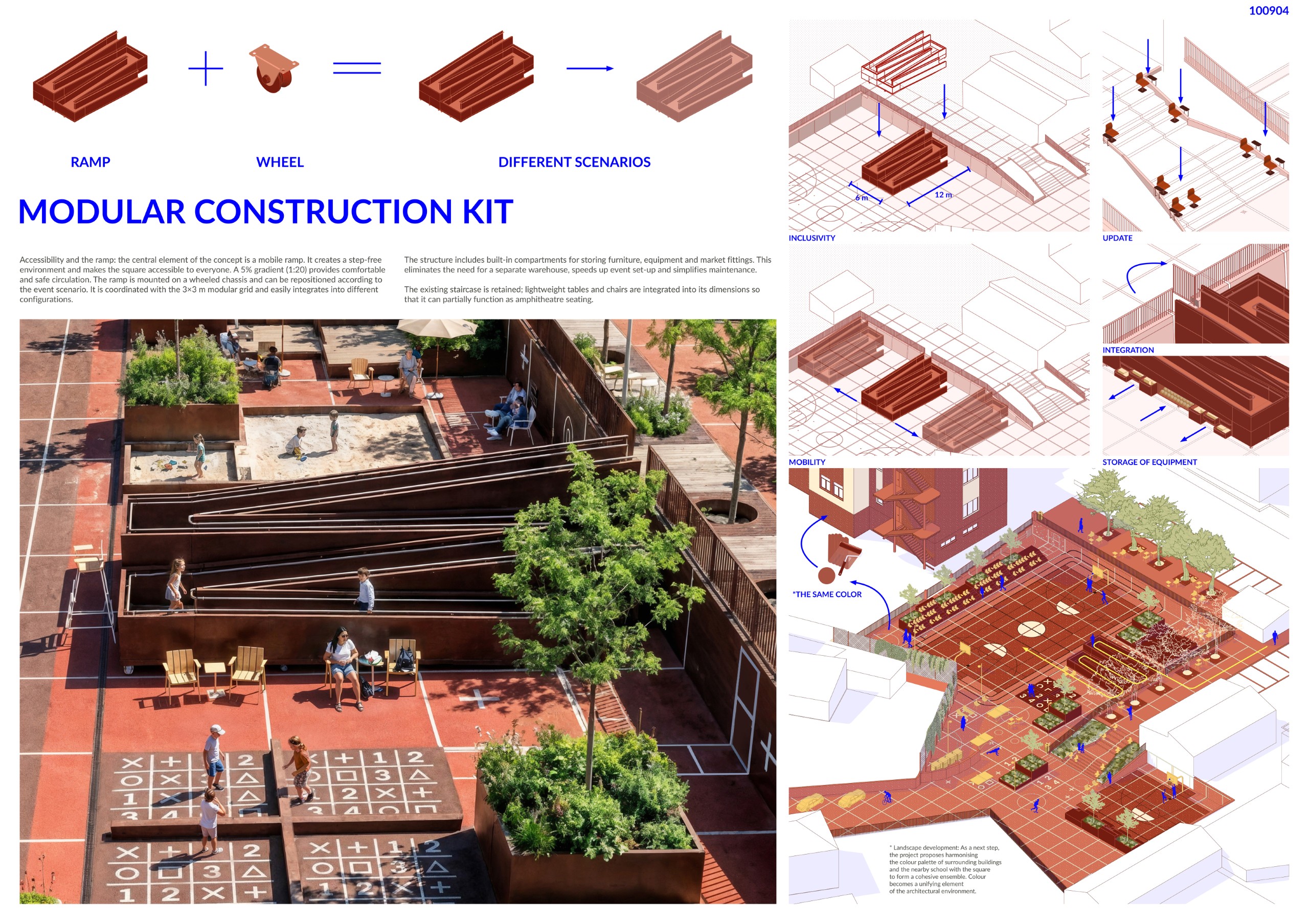
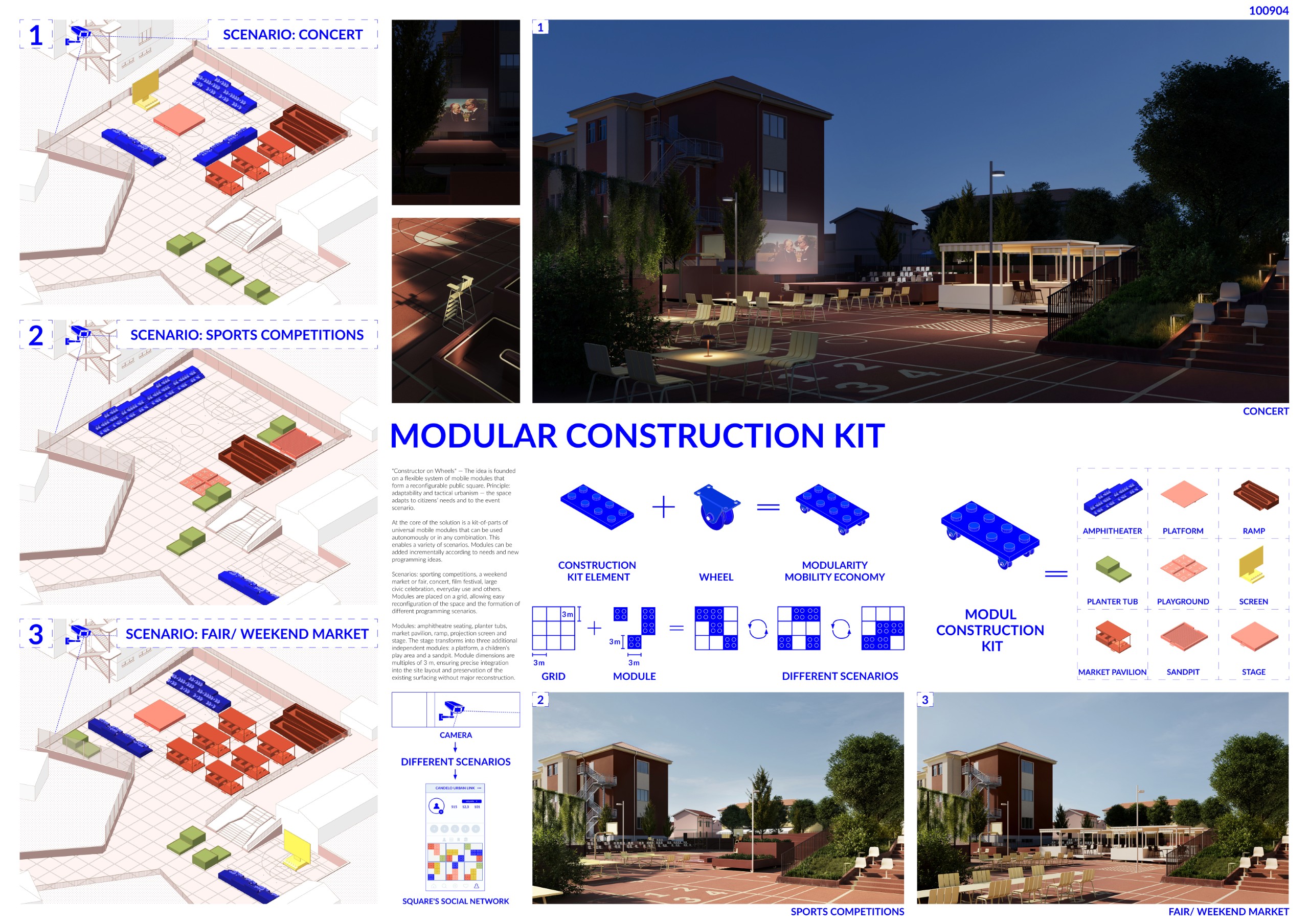
PROJECT DESCRIPTION
“Constructor on Wheels” is a flexible kitofparts of wheeled mobile modules that create a reconfigurable public square. Principles: adaptability and tactical urbanism — the square responds to users’ needs and specific event scenarios.
The system comprises universal modules that operate autonomously or in combinations, allowing incremental delivery as programming needs evolve. Modules sit on a 3×3 m grid, enabling rapid reconfiguration and precise integration with the existing site without major civil works.
Scenarios include sporting events, weekend markets, concerts, film festivals, civic celebrations and everyday public life. Module types: amphitheatre seating, planter tubs, market pavilion, ramp, projection screen and stage. The stage reconfigures into three independent units — a platform, a children’s play area and a sandpit. Modules are dimensioned in 3 m increments to preserve existing surfacing and simplify placement.
Materials and surfacing: the square retains its existing paving; instead of largescale reconstruction, the surface is refreshed with a durable, wearresistant coating and line graphics applied to the existing substrate. A graphic 3×3 m grid organises layout, cuts cost and speeds implementation.
Interactive markings: an overlay of graphics defines play and sports zones — children’s games, coordination drills, team activities and informal sport. These markings can act as a standalone programme: the square can instantly function as a playground or sports court even without modules.
Graphics extend vertically onto retaining and boundary walls, integrating horizontal and vertical planes into a coherent composition. Walls thereby become functional elements for play tasks, training exercises, tactile engagement and visual zoning.
Urban benefits: economic efficiency, simple fabrication, interchangeability, mobility and rapid transformation. The modular system minimises storage and maintenance costs and supports phased implementation. The public realm shifts from static to operational — a responsive urban instrument that adapts to seasonal change and community initiatives while enabling quick event mobilisation with low longterm infrastructure cost.
Accessibility and the ramp: the concept’s central element is a mobile ramp creating a stepfree environment and universal access. A 5% gradient (1:20) ensures comfortable circulation. The ramp is mounted on a wheeled chassis with locking devices, aligns with the 3×3 m grid and integrates builtin storage bays for furniture, AV and market fittings — eliminating separate warehousing, accelerating setup and simplifying operations. The existing staircase is retained; lightweight tables and chairs fit within its geometry so it can partially function as amphitheatreseating.
Landscape development:
Next steps include harmonising the colour palette of adjacent buildings and the nearby school with the square to form a cohesive ensemble. Digital activation — a social page or fixed camera — can document changing configurations, boost engagement and give the place continuous digital life.
Additionally: a social media page for the place would showcase changing scenarios and announce events — from everyday activities to major city gatherings. Content can be residentgenerated or recorded via a fixed camera documenting life on the square. This creates a sense of continual renewal, enhances community engagement and gives the place a new digital life.
JURY COMMENT
“The project stands out for the clarity and completeness with which the design choices are described. The concept of a reconfigurable square on wheels, organized according to a precise grid, is original and consistent with the principles of flexibility and adaptability typical of tactical urbanism. Overall, the intervention is characterized by a strong sense of identity and a particularly compelling design approach.”
Alice Trematerra – Didacommunicationlab
Honorable Mentions
(ordered by registration code)
Urban Ring : A Framework for Everyday Interaction
Meryem KübraUluç Tolba, Nadine Elsayed [Turkey – Egypt]
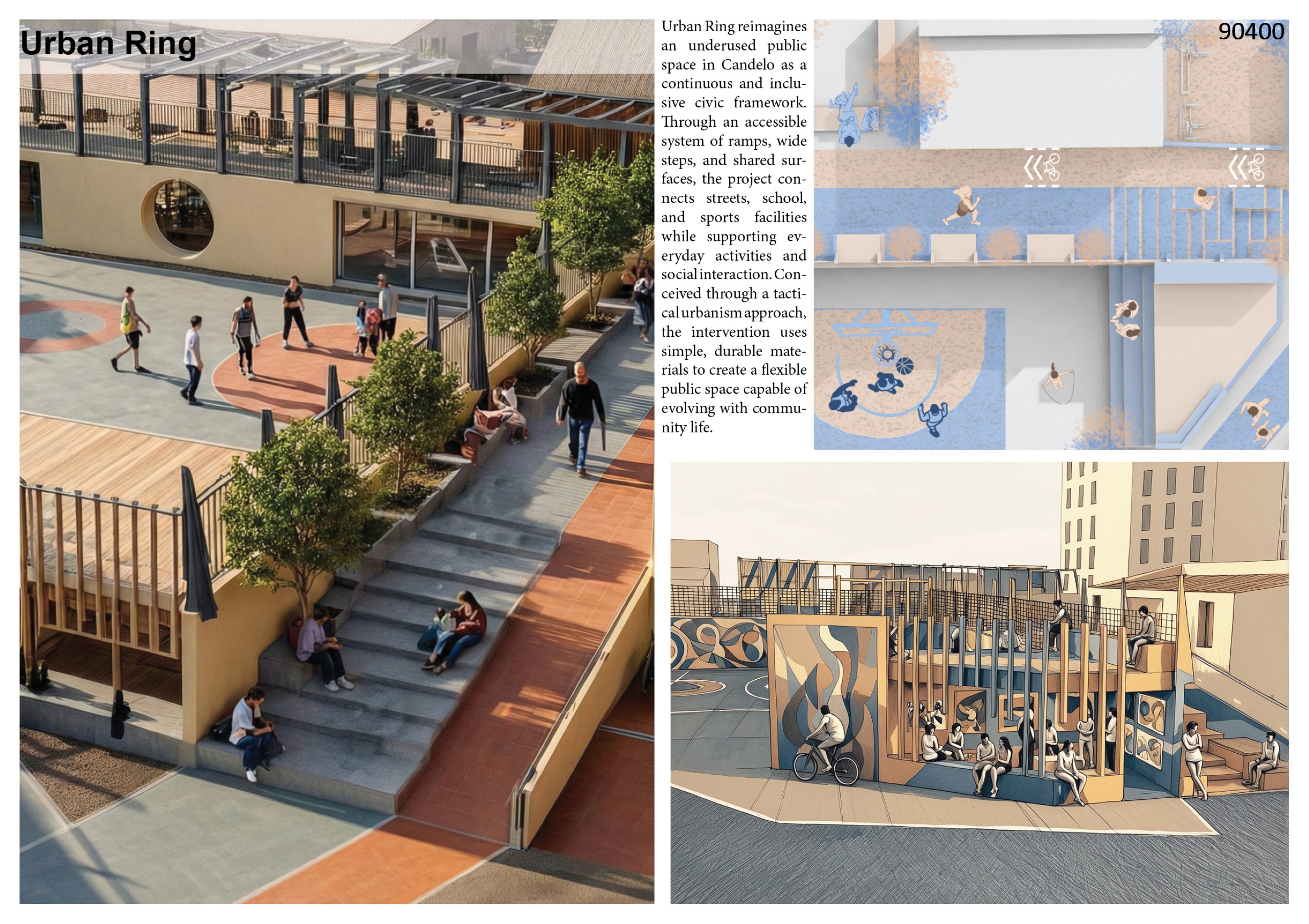
PROJECT DESCRIPTION
This project proposes a tactical urban intervention that redefines a fragmented public space in Candelo as a continuous, inclusive, and socially active urban framework. The proposal focuses on connecting existing activities and users through a single spatial system capable of supporting everyday life and strengthening neighborhood interaction.
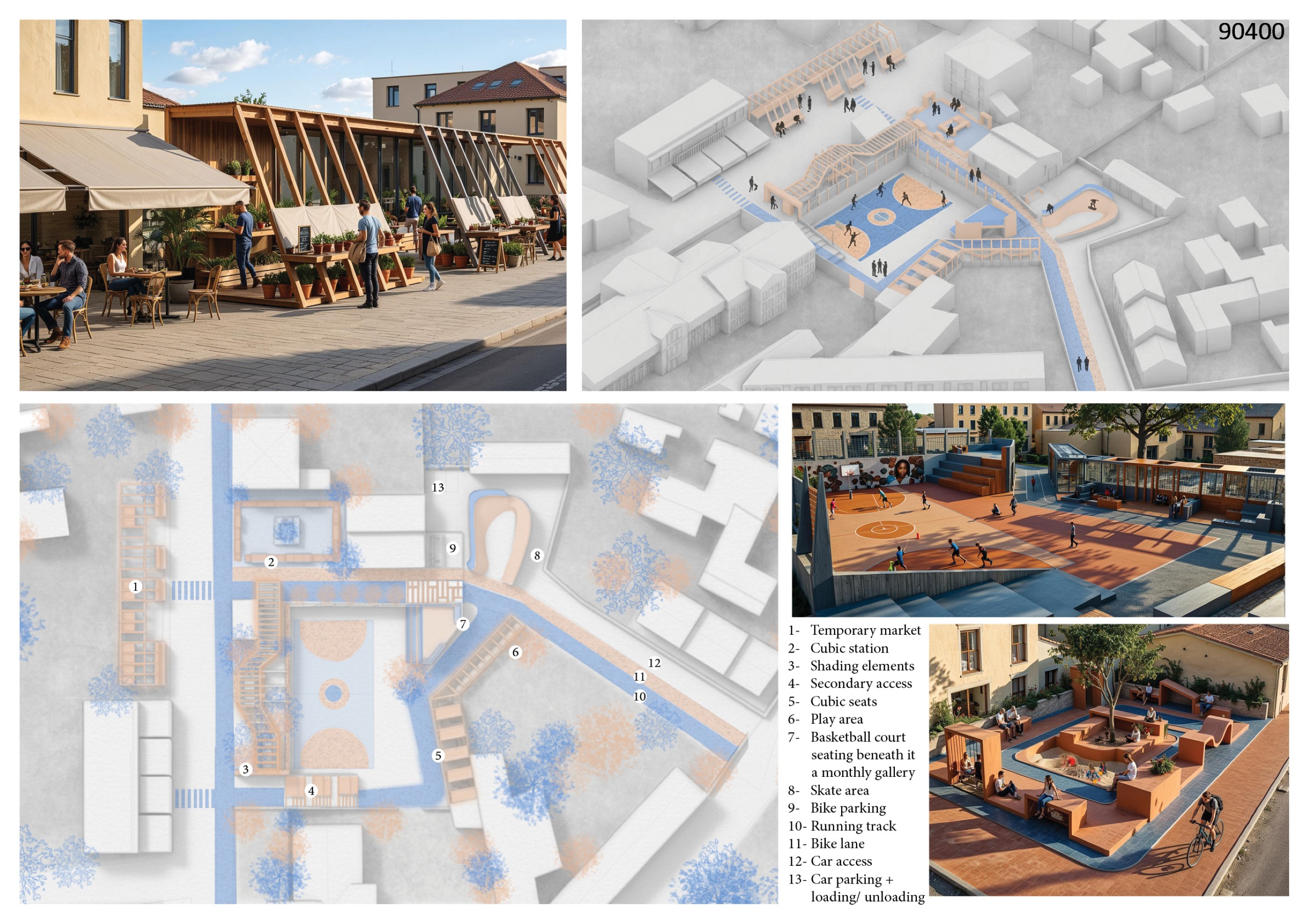
The intervention is conceived as a continuous ring linking Via San Sebastiano, Via Libertà, the school, the basketball field, and the surrounding neighborhood. This ring operates as an open and adaptable infrastructure that organizes movement, pause, and encounter across different levels and programs. It functions simultaneously as circulation, public space, and civic ground, allowing daily activities to overlap and reinforce one another while maintaining clear spatial hierarchies.
At the core of the ring lies a ramp system that addresses accessibility as a spatial and social opportunity. Integrated with wide, inhabitable steps, seating areas, and a bicycle lane, the ramp forms a layered topography where different speeds and uses coexist. The same gesture that connects the two streets continues seamlessly to bridge the level difference between the school and the sports field, establishing spatial continuity across the site. Movement and rest are treated as equally important conditions, enabling the infrastructure itself to become a place for gathering, waiting, and observation.
Ramp and stairs are designed as complementary elements. The steps are intentionally wide and slow, encouraging informal use such as sitting, waiting, and watching, while remaining accessible through generous proportions. The ramp ensures a continuous, barrier-free path for children, elderly residents, parents with strollers, wheelchair users, and cyclists. Carefully placed green elements provide natural shading and comfort, improving microclimatic conditions without relying on heavy landscaping or complex maintenance strategies.
Vehicular access is managed through a controlled entry from Via San Sebastiano, ensuring necessary functionality while maintaining pedestrian priority. This access allows service vehicles to reach a dedicated loading and unloading area serving the adjacent municipal buildings. To clearly separate vehicular movement from pedestrian zones, a roller-skating artificial surface is introduced as a spatial and material buffer. This surface operates simultaneously as a safety barrier, a playful activity zone, and a visual threshold, reinforcing the hierarchy between slow mobility, social space, and controlled car access without the need for rigid physical separation.
The project responds directly to everyday life in Candelo. It accommodates parents waiting after school, teenagers gathering near the sports field, elderly residents resting and observing, children moving freely across levels, and residents crossing the space as part of their daily routines. Along Via Libertà, the removal of on-street parking next to Bar Viana allows the creation of a flexible community area designed to host temporary activities such as neighborhood markets, Christmas events, flea markets, or charity bazaars, reinforcing the square’s role as a shared civic platform adaptable to seasonal and social needs.
Material choices follow a tactical urbanism approach, prioritizing low-cost construction, standard municipal materials, durability, and ease of maintenance. The architectural language remains restrained and familiar, supporting long-term use and gradual appropriation. The program and spatial configuration are informed by existing user profiles and daily practices, ensuring relevance and feasibility within the local context.
The Urban Ring activates a neighborhood that currently lacks spaces for social exchange and collective use. By transforming accessibility and circulation infrastructure into a shared civic framework, the project strengthens spatial connections, supports inclusivity, and creates a public space rooted in everyday interaction and community life.
Living Ribbon
Keteryna Karpovska, Matylda Grojec [Poland]
PROJECT DESCRIPTION
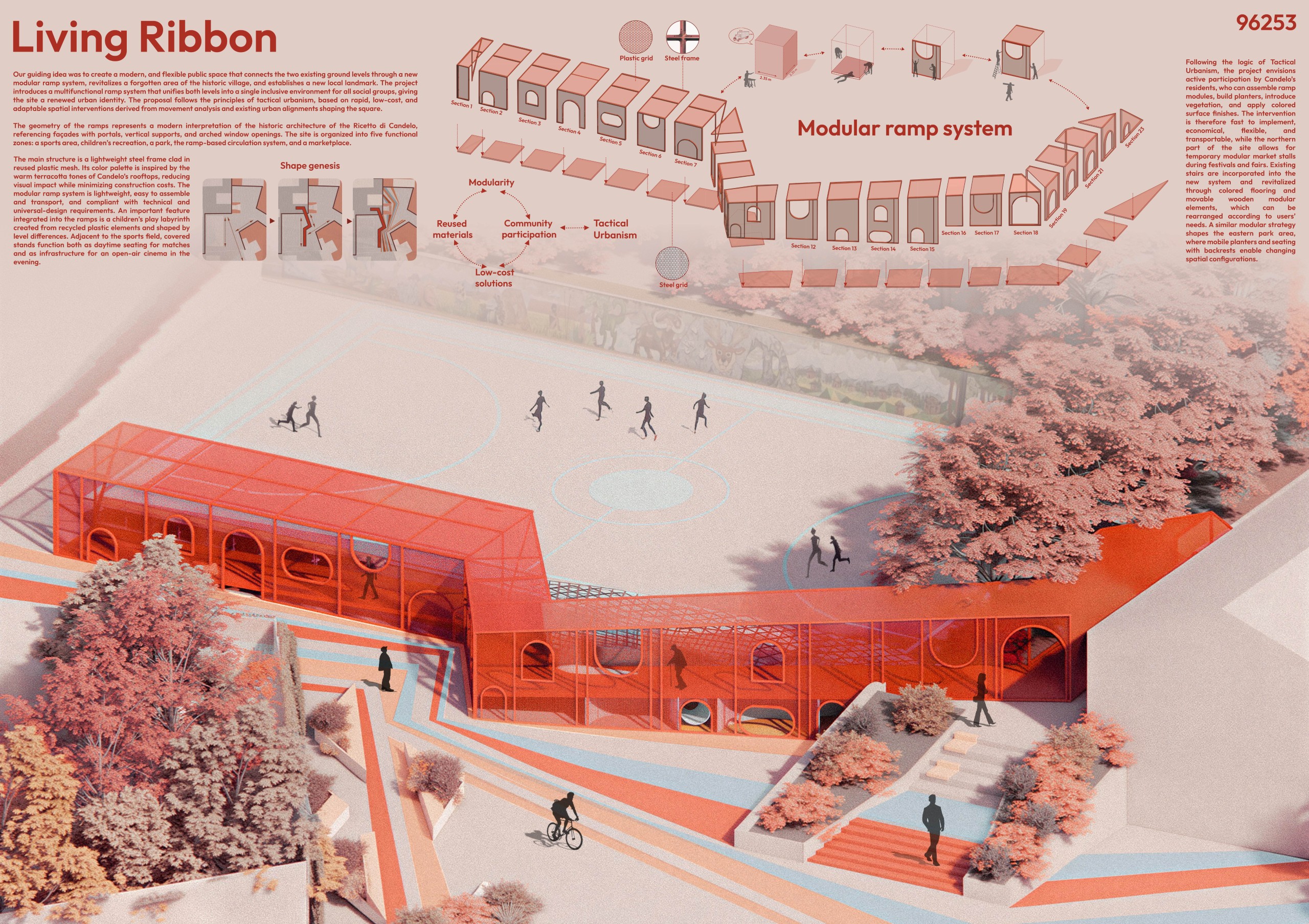
The primary objective of the Candelo Urban Link competition was to design a self-sufficient, multifunctional town center by transforming the underused square along Via San Sebastiano. Our guiding idea was to create a modern, and flexible public space that connects the two existing ground levels through a new modular ramp system, revitalizes a forgotten area of the historic village, and establishes a new local landmark.
Currently, the square accommodates several unrelated functions, including a school sports field, parking spaces, and occasional festivals or markets. The two levels are linked only by outdated reinforced-concrete stairs that do not meet universal design standards, while the space itself lacks greenery, shading, seating, and clear public-space infrastructure, being almost entirely covered with asphalt.
To address these issues, the project introduces a multifunctional ramp system that unifies both levels into a single inclusive environment for all social groups, giving the site a renewed urban identity. The proposal follows the principles of tactical urbanism, based on rapid, low-cost, and adaptable spatial interventions derived from movement analysis and existing urban alignments shaping the square.
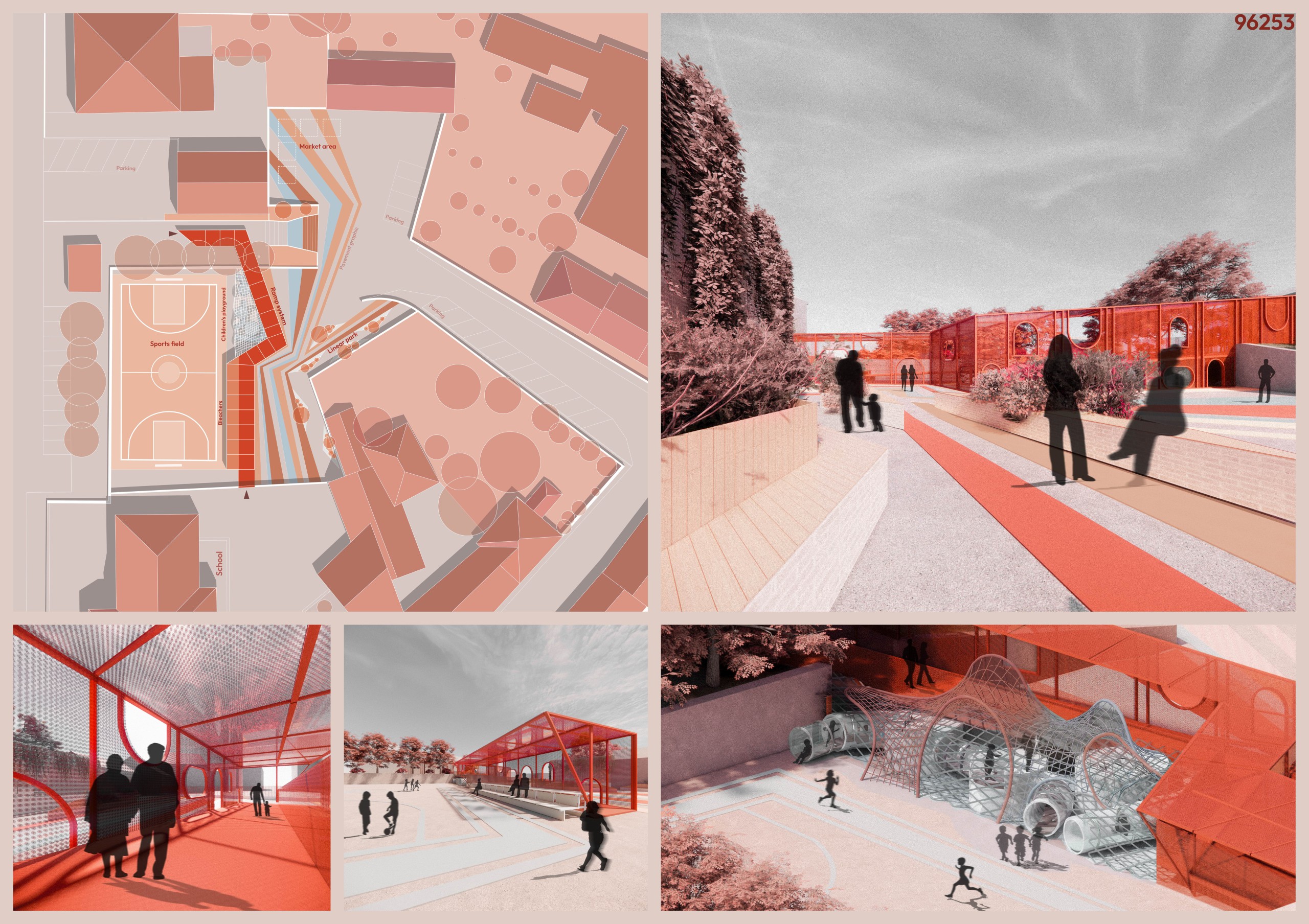
The geometry of the ramps represents a modern interpretation of the historic architecture of the Ricetto di Candelo, referencing façades with portals, vertical supports, and arched window openings. The site is organized into five functional zones: a sports area, children’s recreation, a park, the ramp-based circulation system, and a marketplace.
The main structure is a steel frame clad in reused plastic mesh. Its color palette is inspired by the terracotta tones of Candelo’s rooftops.The modular ramp system is lightweight, easy to assemble and transport, and compliant with technical and universal-design requirements. An important feature integrated into the ramps is a children’s play labyrinth created from recycled plastic elements and shaped by level differences. Adjacent to the sports field, covered stands function both as daytime seating for matches and as infrastructure for an open-air cinema in the evening.
Following the logic of tactical urbanism, the project envisions active participation by Candelo’s residents, who can assemble ramp modules, build planters, introduce vegetation, and apply colored surface finishes. The intervention is therefore fast to implement, economical, flexible, and transportable, while the northern part of the site allows for temporary modular market stalls during festivals and fairs. Existing stairs are incorporated into the new system and revitalized through colored flooring and movable wooden modular elements, which can be rearranged according to users’ needs. A similar modular strategy shapes the eastern park area, where mobile planters and seating with backrests enable changing spatial configurations.
The entire square is coated with durable outdoor flooring paint, while the ground graphic—radiating like sunbeams along the site’s dominant axes—emphasizes the geometry of the ramps and the uniqueness of the space. Ultimately, the project aims to deliver strong social and cultural value, combining rational design with sensitivity to historical context. By enabling architecture to be co-created by residents, the proposal opens a new, community-driven dimension of spatial design centered on people, participation, and shared urban life.
Scaffold Social
Isaac Contreras Padilla, Nicoll Rey Romero [Colombia]
PROJECT DESCRIPTION
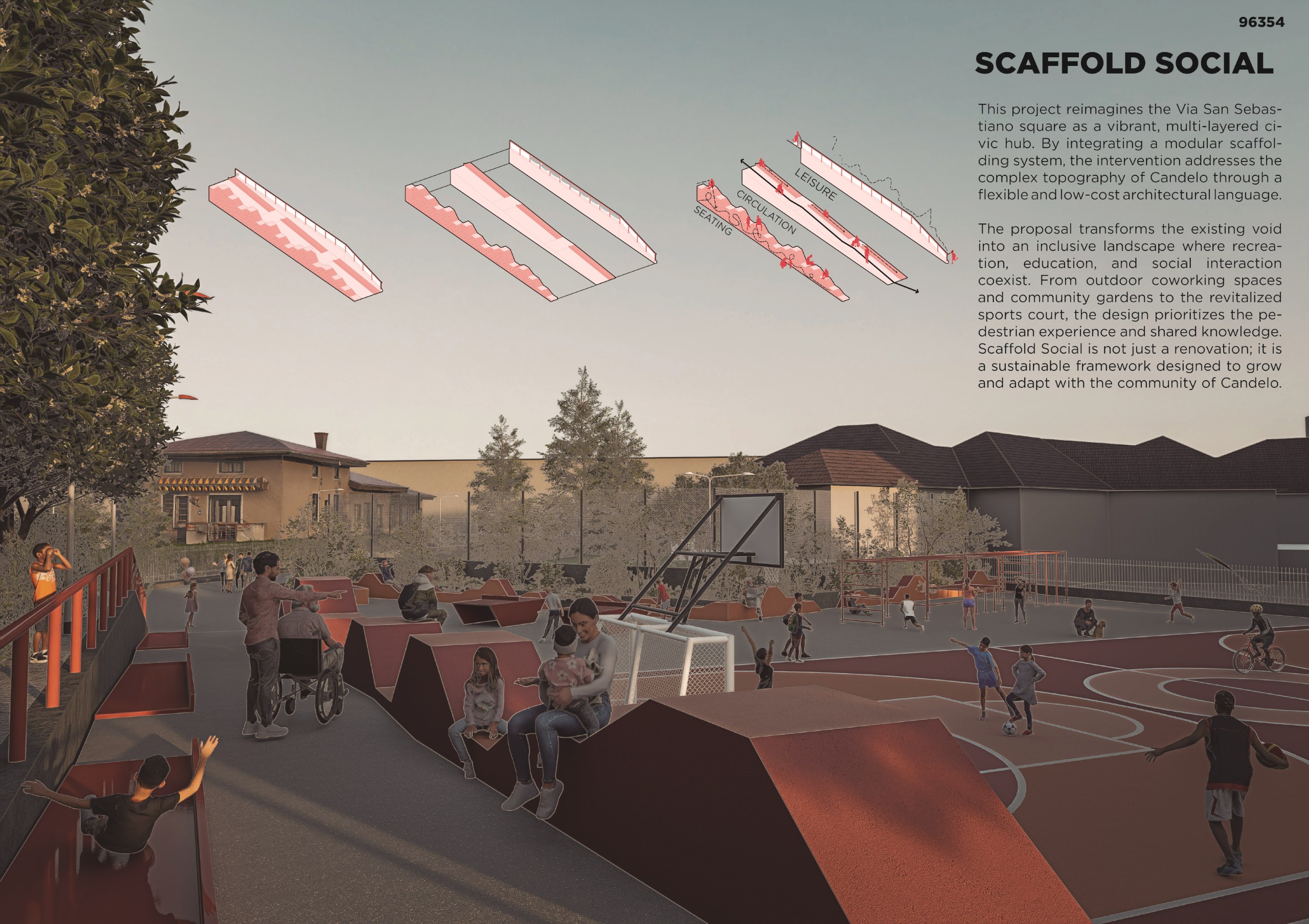
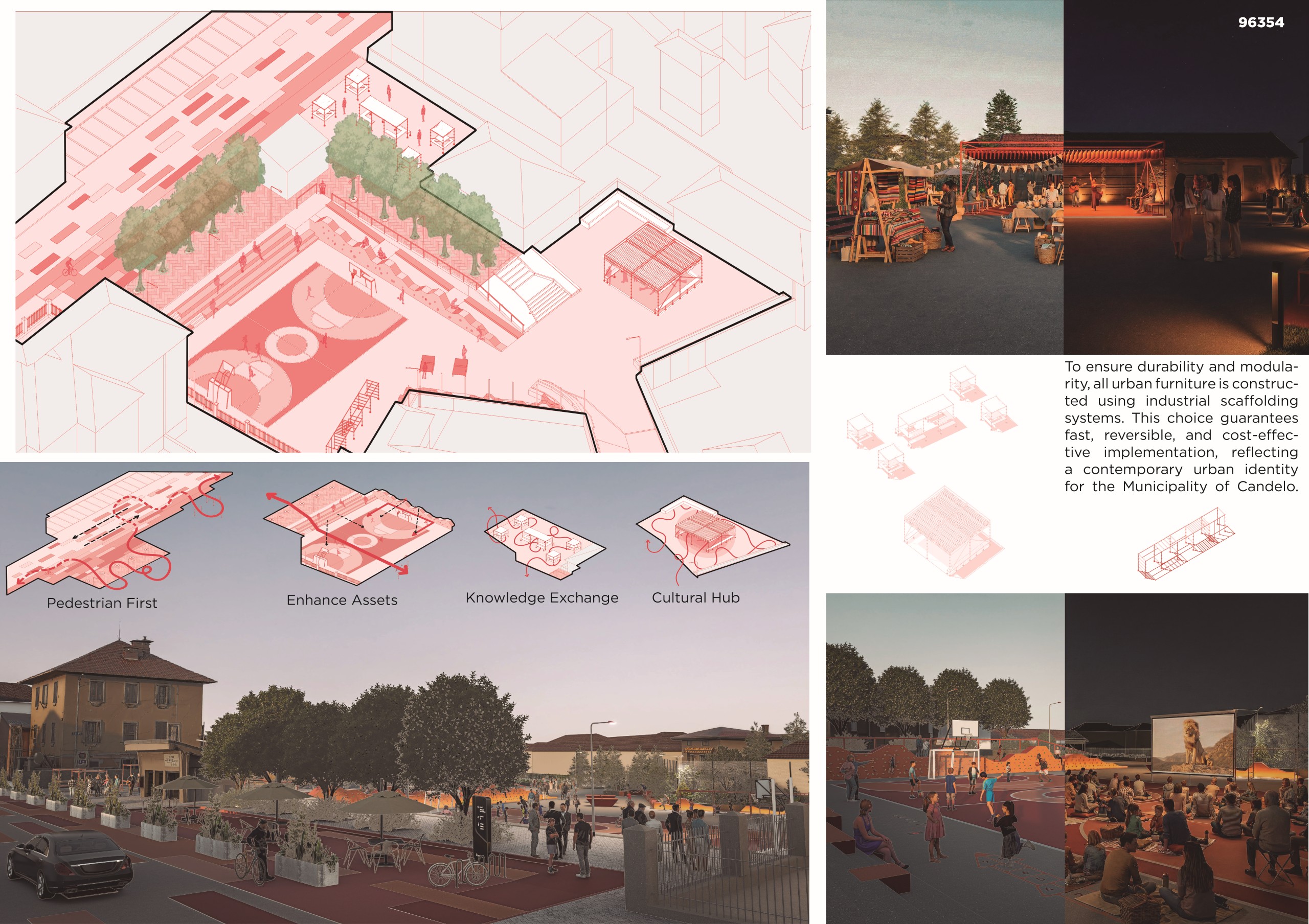
Scaffold Social transforms the Via San Sebastiano square from a residual “urban void” into a vibrant, multi-generational landmark. Our proposal focuses on four strategic moments that bridge the topographical gap and catalyze social interaction through a low-cost, high-impactapproach.
1. The Upper Threshold: Living & Knowledge
The intervention begins on Via Libertà with a tactical floor treatment designed to reduce vehicle speed and prioritize pedestrians. This level hosts an outdoor coworking space, a knowledge hub where students, parents, and the elderly coexist. The area is inherently flexible, doubling as a local market to bolster the neighborhood economy.
2. The Cultural Heart: Arts & Food Security
This zone is dedicated to local talent and the integral development of the community. A flexible space for performing arts provides a stage for cultural expression, while the perimeter is defined by community orchards that promote environmental education. Additionally, the area can function as a local bazaar for artisans and entrepreneurs.
3. The Recreative Anchor: Sport & Cinema
The existing sports court is revitalized by integrating it with public grandstands. These steps serve as an open-air cinema and a venue for school or communal events. The area is enhanced with an outdoor gym, ping-pong tables, and playful pavement patterns, ensuring the square remains active and safe throughout the day.
4. The Inclusive Spine: The Living Ramp
The core of the project is a new inclusive ramp system connecting both levels. Far from being a mere transit route, the ramp is designed as a “stay-in” element with areas for contemplation and play. It articulates with the existing stairs to avoid unnecessary demolition, respecting the principle of economic sustainability.
Tactics & Materiality
To ensure durability and modularity, all urban furniture is constructed using industrial scaffolding systems. This choice guarantees fast, reversible, and cost-effective implementation, reflecting a contemporary urban identity for the Municipality of Candelo.
CAU Candelo Urban Link
Ray Agung Sucika Pratama, Ahmad Alfu Ihsan, Faris Raihan Friadi [Indonesia]
PROJECT DESCRIPTION
A SHARED THRESHOLD Between Movement and Encounter
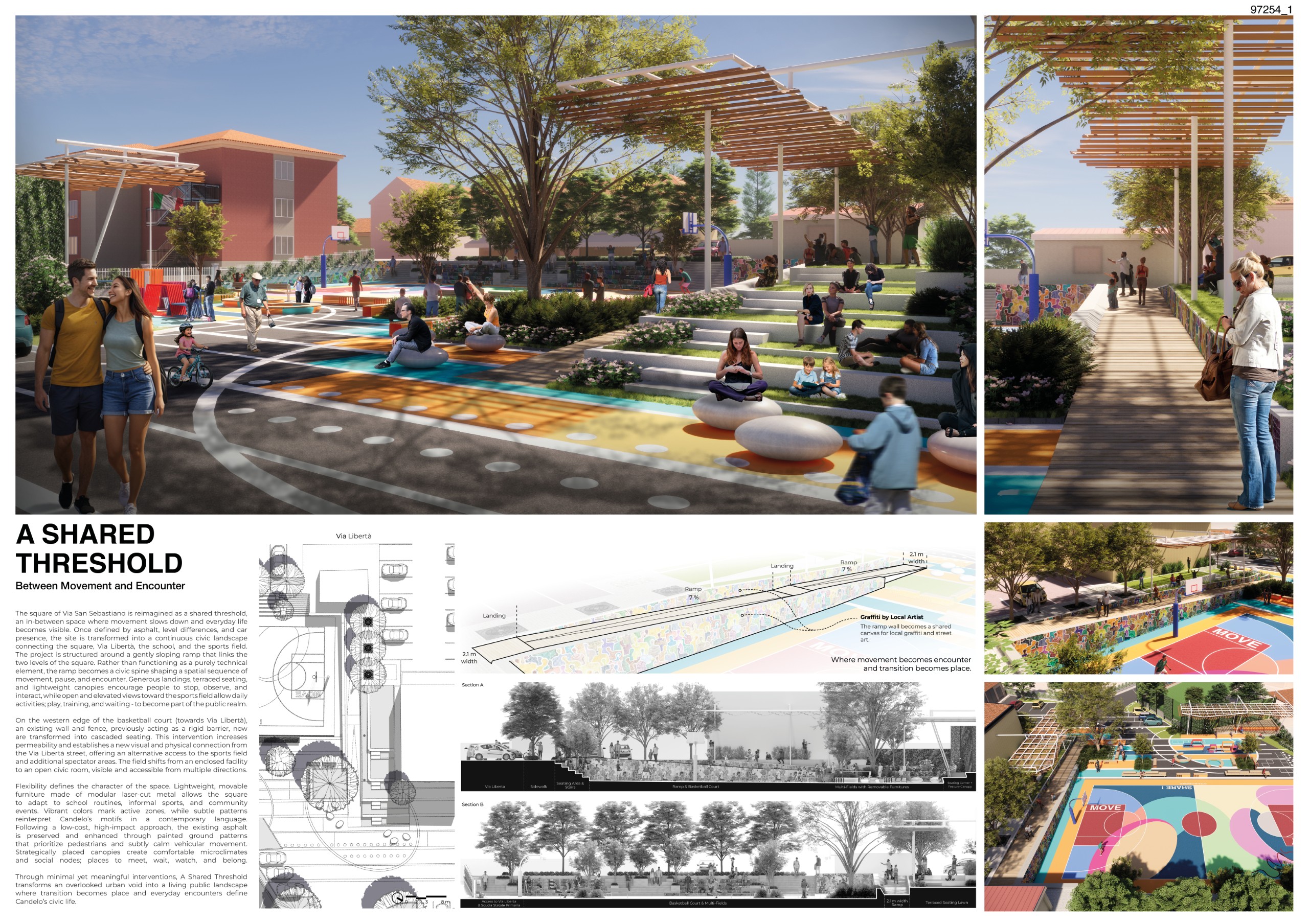
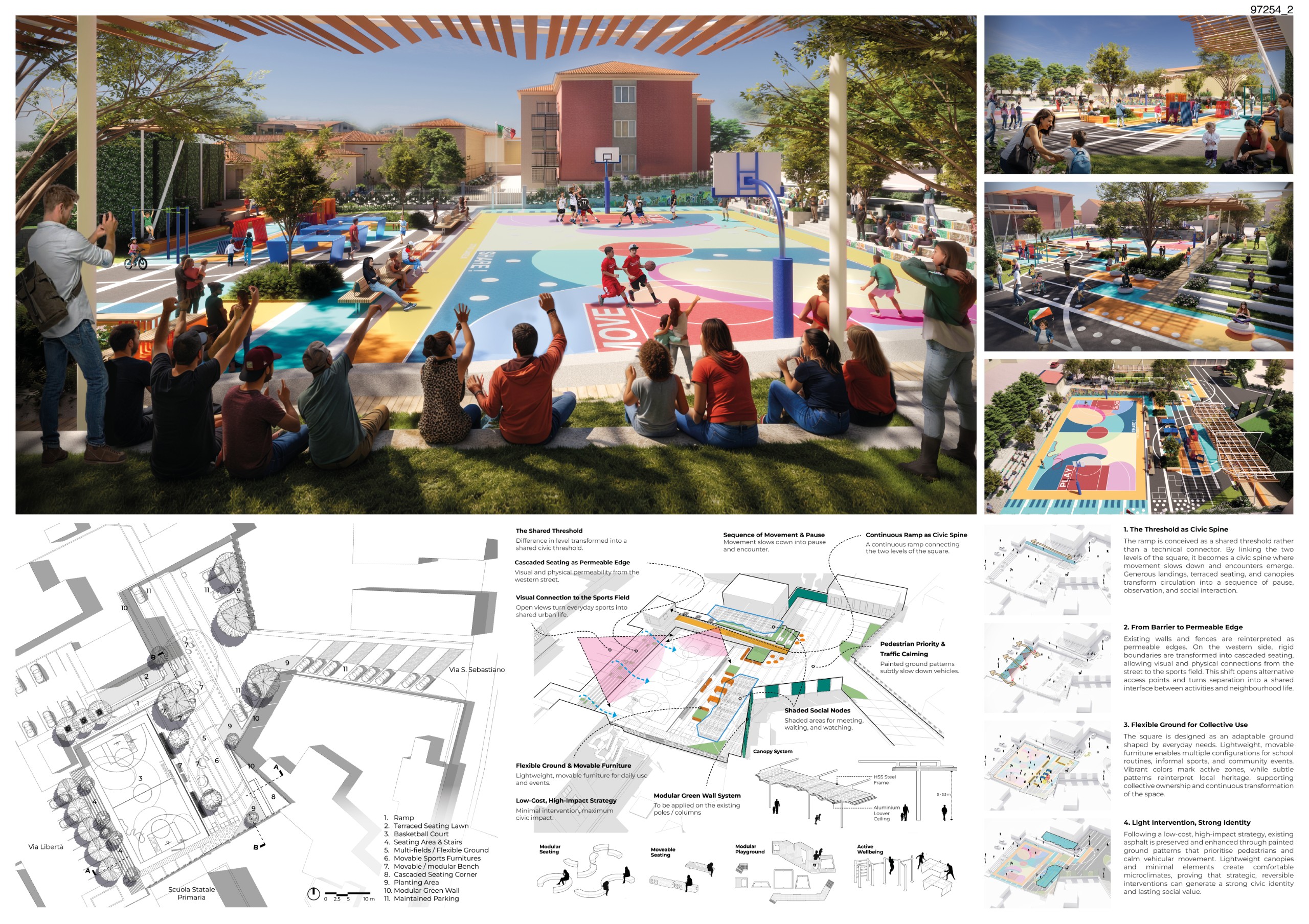
The square of Via San Sebastiano is reimagined as a shared threshold, an in-between space where movement slows down and everyday life becomes visible. Once defined by asphalt, level differences, and car presence, the site is transformed into a continuous civic landscape connecting the square, Via Libertà, the school, and the sports field.
The project is structured around a gently sloping ramp that links the two levels of the square. Rather than functioning as a purely technical element, the ramp becomes a civic spine shaping a spatial sequence of movement, pause, and encounter. Generous landings, terraced seating, and lightweight canopies encourage people to stop, observe, and interact, while open and elevated views toward the sports field allow daily activities; play, training, and waiting – to become part of the public realm.
On the western edge of the basketball court (towards Via Libertà), an existing wall and fence, previously acting as a rigid barrier, now are transformed into cascaded seating. This intervention increases permeability and establishes a new visual and physical connection from the Via Libertà street, offering an alternative access to the sports field and additional spectator areas. The field shifts from an enclosed facility to an open civic room, visible and accessible from multiple directions.
Flexibility defines the character of the space. Lightweight, movable furniture made of modular laser-cut metal allows the square to adapt to school routines, informal sports, and community events. Vibrant colors mark active zones, while subtle patterns reinterpret Candelo’s motifs in a contemporary language.
Following a low-cost, high-impact approach, the existing asphalt is preserved and enhanced through painted ground patterns that prioritize pedestrians and subtly calm vehicular movement. Strategically placed canopies create comfortable microclimates and social nodes; places to meet, wait, watch, and belong.
Through minimal yet meaningful interventions, A Shared Threshold transforms an overlooked urban void into a living public landscape where transition becomes place and everyday encounters define Candelo’s civic life.
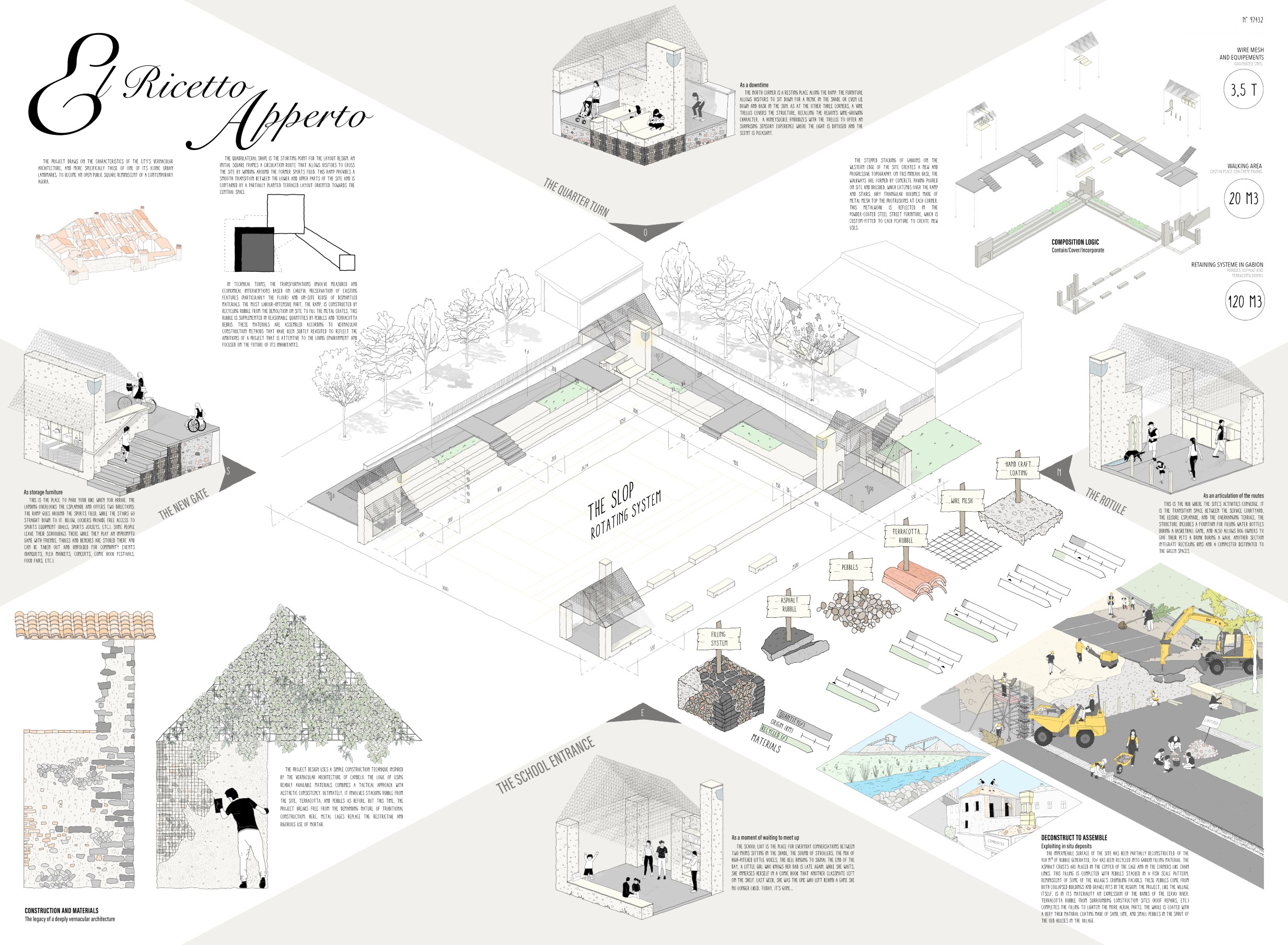
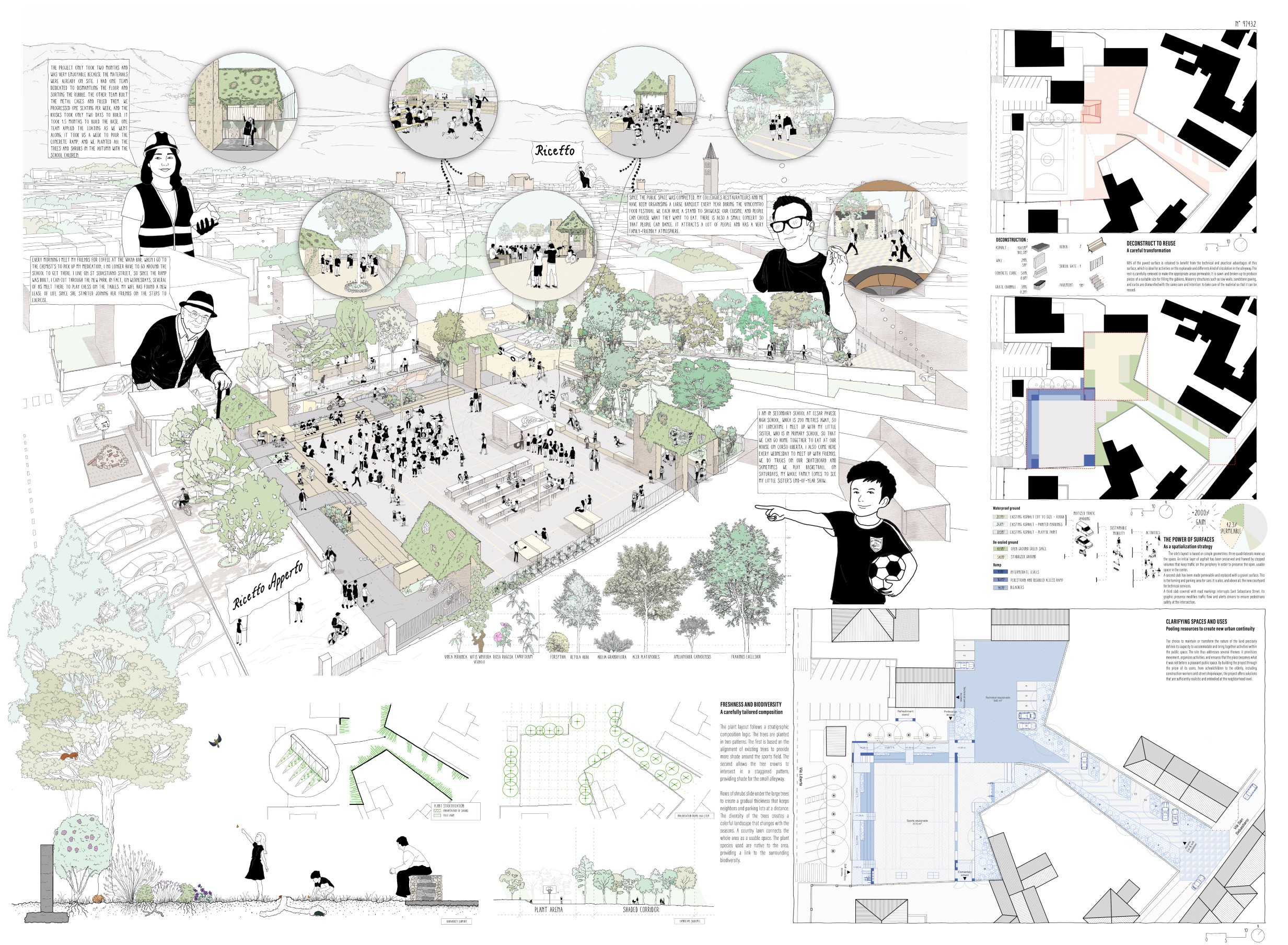
El Ricetto Apperto
Pernot Pierre-Antoine, Paf Architecture [France] – www.pafarchitecture.fr
PROJECT DESCRIPTION
The project incorporates the characteristics of the city’s vernacular architecture, and more specifically those of one of its emblematic urban features, to create an open public square reminiscent of a contemporary agora.
A first square frames a circulation path that allows passage through the site, winding around the former sports field. Two of the lateral pathways converge at the school entrance, which has been relocated to the southeast corner to preserve the activities of this “possibilities space.” The entrance is marked by an emergence topped with a green trellis, providing shelter for parents to wait for their children. Symmetrically, the northwest corner features a covered landing, particularly for people with reduced mobility who use the ramp that runs alongside the partially preserved mural, as a nod to the past. This ramp is contained by a partially planted, tiered layout oriented towards the central space. The ramp provides a smooth transition between the lower and upper parts of the site, leading to a new southwest access point. The opposite corner is the junction of various routes: those taking their children to school, those wishing to reach the street of the Libertà from those of S. Sebastiano, and those coming to enjoy the new uses offered by this esplanade of endless possibilities. This central point is also accessible via a smaller, more efficient staircase that replaces the existing one and connects the esplanade to the elevated section, which will house a small summer open-air café stand for occasional events.
The fourth corner is shared with this of another quadrilateral, defining the second structuring space of the project. This is a courtyard that retains its technical function, providing access to the city services building, and where parking is maintained but now concealed behind landscaped areas. This space remains accessible from the small alleyway, whose parking has been reorganized symmetrically to the previous layout to optimize the planted areas, making passage more pleasant. This new atmosphere confers a priority to families walking to and from school. This access leads to a redesigned intersection with simple markings. The inverted square geometry narrows the traffic lanes to regulate traffic on Via S. Sebastiano and thus make the area safer for soft mobilities.
From a technical standpoint, the transformations are measured and economical interventions based on careful preservation of the existing structure (particularly the ground) and the on-site reuse of dismantled materials. The most complex part, the ramp, is constructed by recycling the rubble generated to fill metal mesh containers. These “Gabbioni” are stacked to support the ramp and become a base for fragrant vegetation that will eventually cover the mesh of the welded wire shelters. Removing the asphalt surface creates permeable areas that promote biodiversity while maintaining accessible spaces and uses. The amount of rubble generated, is supplemented pebbles and terracotta. This also echoes vernacular building techniques, subtly revisited here to reflect the ambitions of a project attentive to the ecology and focused on the future of its inhabitants.
Up’n Down
Idil Mersin, Emrecan Bostan [Turkey]
PROJECT DESCRIPTION
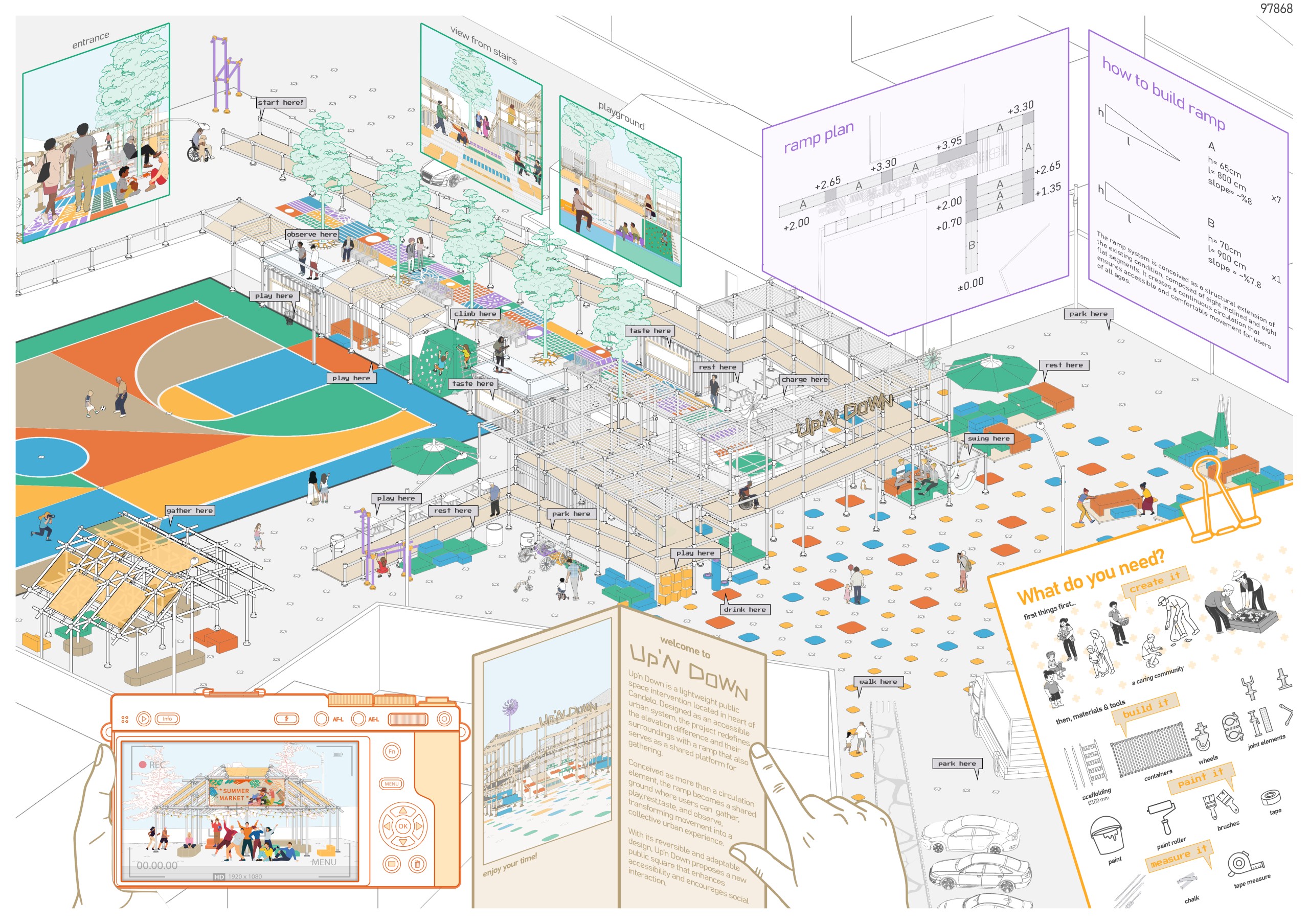
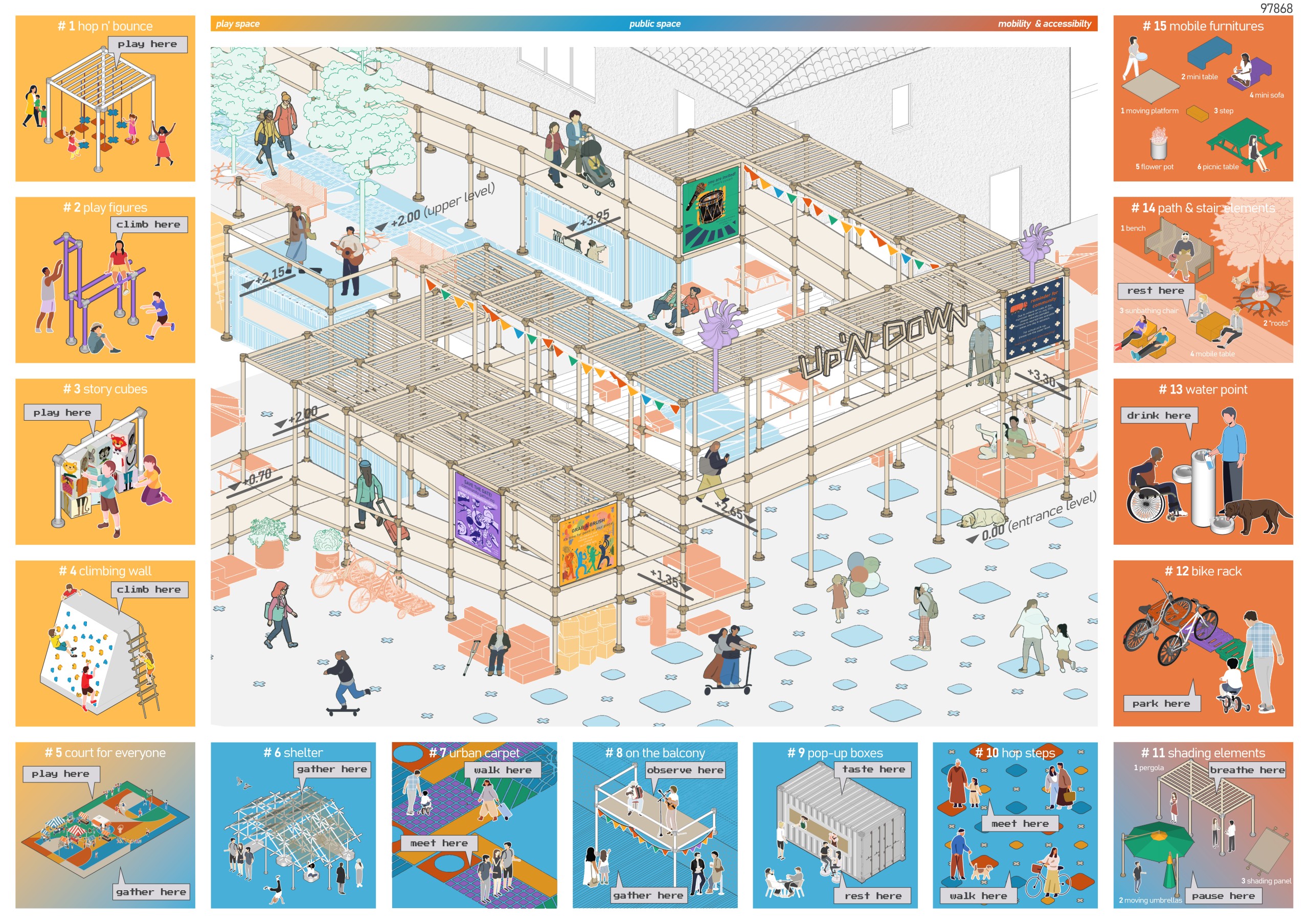
Up’n Down is a public space intervention in Candelo, Italy.
At the entrance to the ramp from the upper level, the existing path is protected by a painted surface. Existing trees have been made visible with minimal intervention around their roots, using simple colored material applications that reinforce the presence of natural elements within the project area.
This level functions as an upper platform offering a comprehensive view of the entire site.
Balconies integrated into the ramp structure provide alternative gathering areas that allow users to experience the project from different perspectives. These elevated platforms frame the surrounding landscape and offering opportunities for new gatherings.
The ramp’s structure relies on a simple scaffolding and connection elements system and can be constructed in less than a day. Positioned on top of the existing staircase, the structure provides uninterrupted access for those who prefer a direct shortcut to the ground floor. Depending on the available budget, the structure can be built directly on top of the existing stairs, providing flexibility and adaptability.
The structure that locates end of the ramp, urban shelter, forms the center of gathering opportunities. Designed as a shared space, the shelter provides a place for the people of Candelo to gather, meet, and interact. It also supports daily use throughout different seasons by offering a shaded and comfortable environment for those using the square.
This intervention activates the area under the ramp, enabling it to be used as an integrated part of the public space. The path running under the ramp, supported by service-oriented areas, creates spaces that directly provide services to users. Simple container units are used as flexible elements that can accommodate public functions such as food kiosks, public restrooms, or areas for seasonal and temporary events.
The existing sports field is redefined as an attractive focal point with a clear color intervention. On weekdays, it serves as an area for daily activities for the children of the neighbouring school, while on weekends it transforms into a flexible open space suitable for flea markets, small concerts, and community events.
Mobile and interchangeable furniture around intervention area allows users to create their own spatial arrangements according to different needs and activities. This flexible system supports both daily use and temporary events, enabling people to adapt the space to suit themselves and actively shape their own gathering and interaction patterns.
The lower part of the intervention was previously used as a parking area. While preserving this function, the project aims to ensure that children can reach school safely. To this end, a small section of the asphalt surface has been de-paved, creating a physical and visual boundary between the parking area and the pedestrian path.
With this lightweight and reversible intervention, a new plaza is proposed that enhances accessibility for the people of Candelo and creates a modern public space rooted in the site’s character.
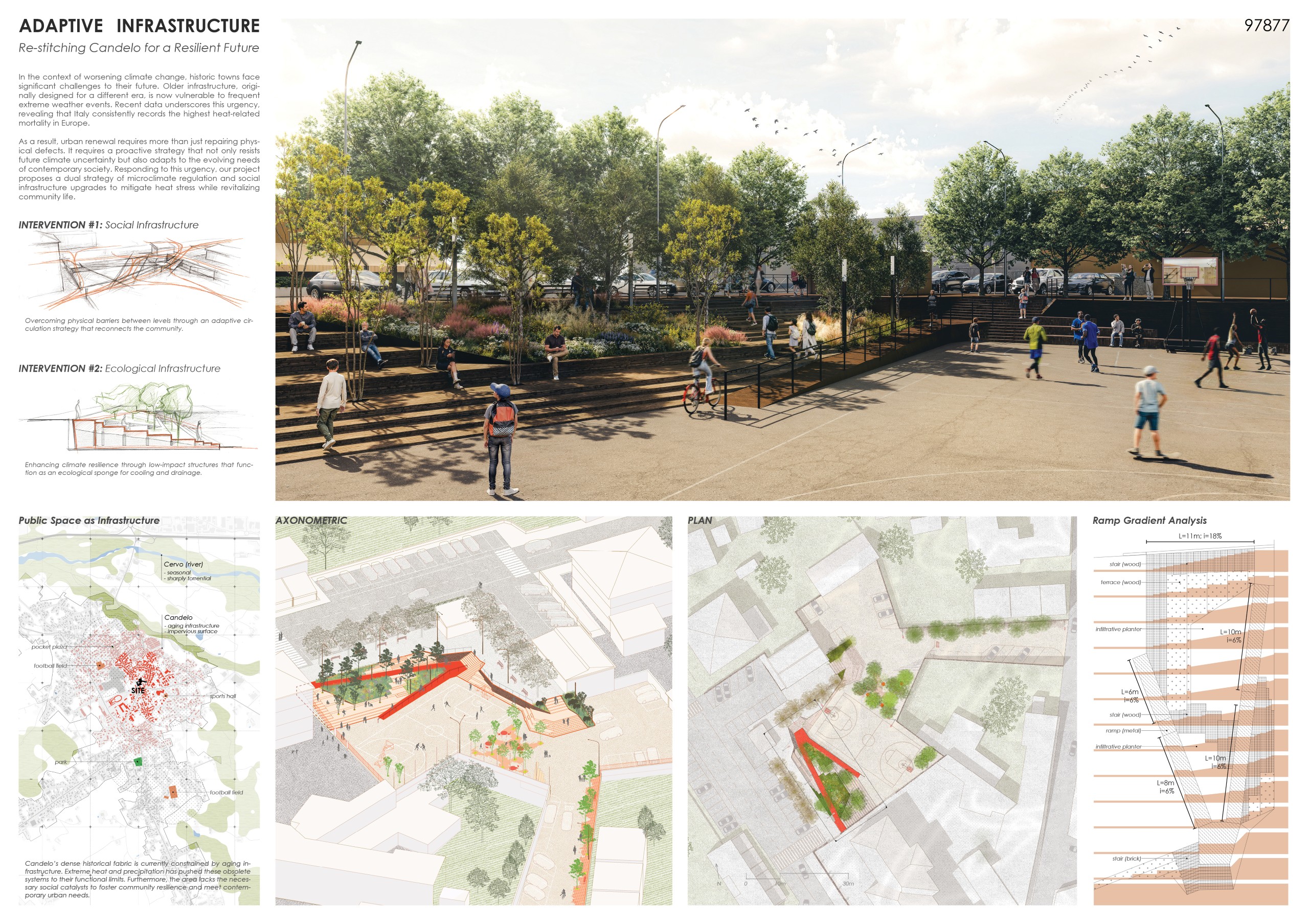
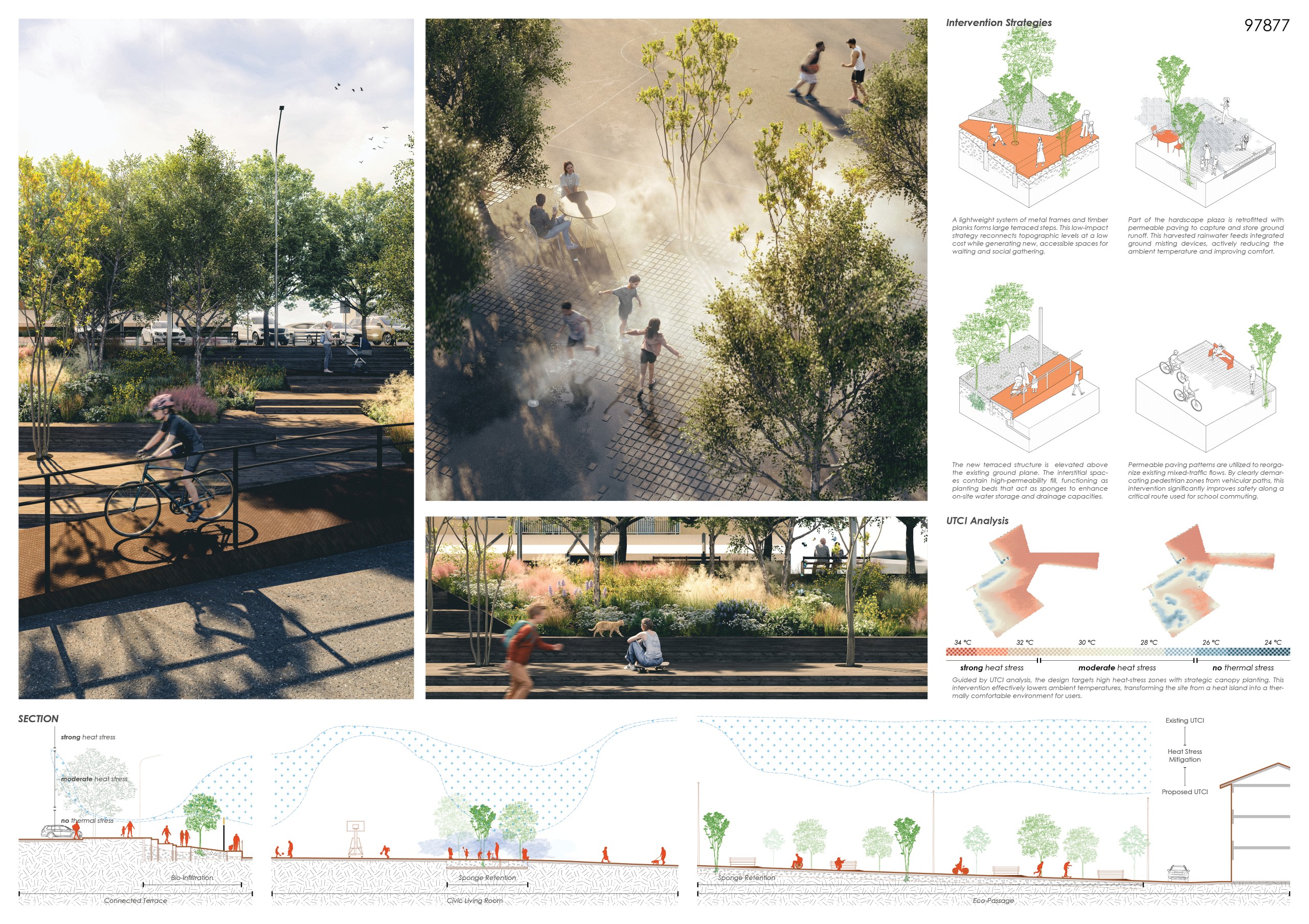
ADAPTIVE INFRASTRUCTURE:Re-stitching Candelo for a Resilient Future
Muyao Zhou, Yuehan Li [China
PROJECT DESCRIPTION
In the context of worsening climate change, historic towns face significant challenges to their future. Older infrastructure, originally designed for a different era, is now vulnerable to frequent extreme weather events. Recent data underscores this urgency, revealing that Italy consistently records the highest heat-related mortality in Europe. As a result, urban renewal requires more than just repairing physical defects. It requires a proactive strategy that not only resists future climate uncertainty but also adapts to the evolving needs of contemporary society. Responding to this urgency, our project proposes a dual strategy of microclimate regulation and social infrastructure upgrades to mitigate heat stress while revitalizing community life.
Candelo’s dense historic fabric is currently constrained by aging infrastructure. Extreme heat and concentrated precipitation have pushed these antiquated systems to their functional limits, while the area lacks the social catalysts needed to meet contemporary urban needs.
Analysis of current circulation revealed the site’s primary constraint: a single narrow staircase connecting the upper and lower levels, restricting access for wheelchairs and cyclists. Addressing this rupture, we proposed a lightweight, low-impact strategy. By inserting a cascading system of steel frames and timber decking alongside accessible metal ramps, we re-stitched the fragmented terrain at a low cost. This new staircase is redefined as a daily passageway for parents and children commuting to and from school as well as a social gathering spot. On the other side of the school entrance, new permeable paving, planting, and movable furniture create another safe gathering space. Parking along Via San Sebastiano was reconfigured, utilizing permeable paving to clearly separate vehicular and pedestrian flows. The existing basketball court was retained and integrated into the new layout; with the addition of movable hoops, it acts as a flexible community space adaptable to various temporary events.
Ecologically, the new structures are elevated above the ground, with gaps filled by high-permeability substrate acting as planting beds to enhance drainage through a “sponge” effect. Runoff collected by permeable paving is channeled to integrated misting devices, actively lowering ambient temperatures. Guided by Universal Thermal Climate Index (UTCI) analysis, the proposal deployed tree canopies in high-heat-stress zones. Ultimately, simulations show this intervention reduces the overall site’s heat stress from “strong” to “moderate,” transforming key waiting areas and main pedestrian paths into thermal comfort zones. Candelo’s new plaza is evolving from a piece of aging infrastructure into a safe, inclusive, and climate-adaptive community core.
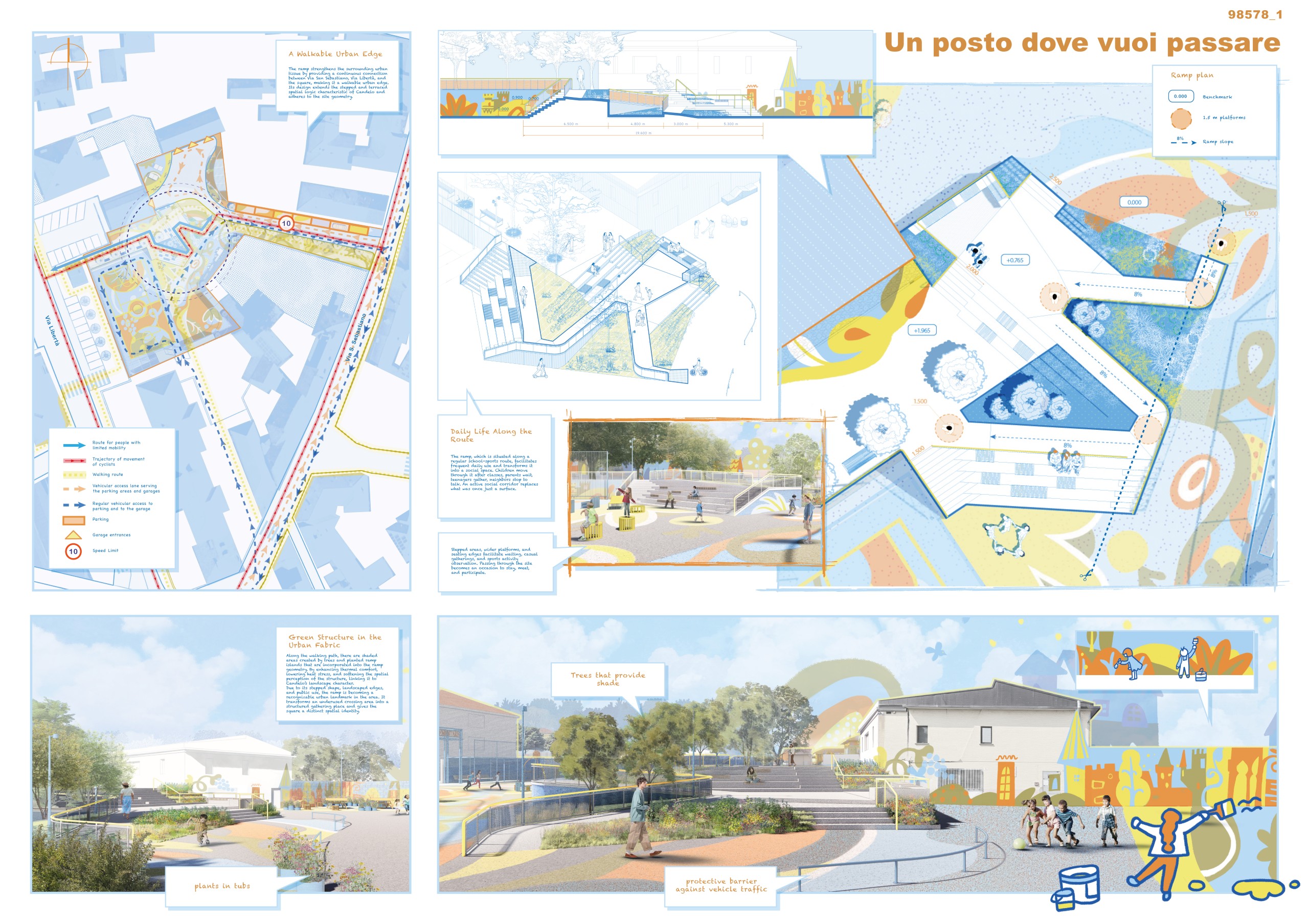
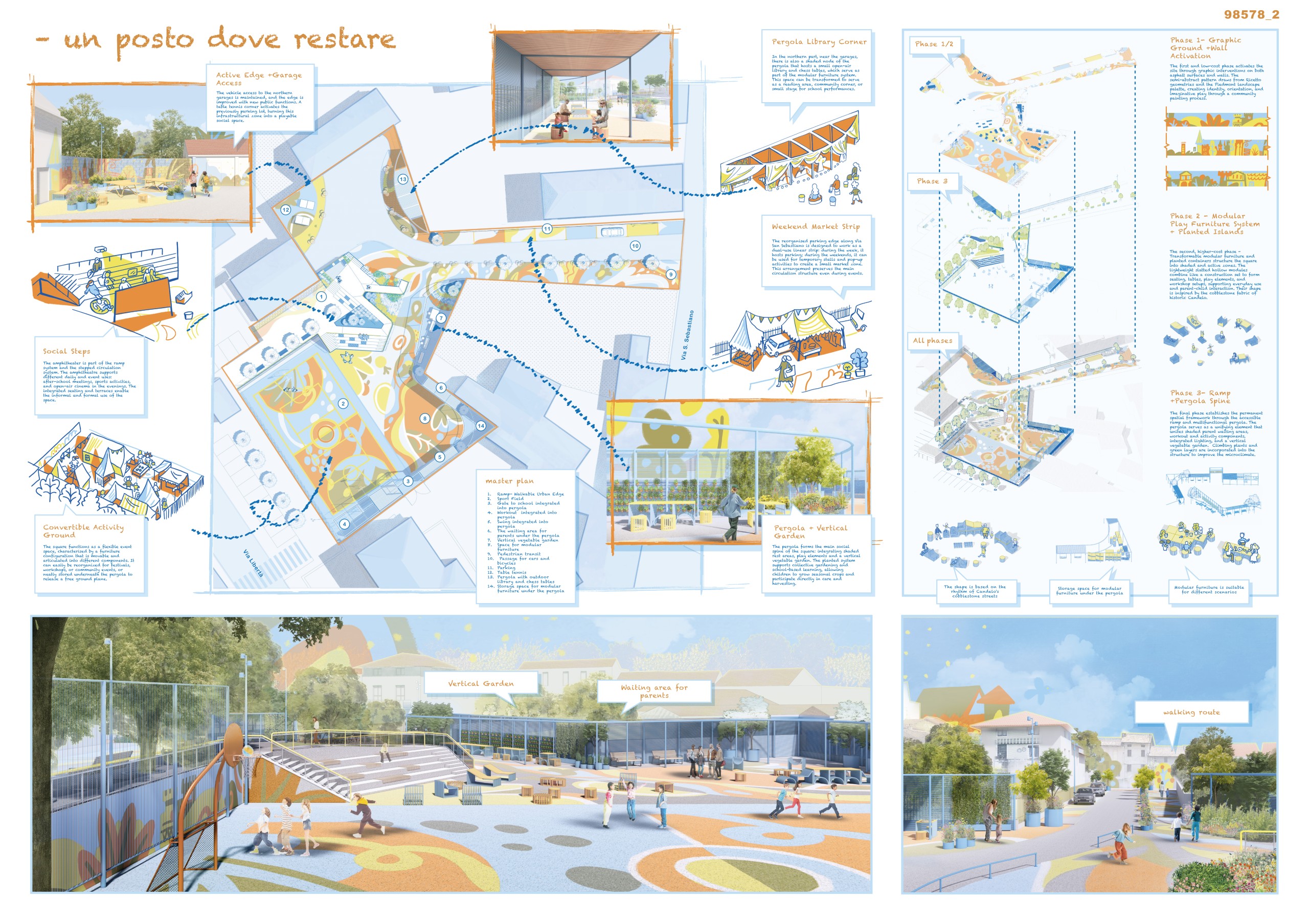
Un posto dove vuoi passare, un posto dove restare
Nataliia Murashova, Maria Knutova, Evdokia Eremeeva [Russia] – www.arch-newest.ru – www.behance.net/DusyaDo
PROJECT DESCRIPTION
Un posto dove vuoi passare, un posto dove restare– a place designed not only for passing through but for staying, meeting, and sharing everyday life. The project transforms this area into a unified public landscape that connects Via San Sebastiano and Via Libertà through an accessible terraced ramp system. Based on Candelo’s stepped morphology and historic fabric, the design defines a clear spatial program– ramp terraces, social steps, pergola spine, and modular activity zones. Thus, the two street levels operate as one continuous civic space without physical or social barriers.
Mobility is reorganized with pedestrian priority to support safe daily use. Parking is relocated along the opposite wall to create a safer school route; the garage access lane is traffic-calmed to 10 km/h and shared with cyclists who continue their route via the ramp toward Via Libertà. Movable planted tubs limit car movement while allowing emergency access.
The intervention is organized as a phased framework that supports gradual realization and community participation. A first low-cost layer activates the site through graphic interventions on the ground and walls. A second layer introduces modular furniture and expands the range of use scenarios. The final layer delivers the permanent ramp and pergola structures.
The ramp forms the main spatial framework– acts as an inhabitable public structure integrated into the site geometry. Its layout extends Candelo’s terraced spatial language into a continuous pedestrian route with platforms and seating edges. Two amphitheater zones are part of the stepped circulation: one facing Via San Sebastiano street, for small gatherings, and a larger one facing the sports field for games, outdoor movies, community activities. Trees planted into ramp islands create shade, improve thermal comfort.
Ground graphics create the primary identity layer. Semi-abstract patterns reference Ricettogeometries and the Piedmont landscape palette through layered color fields and fortified-like motifs interpreted with playful softness. Creative play is supported by non-object drawing. The design is intended for collective drawing so that residents can leave a personal mark.
The transformable modular furniture, made of lightweight latticed hollow elements, is shaped by Candelo’s medieval identity. Modules combine like a construction set into seating, tables and play structures for workshops and parent–child interaction. Because elements are movable, the square can be quickly reconfigured for events.
A multifunctional pergola acts as the social spine, integrating shaded waiting areas, play and workout elements, and a vertical educational garden. In the northern part of the territory, vehicle access to the garage has been preserved, while former parking spaces have been transformed– a small open-air library with chess tables is located under the pergola. In the opposite corner, there are tennis tables, turning the northern part of the territory into an active social area.
Together, the project defines a recognizable civic place that connects levels, community life, and daily routines– ensuring accessibility for everyone – Un posto dove vuoi passare, un posto dove restare – strengthening social presence, local belonging, and a contemporary urban identity for Candelo.
Banco Di Corallo
Nathan Ma [Hong Kong]
PROJECT DESCRIPTION
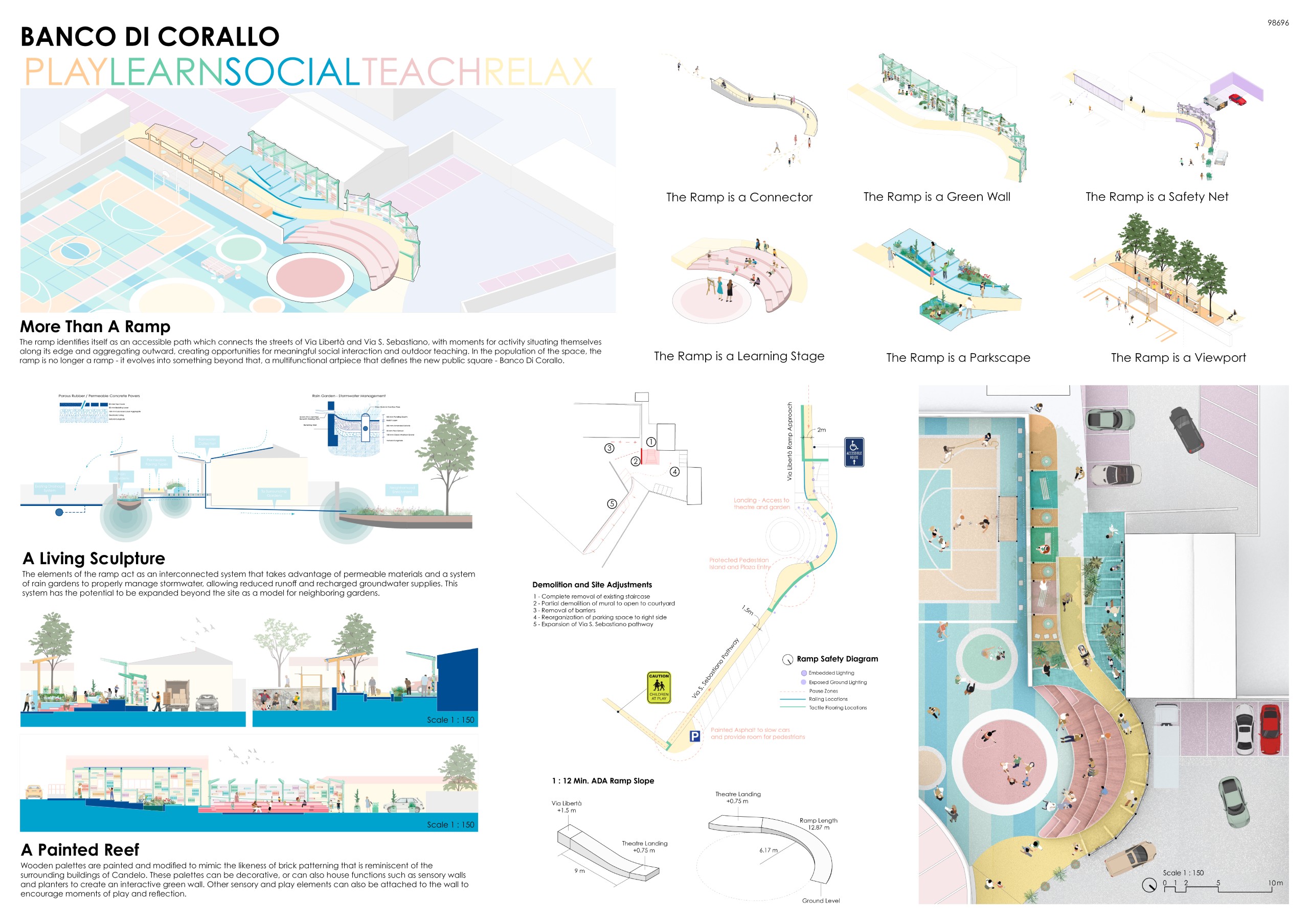
Una volta c’era il mare – A vast canvas of uninhabited voids and open space. Where the movement of daily life lingers, but meaning has not yet arrived.
The site is defined by a series of hard edges that enclose pockets of space adjacent from each other, each with their own unrelated activities. In their current state, they remain isolated by way of physical barriers and necessary transportation access.
Sotto, si forma un banco di corallo – An active and ever-changing space formed beneaththe ripples of people that come and go. The vibrant hues of activity spill into the space and bring it to life.
The first section of this project seeks to create an intervention that mitigates the separation of spaces – the ramp: an inclined surface connecting different levels. However, a ramp can be so much more:
It is the garden that serves as a place of relaxation and contemplation. It is the classroom which students and teachers can enjoy on a good day. It is the public stage for performance and play. It is the safety barrier that defines the boundary between people and transport. It is the grand entrance that channels circulation to the larger public space. Through the differentstages, the ramp becomes a sculpture for the people – a space of endless potential and expression.
The ramp also takes advantage of sustainable strategies such as rain gardens and permeable pavers to manage stormwater and promote urban cooling, transforming the ramp into a truly living sculpture that integrates itself and enriches the urban context around it.
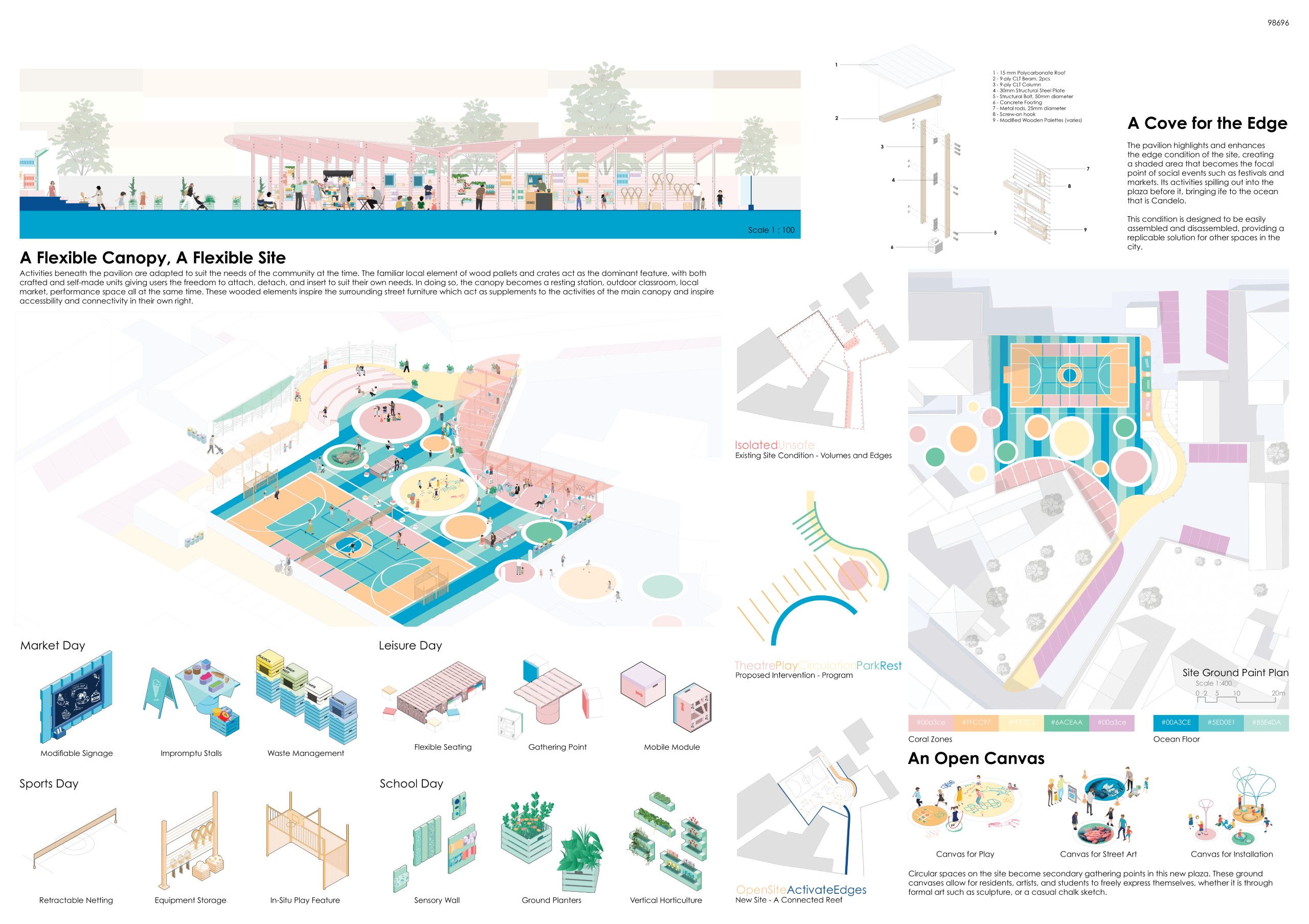
The second section of this project takes inspiration from the familiar local elements of wooden pallets and crates to create a series of framework elements which provide the public of Candelo the means to support varying degrees of meaningful communal activities.
A wooden pavilion takes the hard edge of the public square and softens it into a place of gathering and rest for busy parents and weary travellers alike. This space then becomes the foundation for local festivals and markets, with the potential to house various booths and games. The movable tables, crates, and seating elements allow for the full flexibility of activities to flow into the greater public square, setting the stage for other events such as sports activities and communal farming.
The edge of the pavilion extends out, with wall ornaments and garden crates wrapping around along Via San Sebastiano. This defines a clear boundary between pedestrian and existing vehicular circulation to create a safer, more pleasant transitional corridor.
If Candelo is the ocean, then this square is its reef. The rich colours of the street furniture are enhanced by the community that inhabits it. In the using of the space, the once dull concrete will be brought to motion, like the rolling of the waves.
Campetto
Agnieszka Filipowicz [Poland] – www.studiopauza.com
PROJECT DESCRIPTION
Campetto (noun): A small field or open space; a diminutive form of the Italian word ‘campo’. Used to describe a minor public or communal area, typically a place for gatherings, play, or informal outdoor activities.
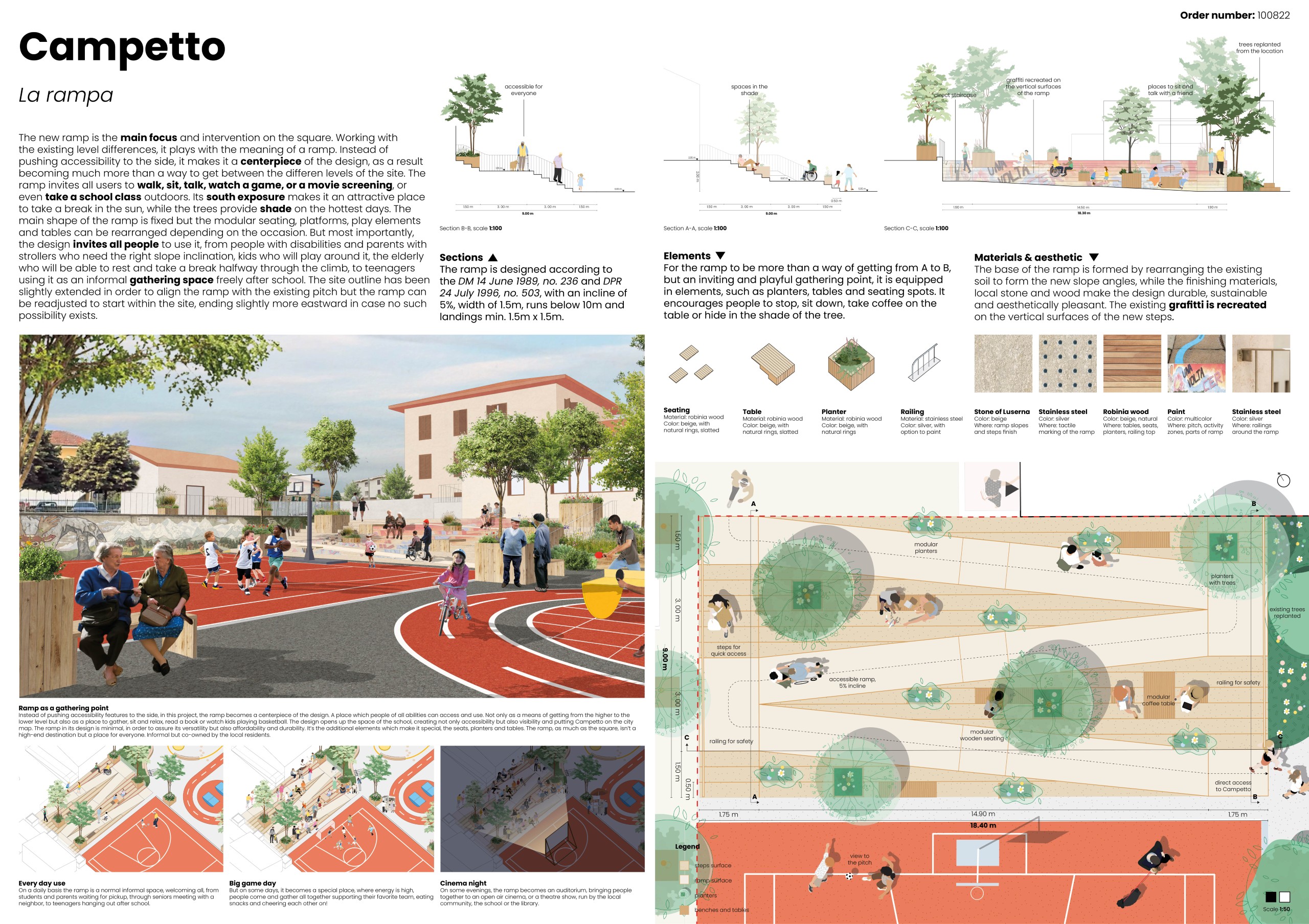
The heart of Campetto is its new ramp. More than just a way to move between the site’s level differences, the ramp is the centerpiece of the square. Its gentle slope and modular design invite everyone, from students and parents with strollers to seniors, people with disabilities, and teenagers, to walk, sit, play, or relax. The south-facing ramp is shaded by trees on the hottest days, making it both a comfortable spot to rest and a lively gathering point. Modular seating, platforms, and play elements can be rearranged, allowing the ramp to shift from a quiet place for reading to an informal stage for a school class, a film screening, or a sports game. While the design follows the required regulations, it doesn’t push accessibility to the side but makes it a key element shaping the space.
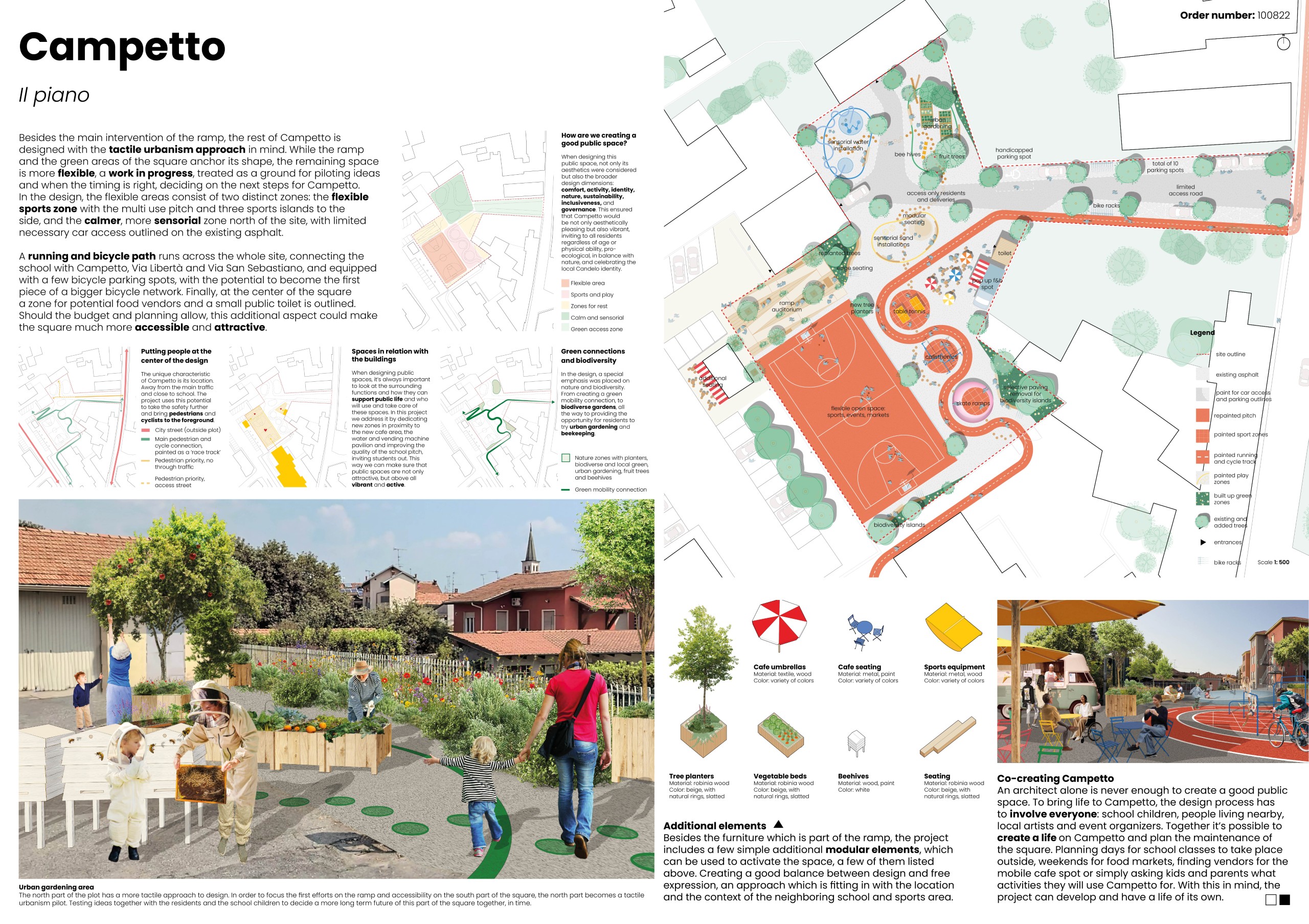
Around the ramp, Campetto is shaped with flexibility in mind. The square combines active and calm zones, from a sports pitch and islands in the southern part, to a quieter, sensorial north area where limited car access is maintained. A running and bicycle path connects the square with the school, Via Libertà, and Via S. Sebastiano, offering potential for a larger network of green mobility. At the center, a space for food vendors and a public toilet is outlined, creating opportunities for gathering and everyday convenience, if the budget allows.In further phases of the design, point lighting around the pitch and linear lighting around the activity areas will be incorporated.
Campetto is not only about function but mostly about life. By putting people at the center, the project celebrates the local Candelo identity, strengthens connections with nearby buildings, and prioritizes safety by bringing pedestrians and cyclists to the foreground. Nature and biodiversity are integrated throughout, from green pathways to biodiverse gardens, urban gardening, and even beekeeping. The north part of the square is a pilot for tactile urbanism, giving residents and schoolchildren a chance to co-create its long-term future.
The square comes alive in many ways. On a normal day, people move through its spaces naturally. On big game days, energy peaks as the ramp hosts cheering crowds. In the evenings, it transforms into an open-air cinema or a stage for the local community. Every element, from seating to planters, is minimal but versatile, ensuring the ramp and square remain affordable and durable, a place co-owned by those who use it.
This project emphasizes that an architect alone is never enough to create a good public space. To bring life to Campetto, the design process has to involve everyone, from school children and people living nearby to local artists and event organizers. By involving the community at every step, Campetto can develop and have a life of its own.
Finalists
(ordered by registration code)
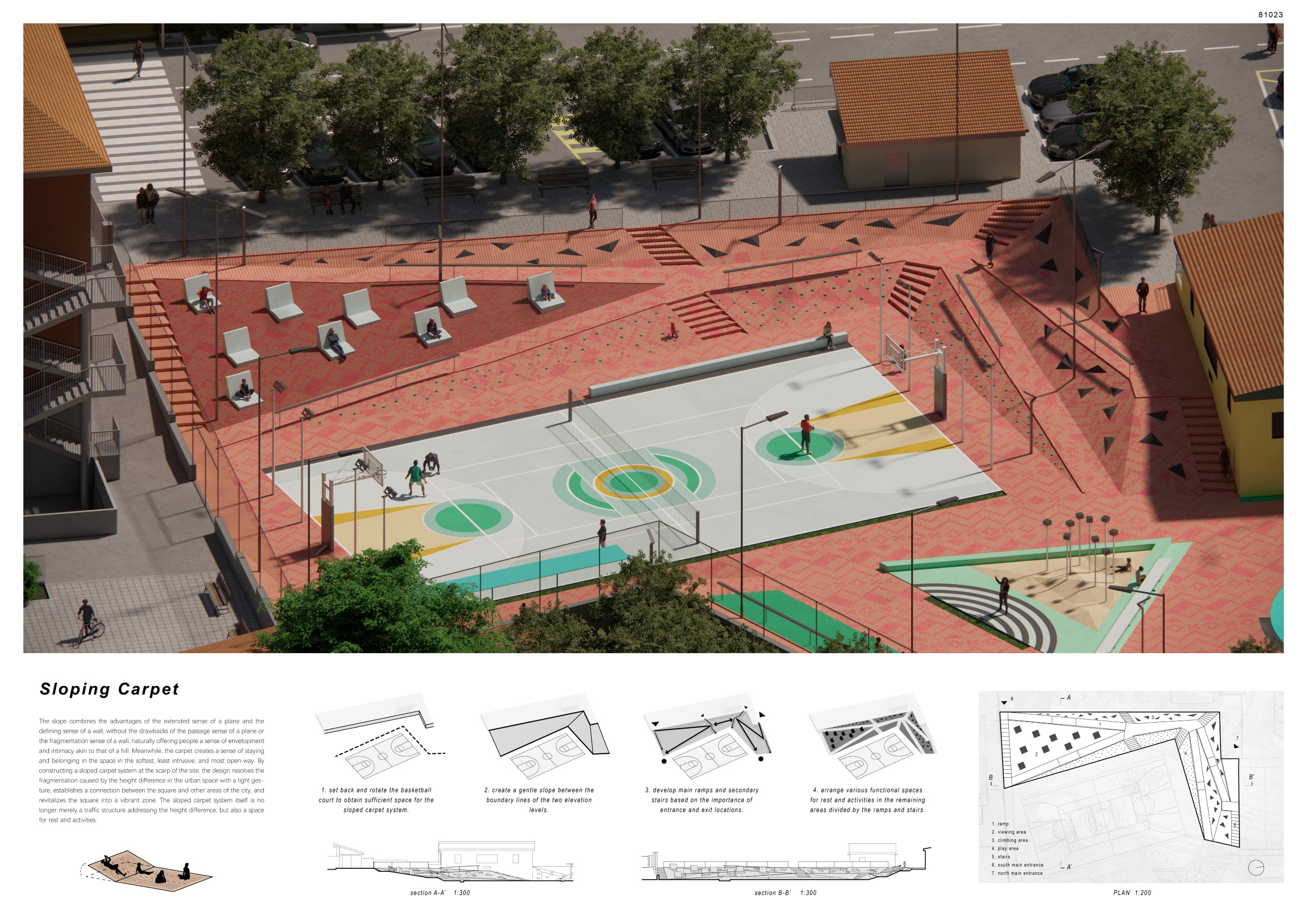
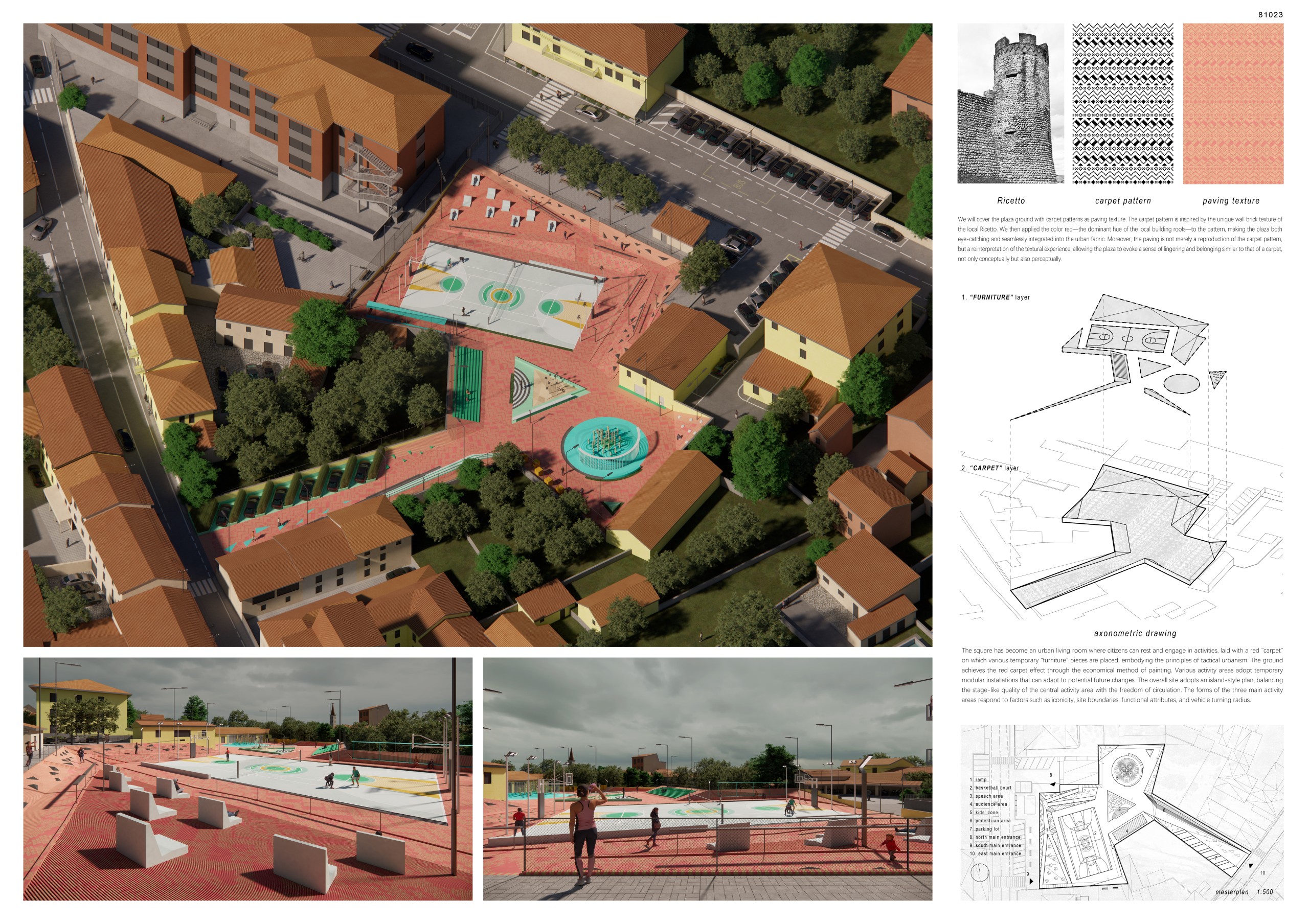
sloping carpet
Lei Mao, Xiaoju Liao [China]
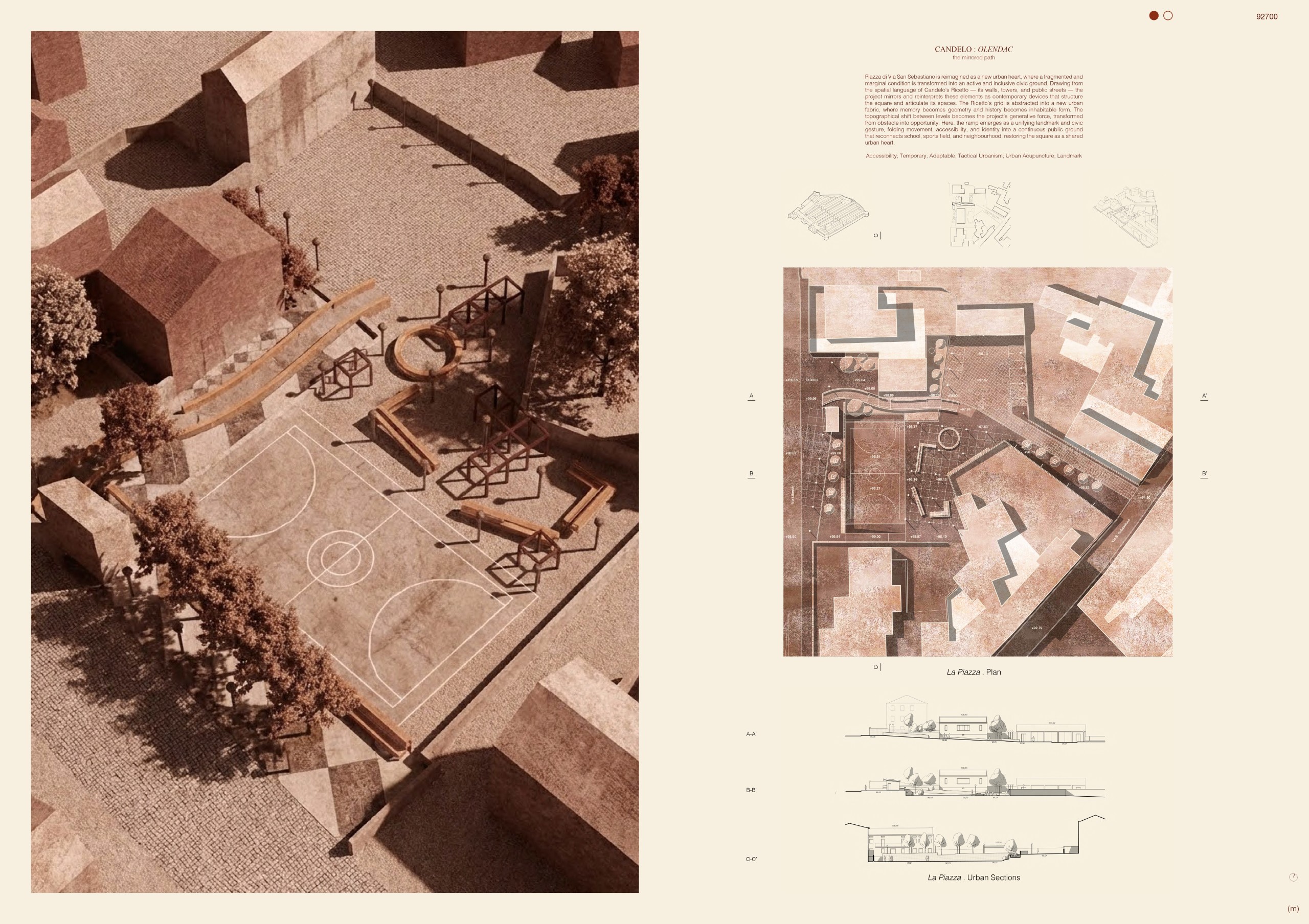
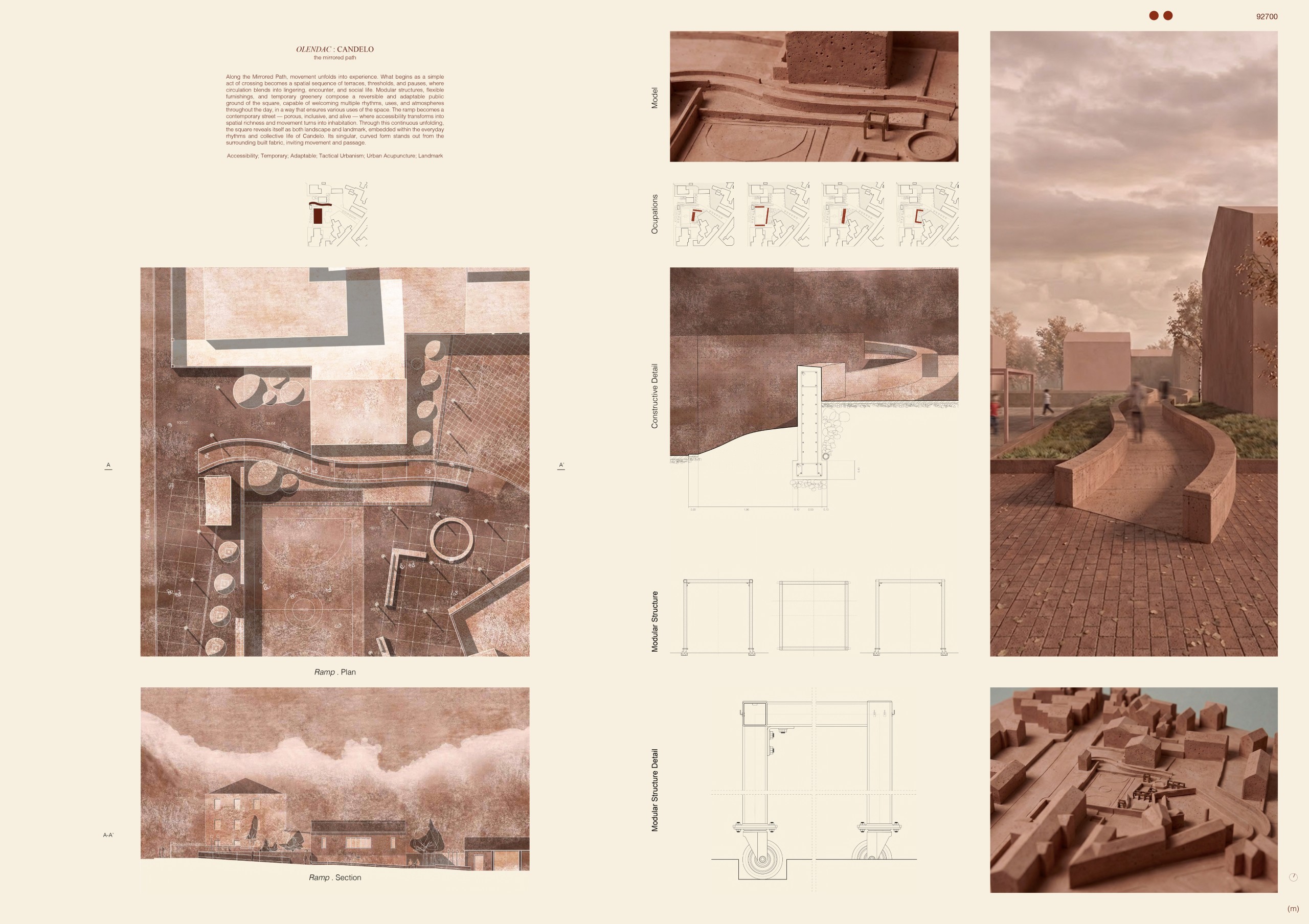
Candelo:olendaC – The Mirrored Path
Beatriz Isabel de Freitas Gordinho, António Pereira, Diogo de Sousa, Francesca Dal Cin [Portugal – Italy]
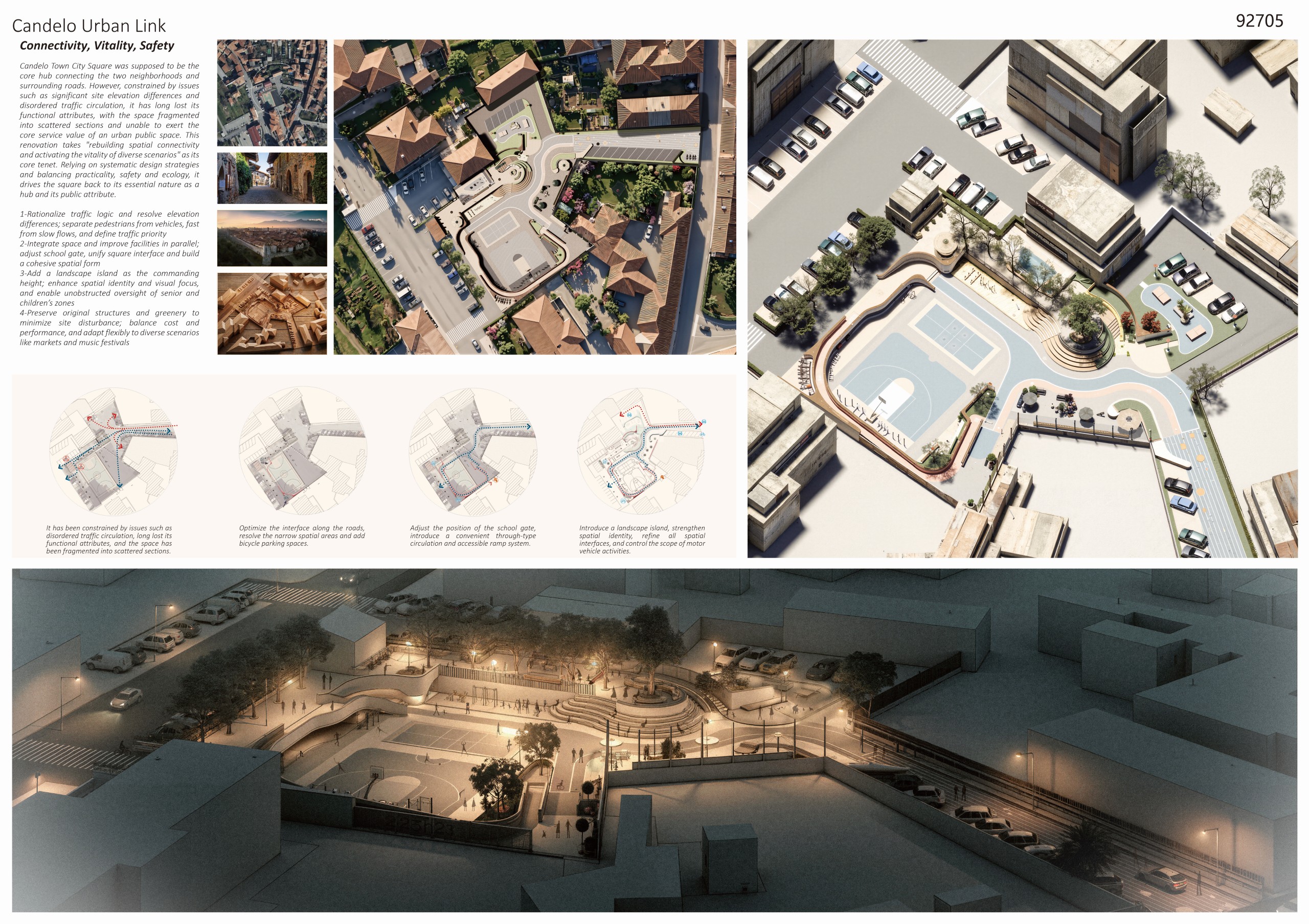
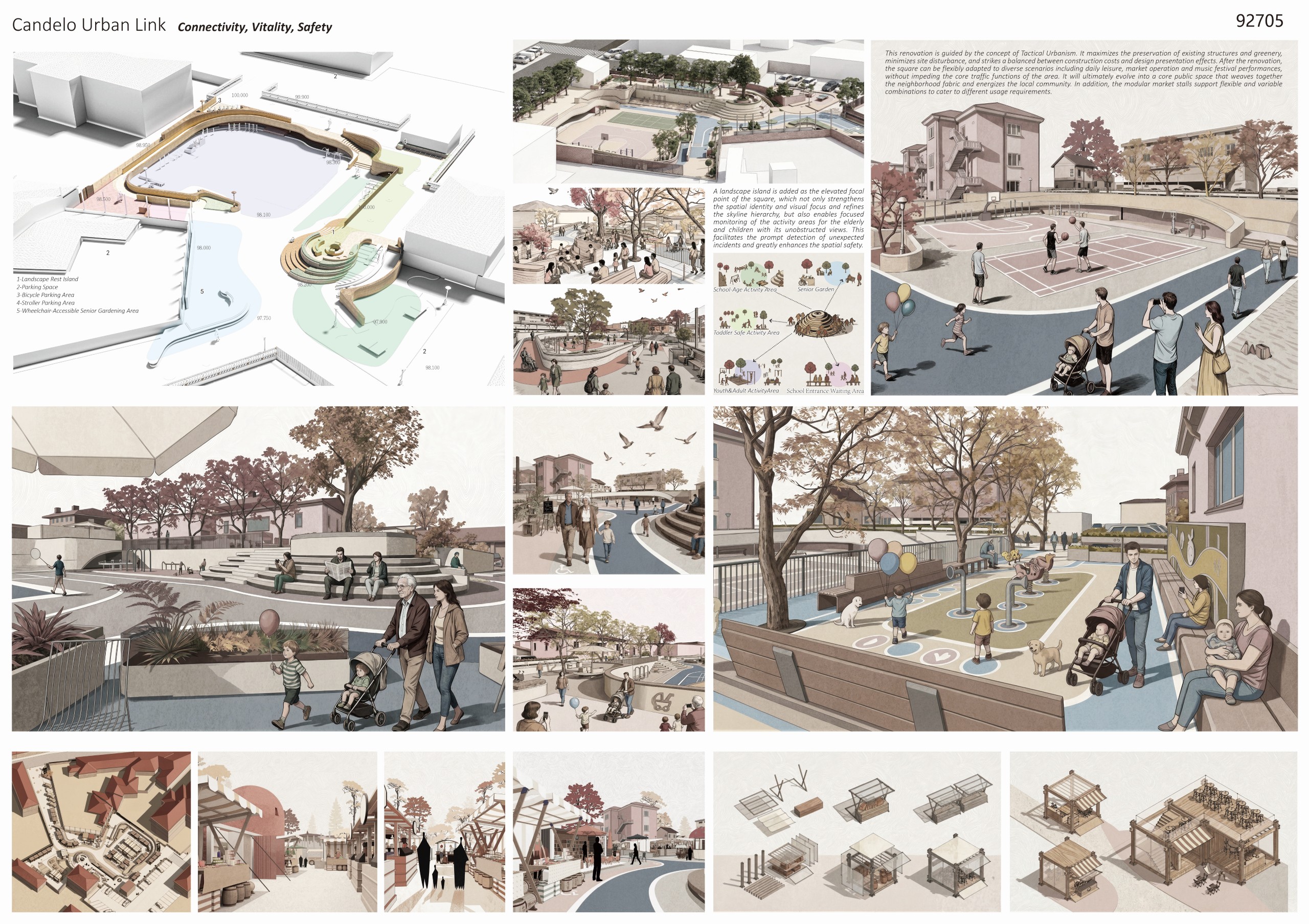
Candelo Urban Link
Liang Ma, Xiao Yi Luo [China]
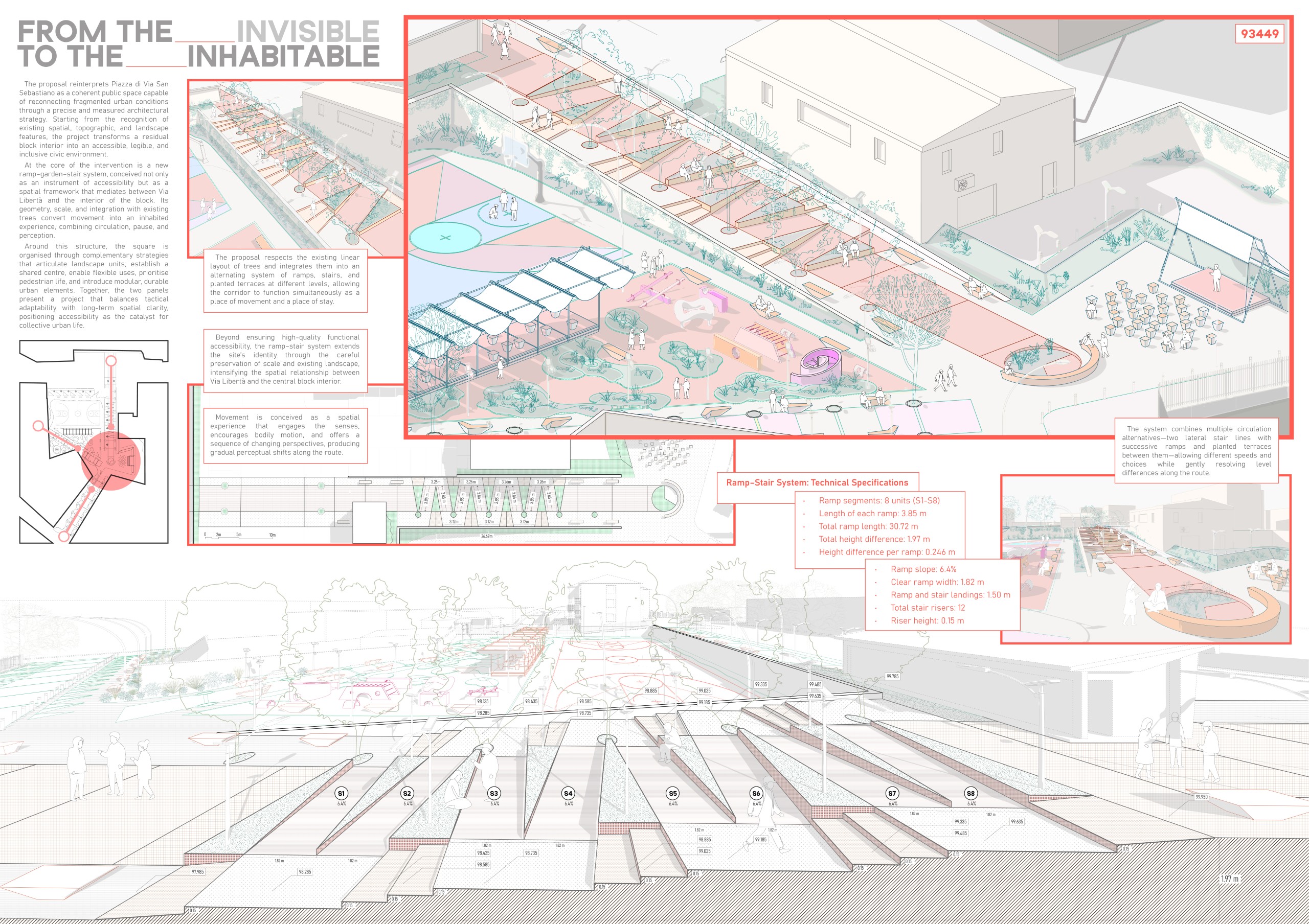
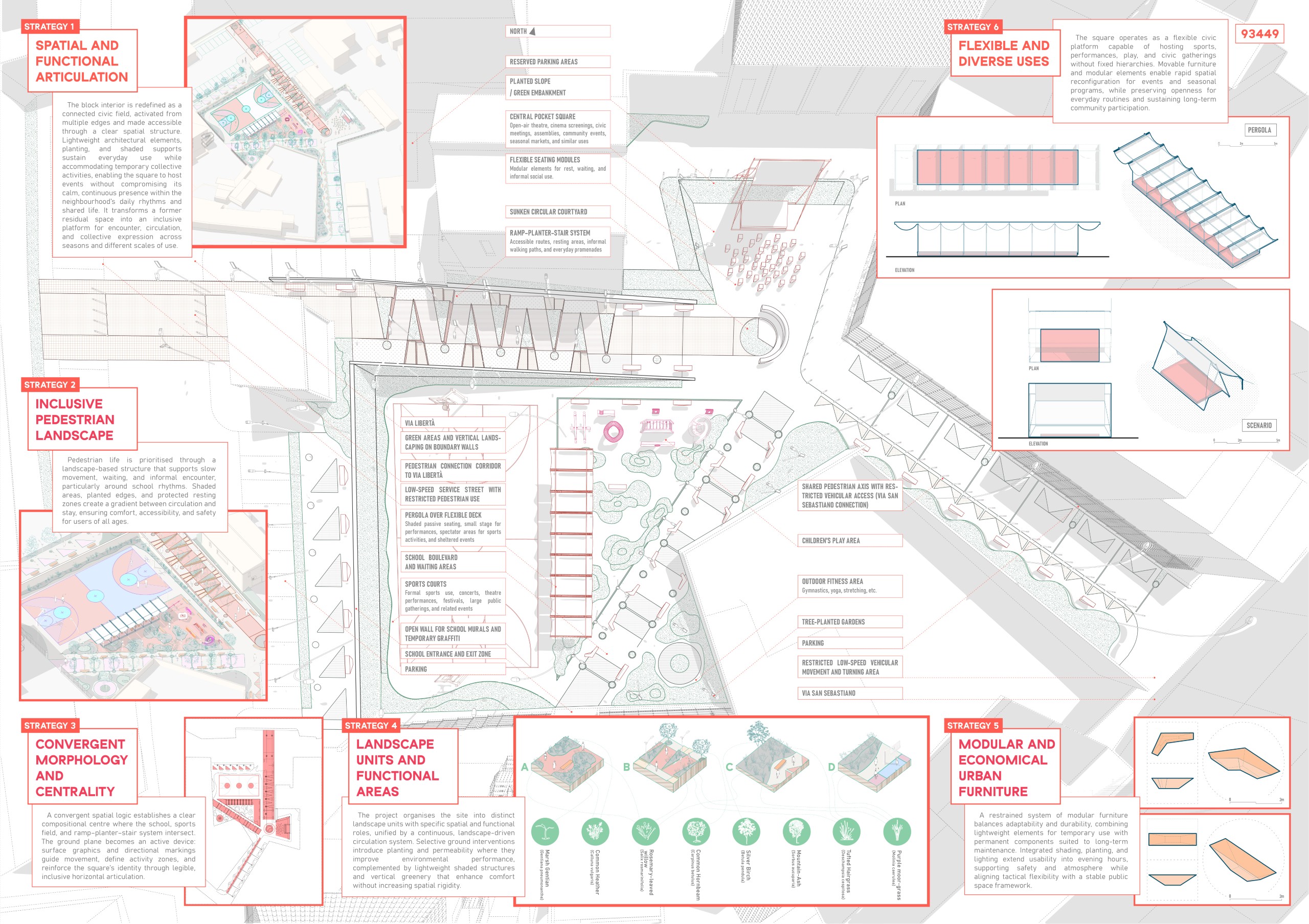
FROM THE INVISIBLE TO THE INHABITABLE
Sergio Trujillo Jaramillo, Sebastián Trujillo-Torres, David Torres Ramirez [Colombia] – www.chaalchaal.com
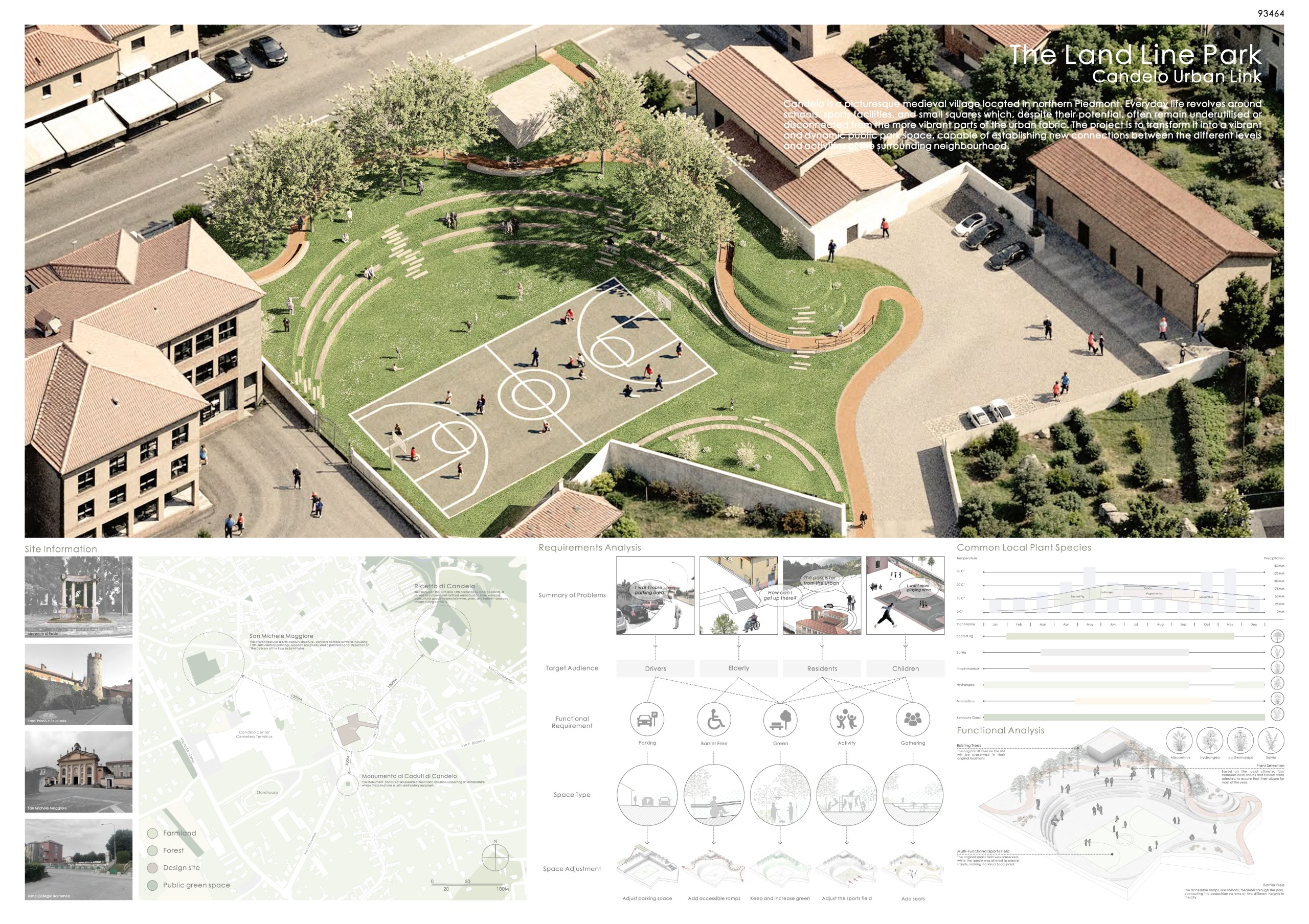
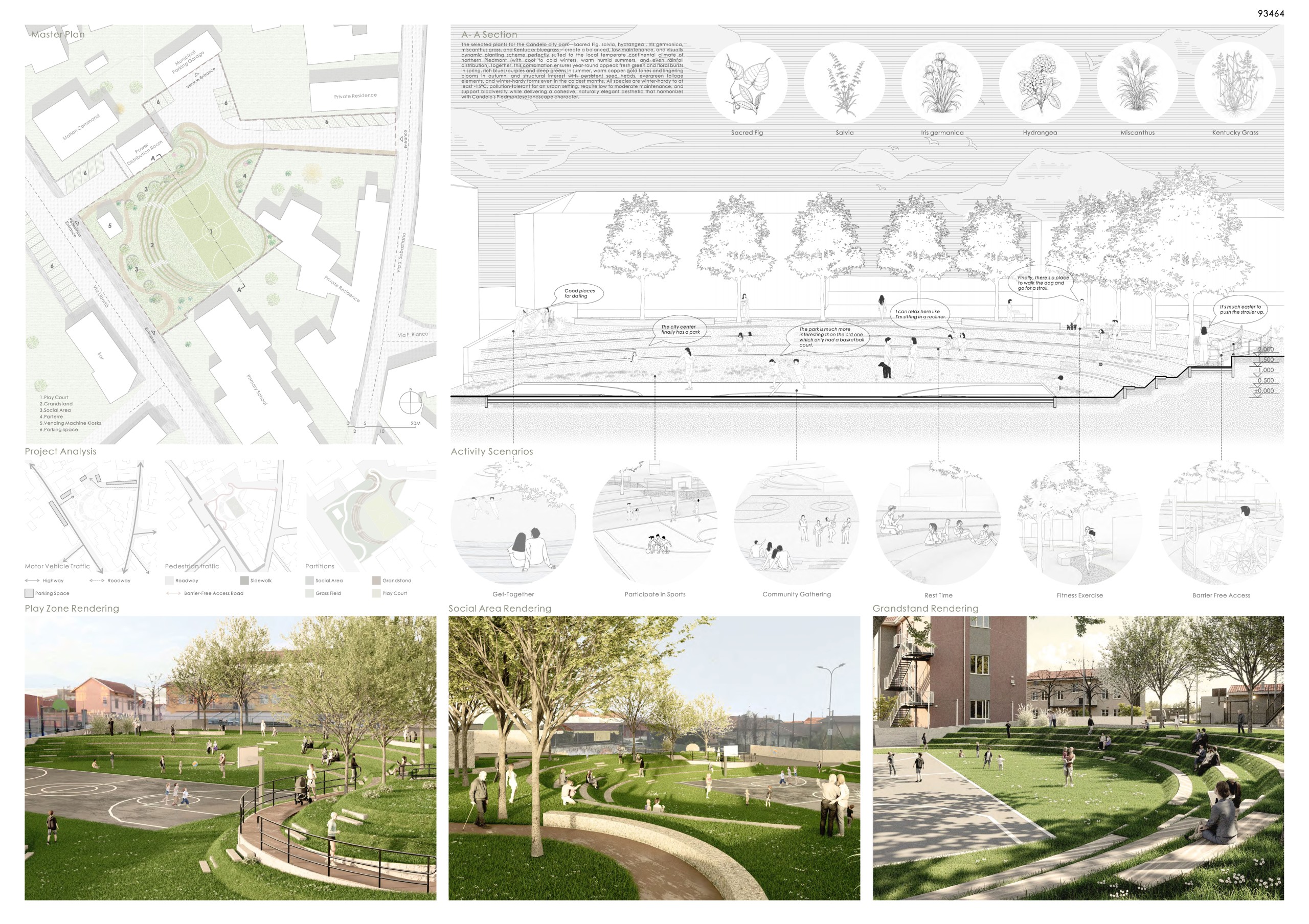
The Land Line Park
Xiangju Wang, Shangfeng Li [China]
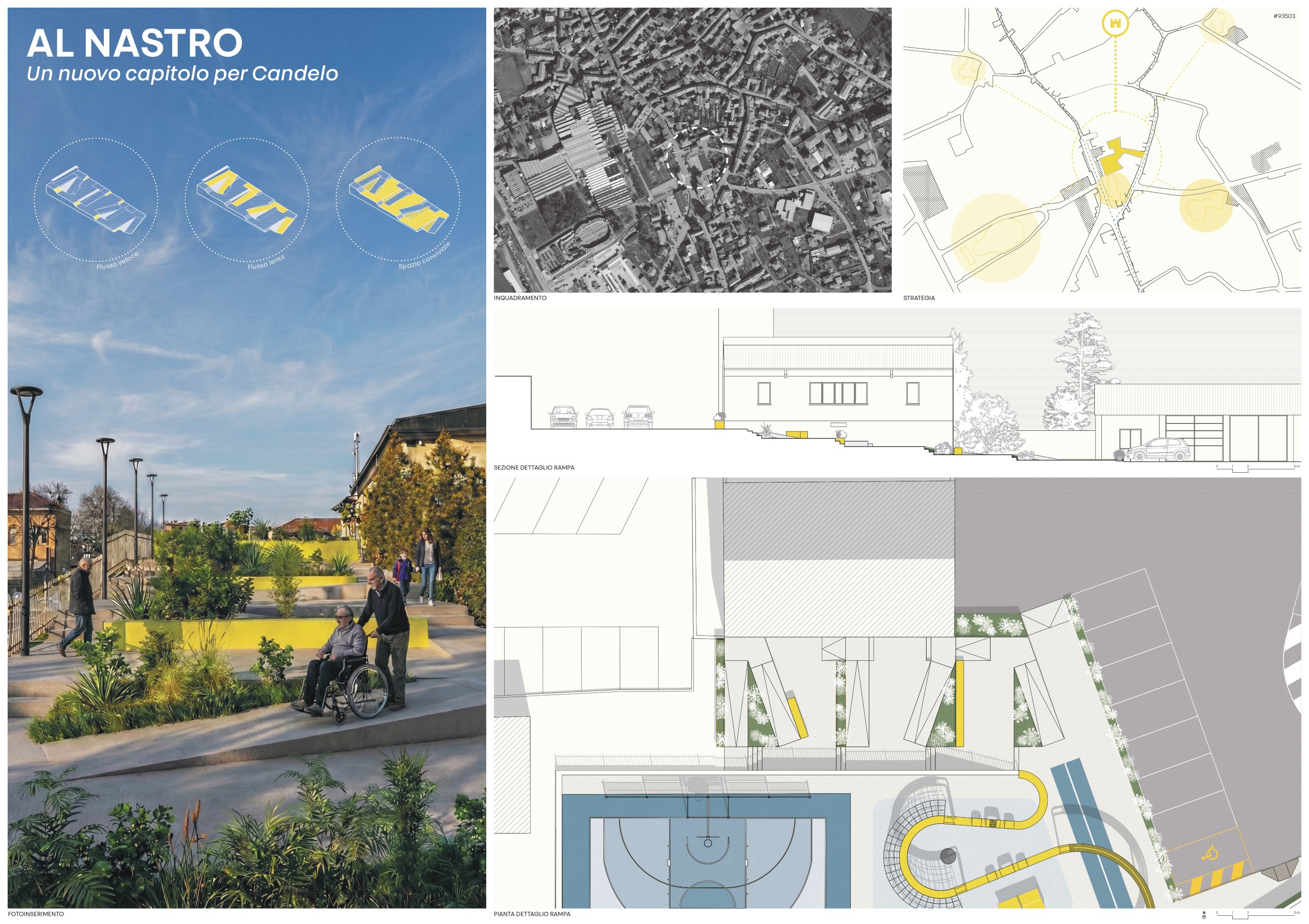
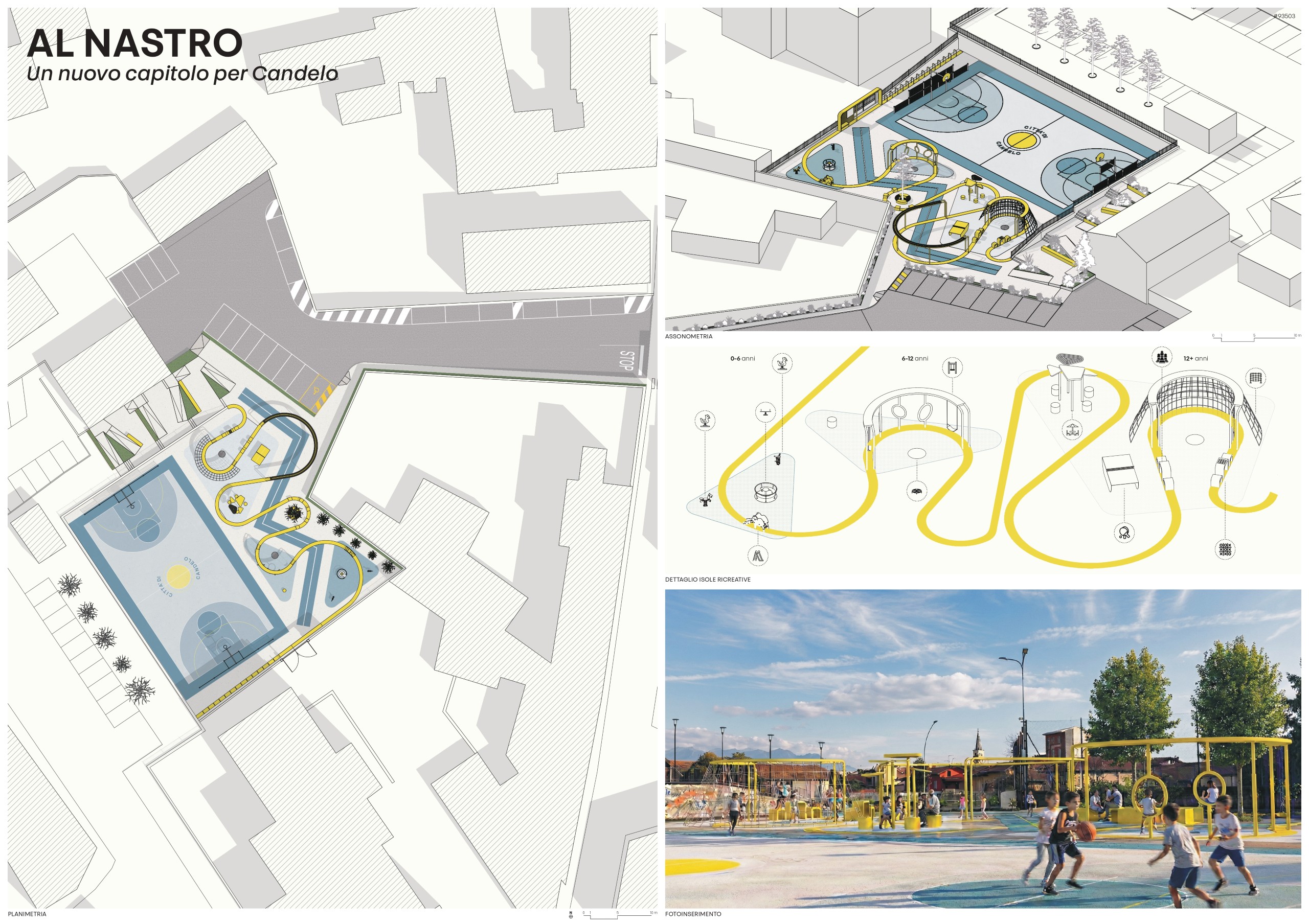
AL NASTRO_Un nuovo capitolo per Candelo
Martina Dall’Ara, Sebastiano Colombo, MicheleBianchessi [Italia]
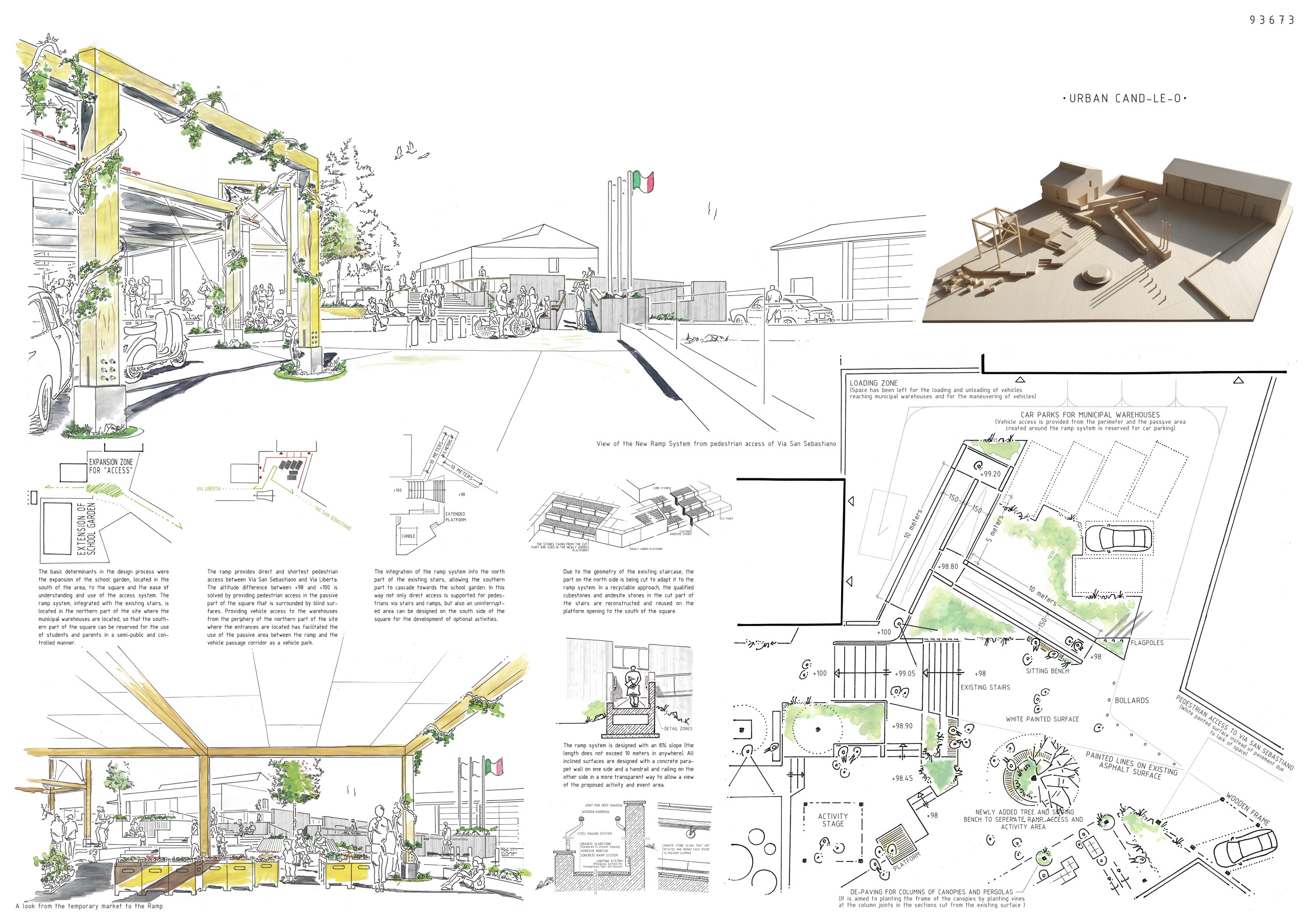
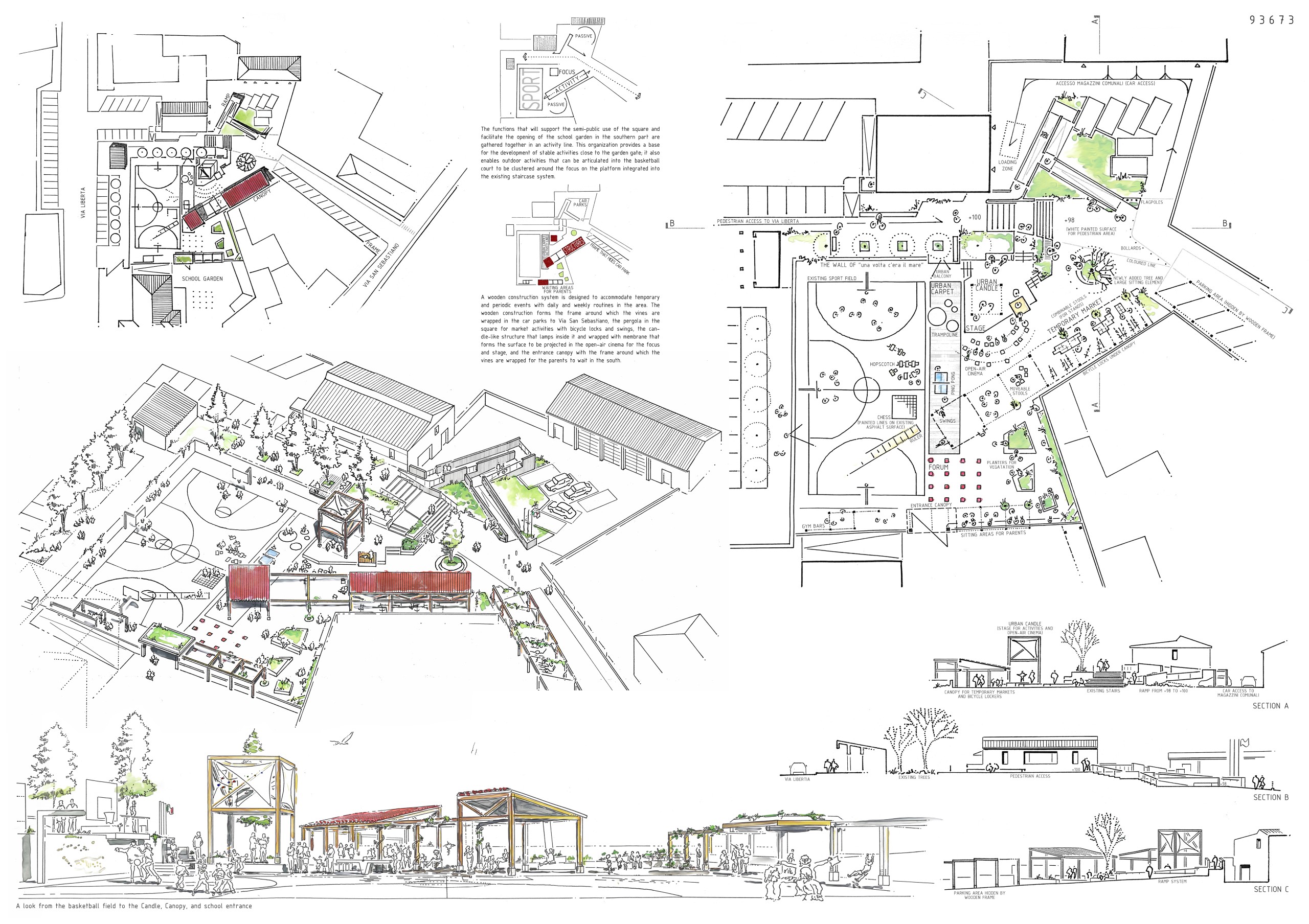
SILENT THRESHOLD
İnci Shoainia, Emil Shoainia [Turkey]
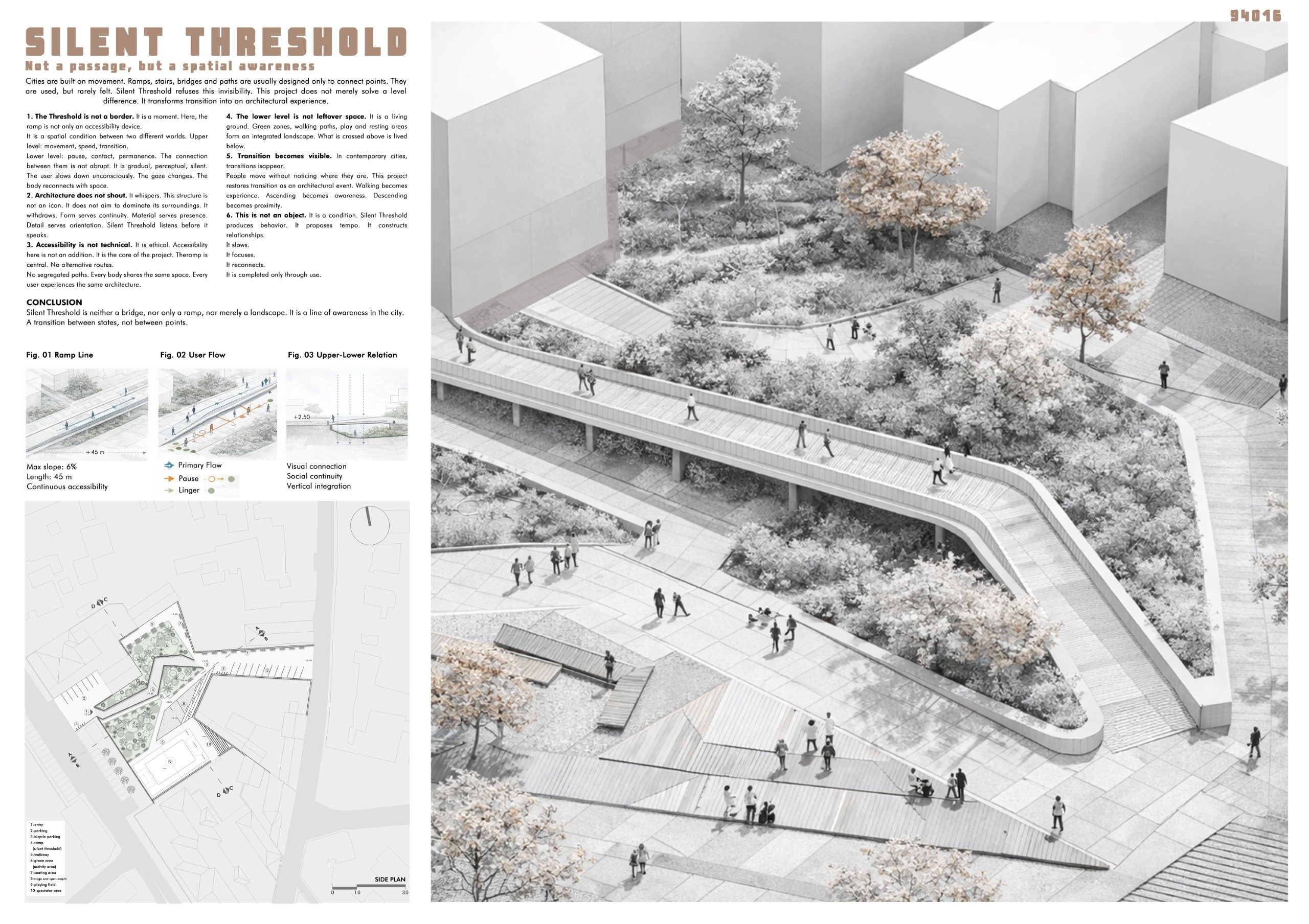
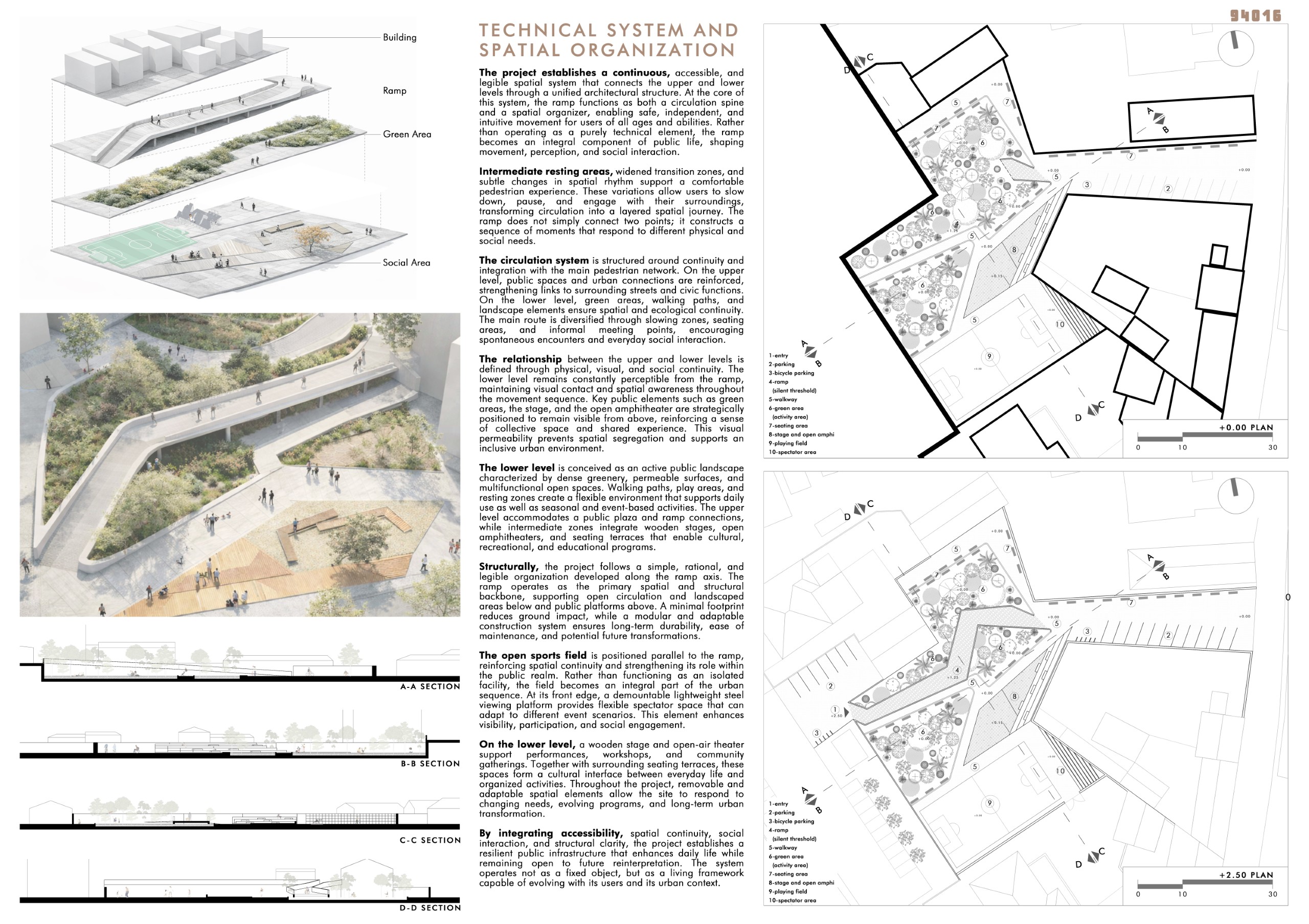
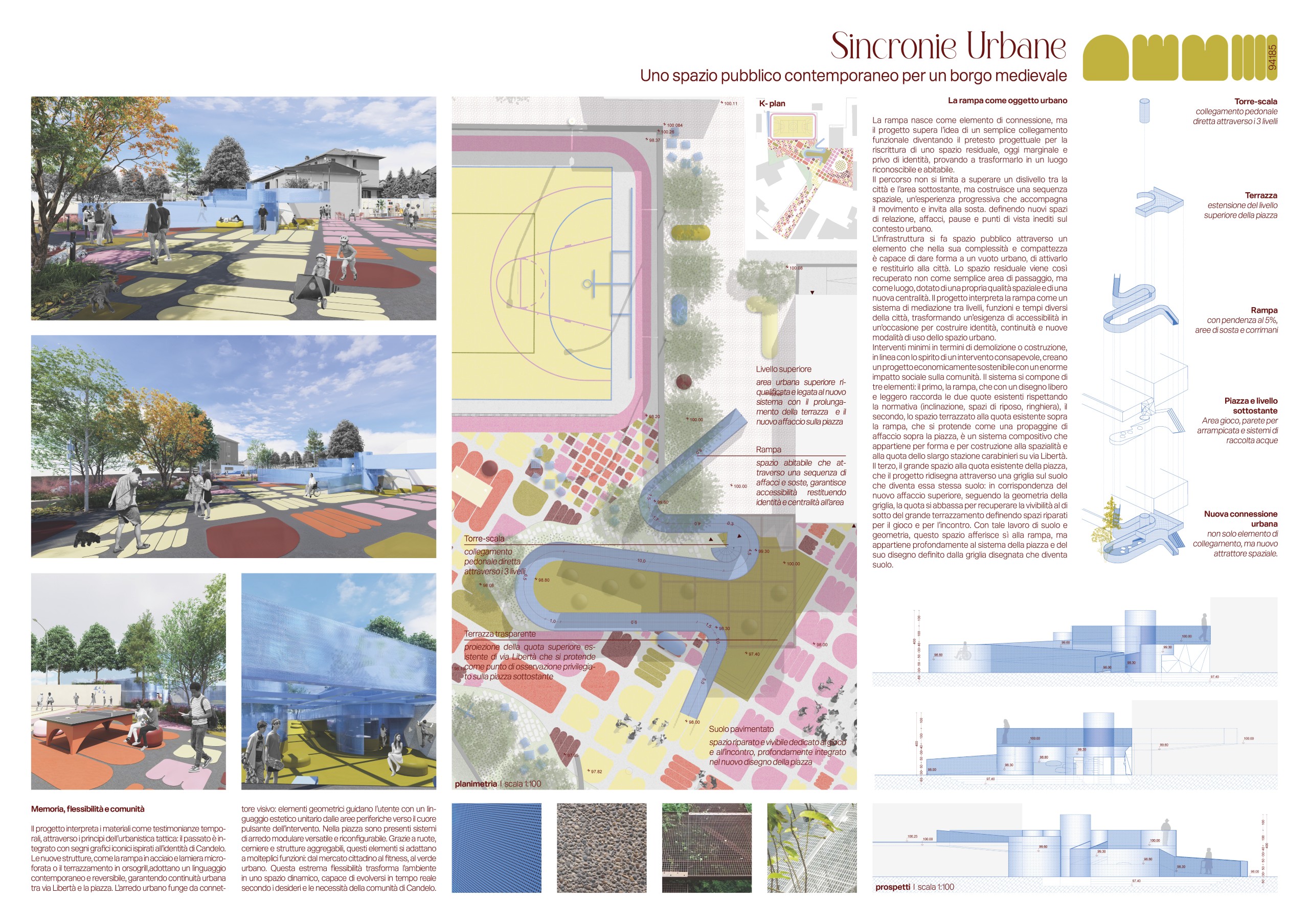
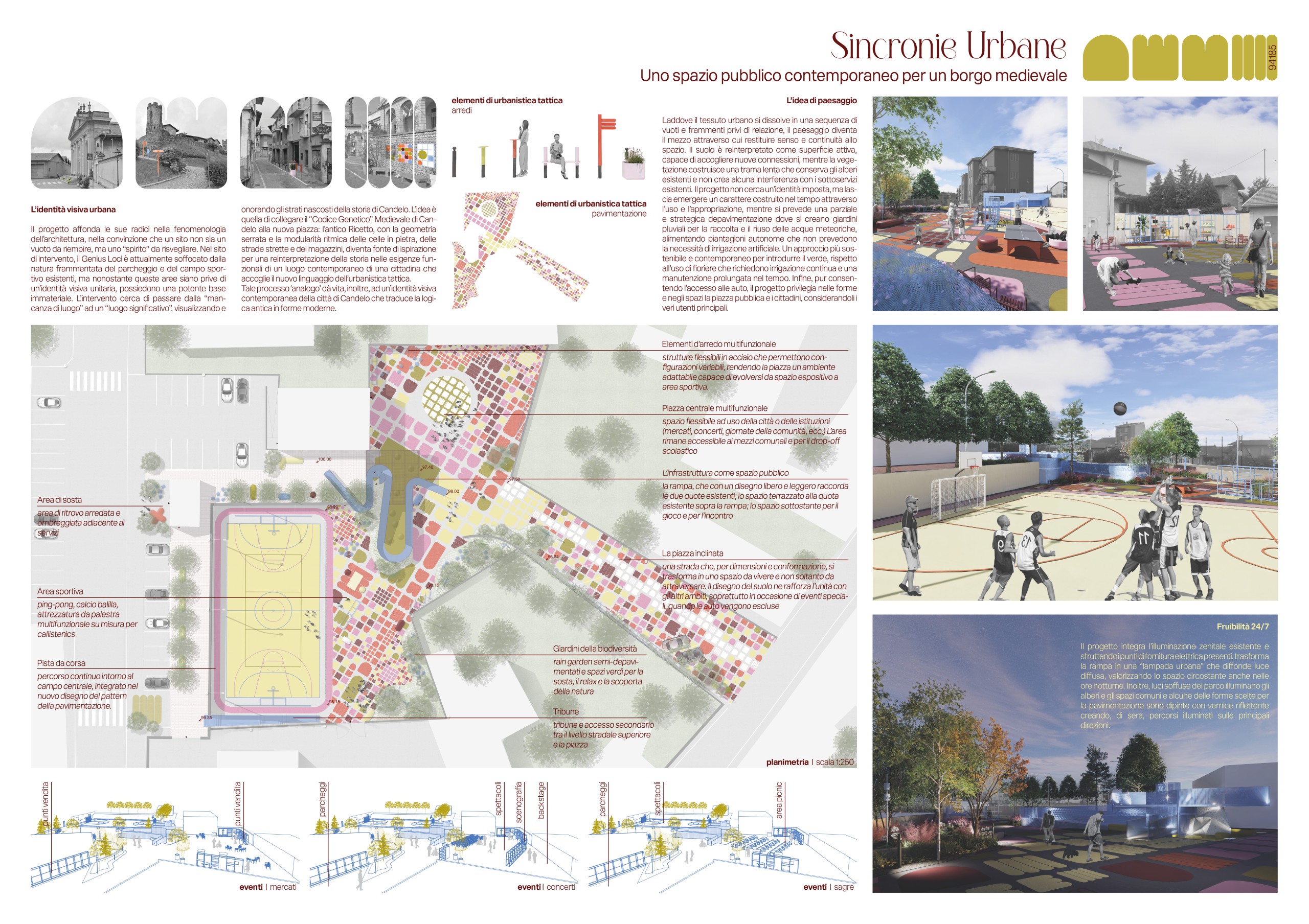
Sincronie Urbane
Progetto Verde soc.coop.ARL, Paola Cannillo, Gabriella Sogor, Fabiana Longo [Italy – Ungary] – www.progettoverde.eu
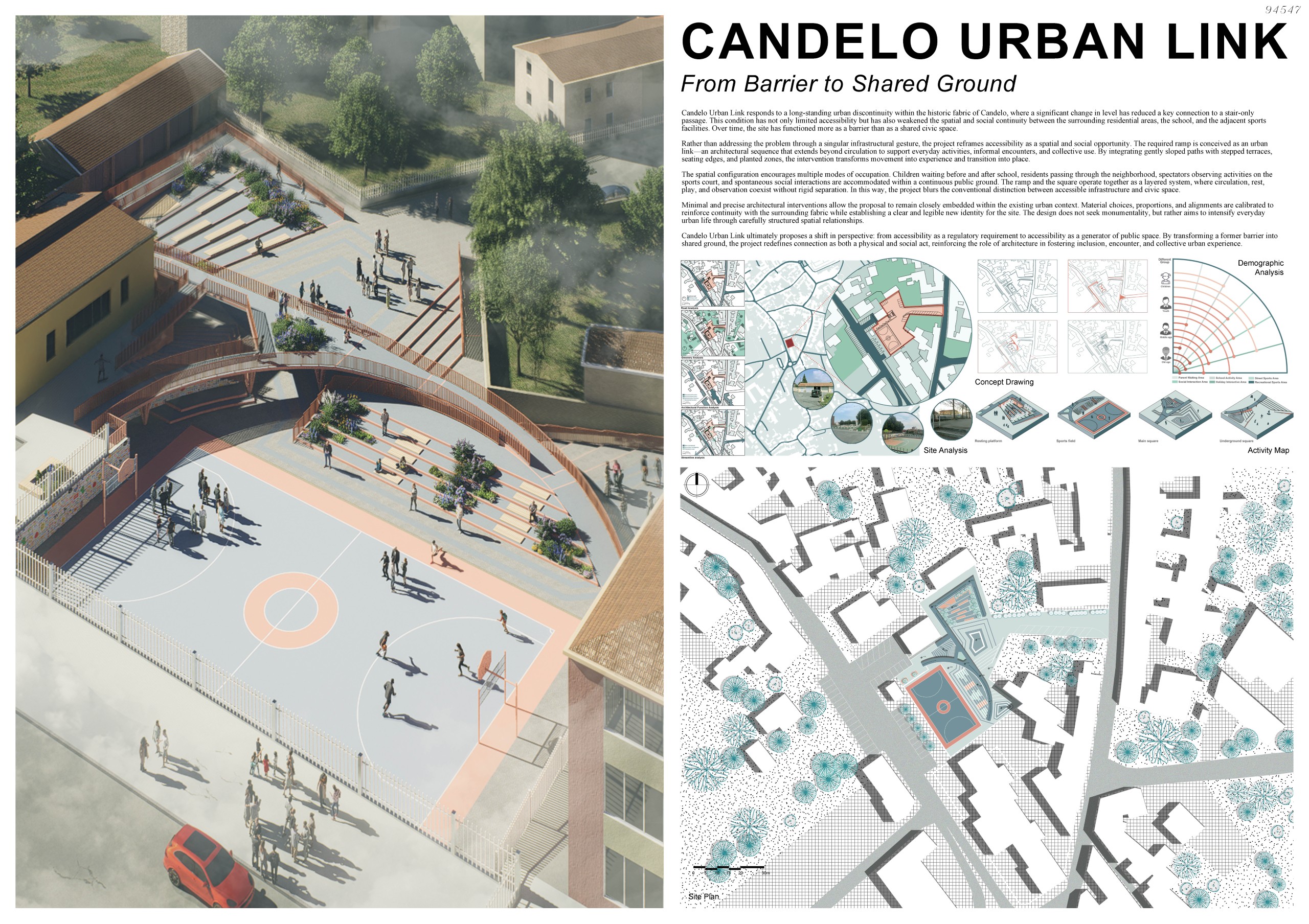
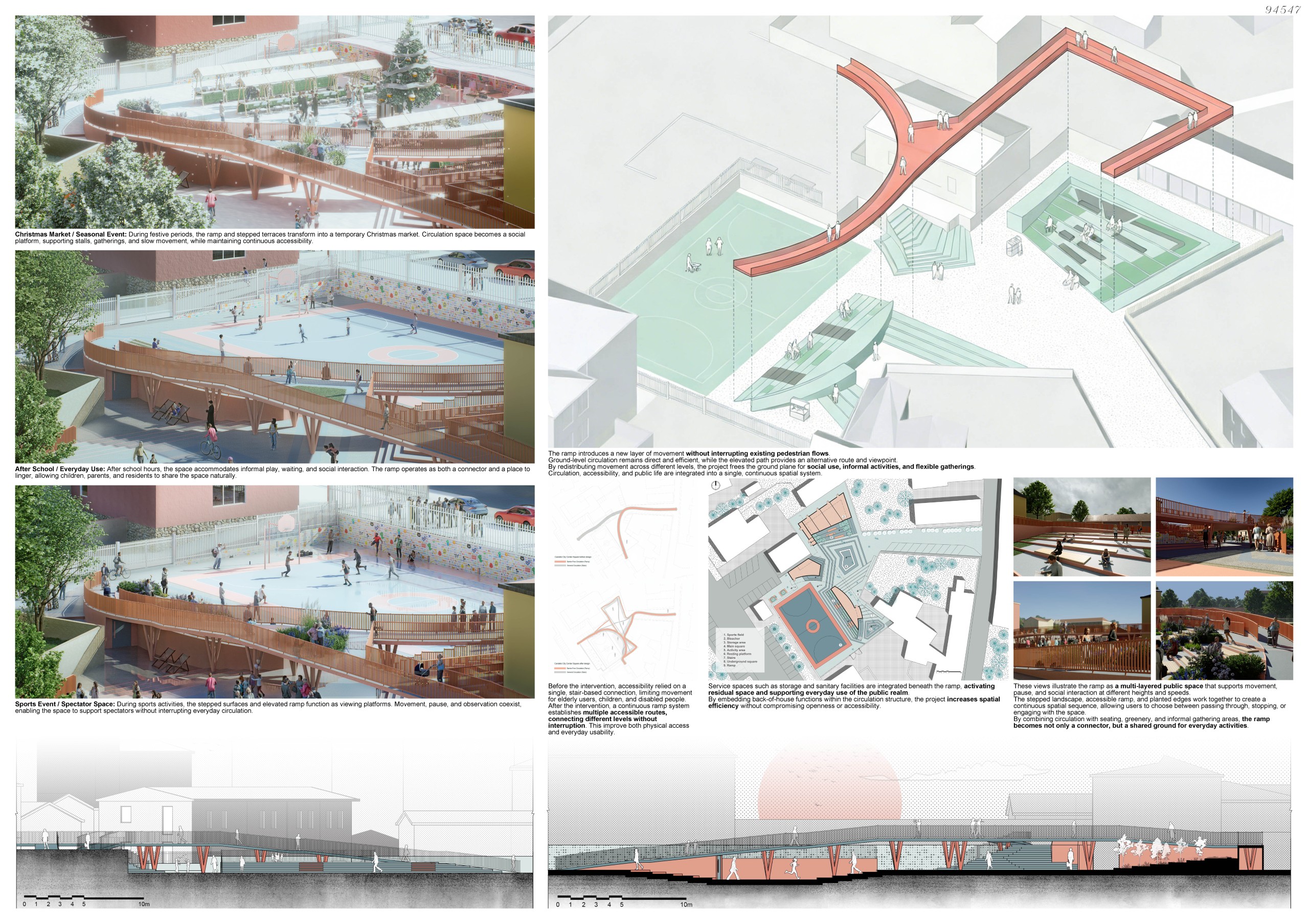
Candelo Urban Link: From Barrier to Shared Ground
Tianhao Shi, Zimou Li, Wen Cheng, Binglin Zhao, Fei Guo, Yu Huang, Zhiyu Yao [China]
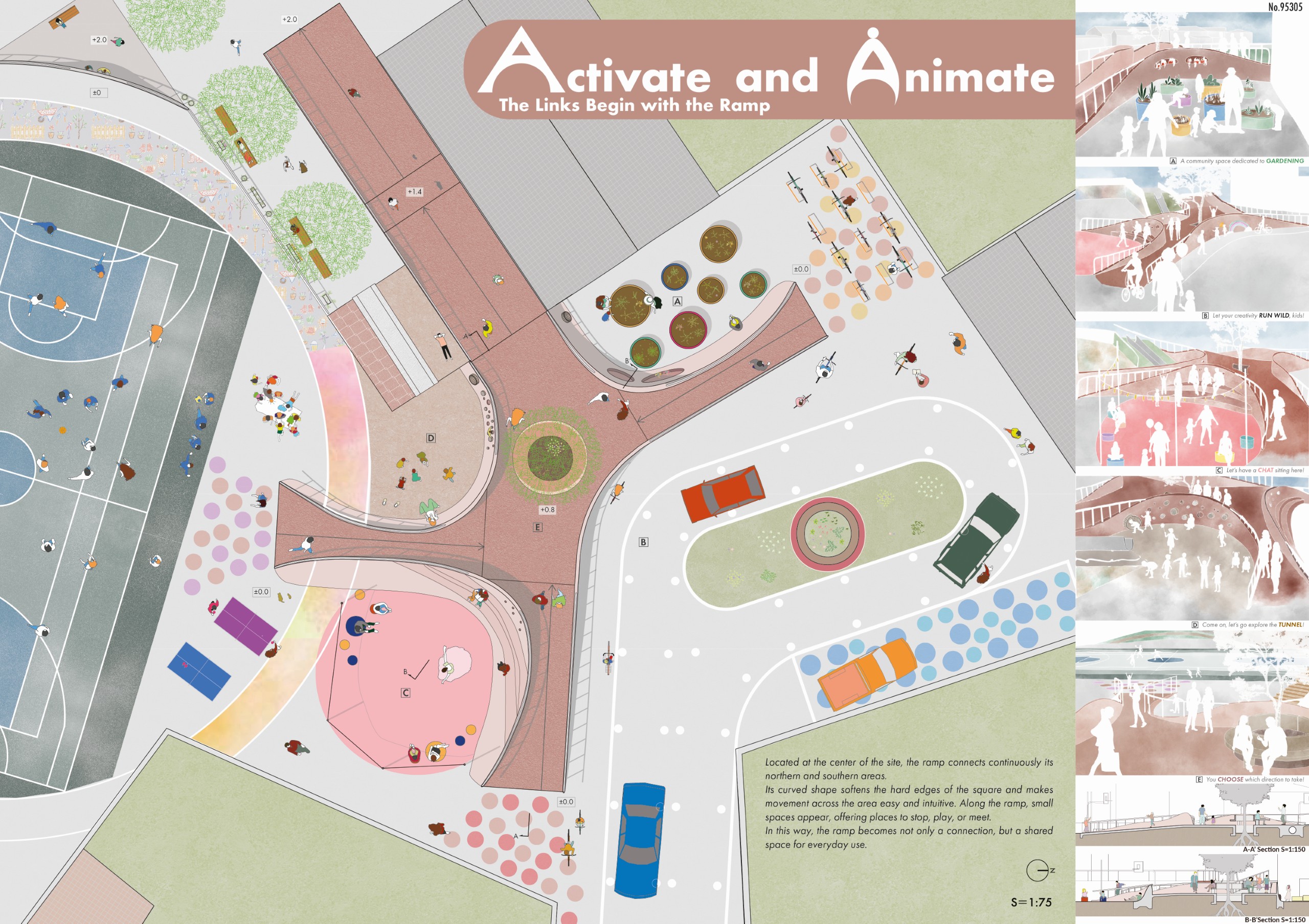
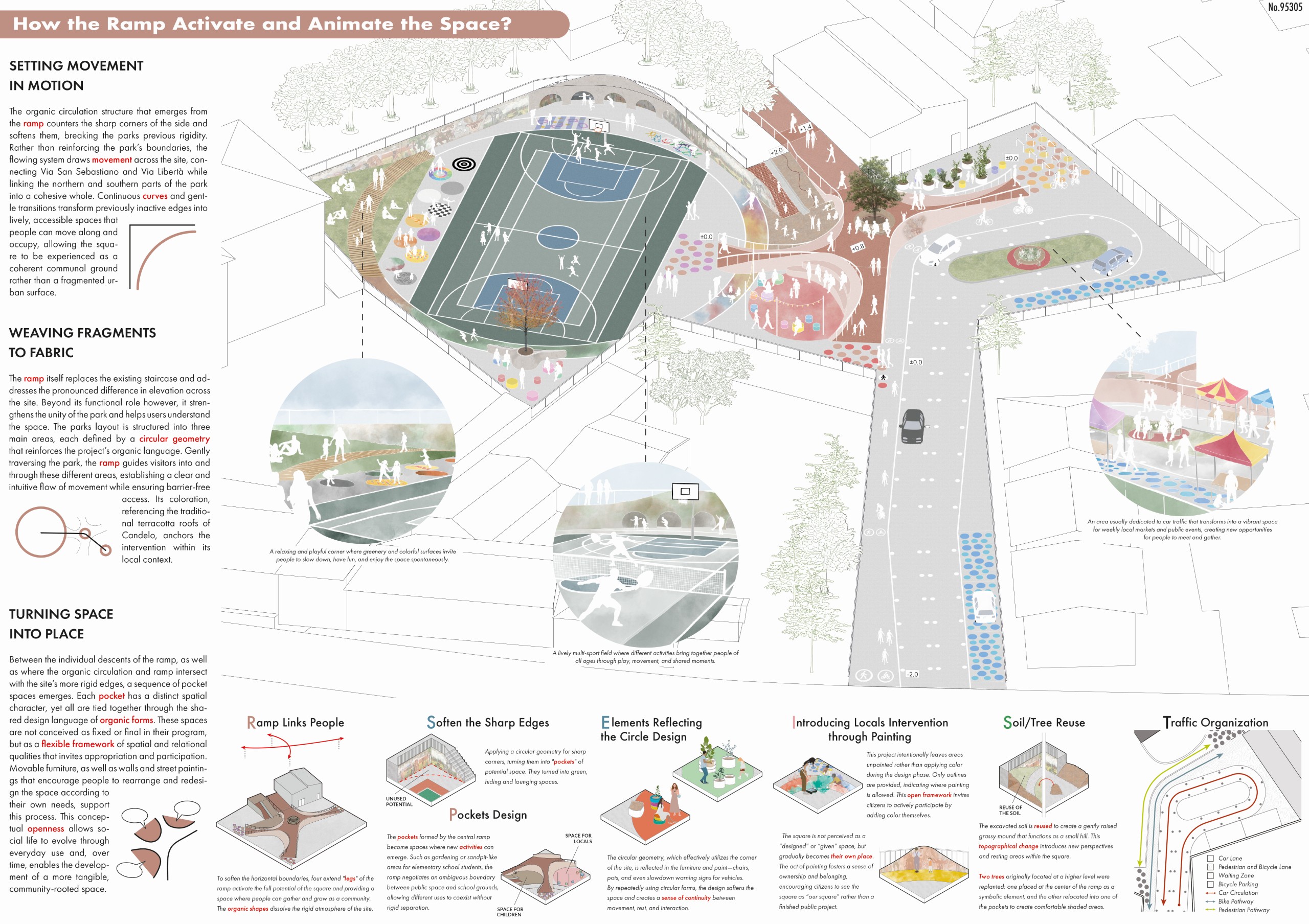
Activate and Animate -The links begin with the ramp-
Ryo Murata, Anita Bertani, Momoko Makino, Kosuke Nakamura, Bernhard Josef Fiedler [Japan – Italy – Germany] – www.arch.ens.isct.ac.jp
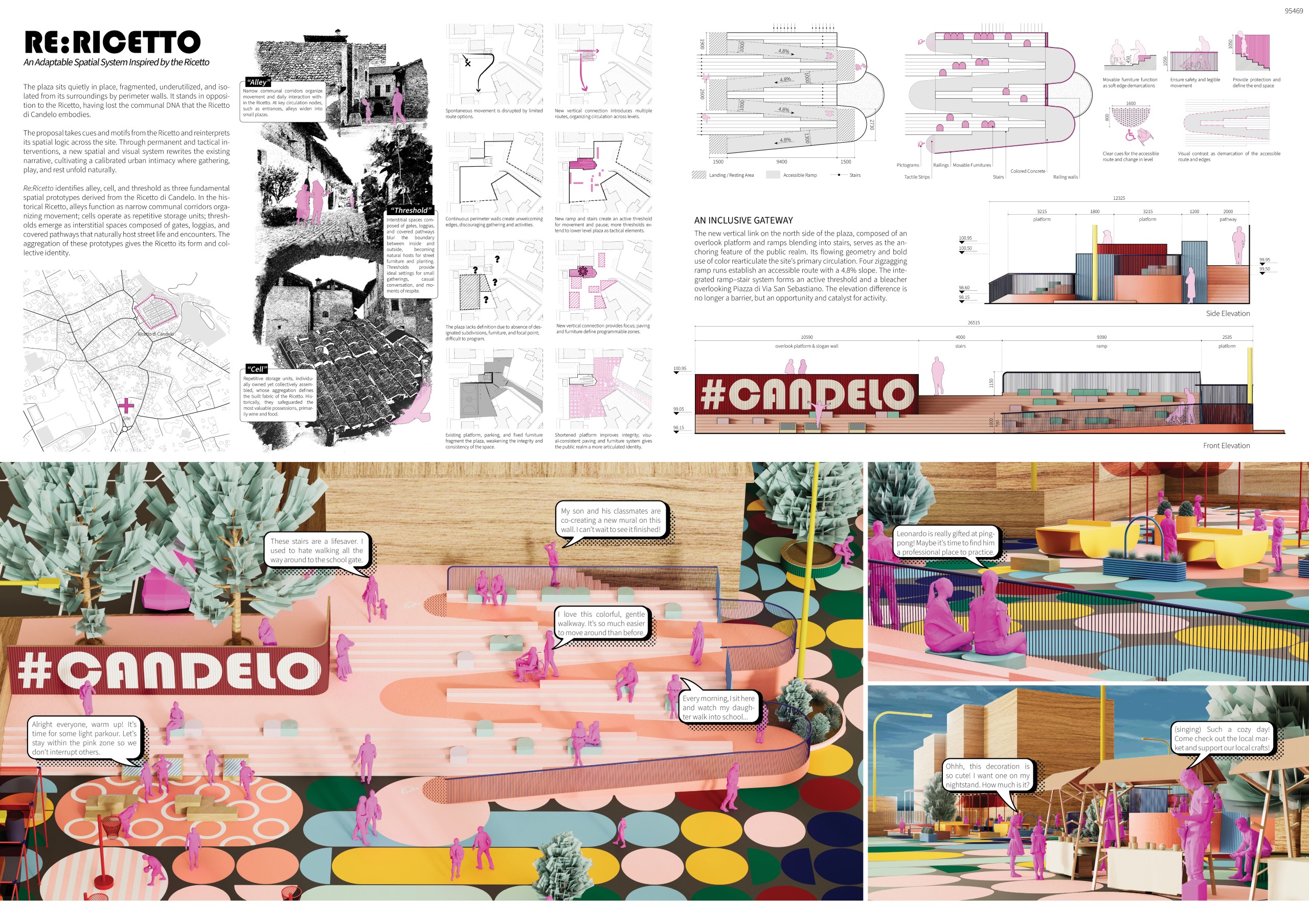
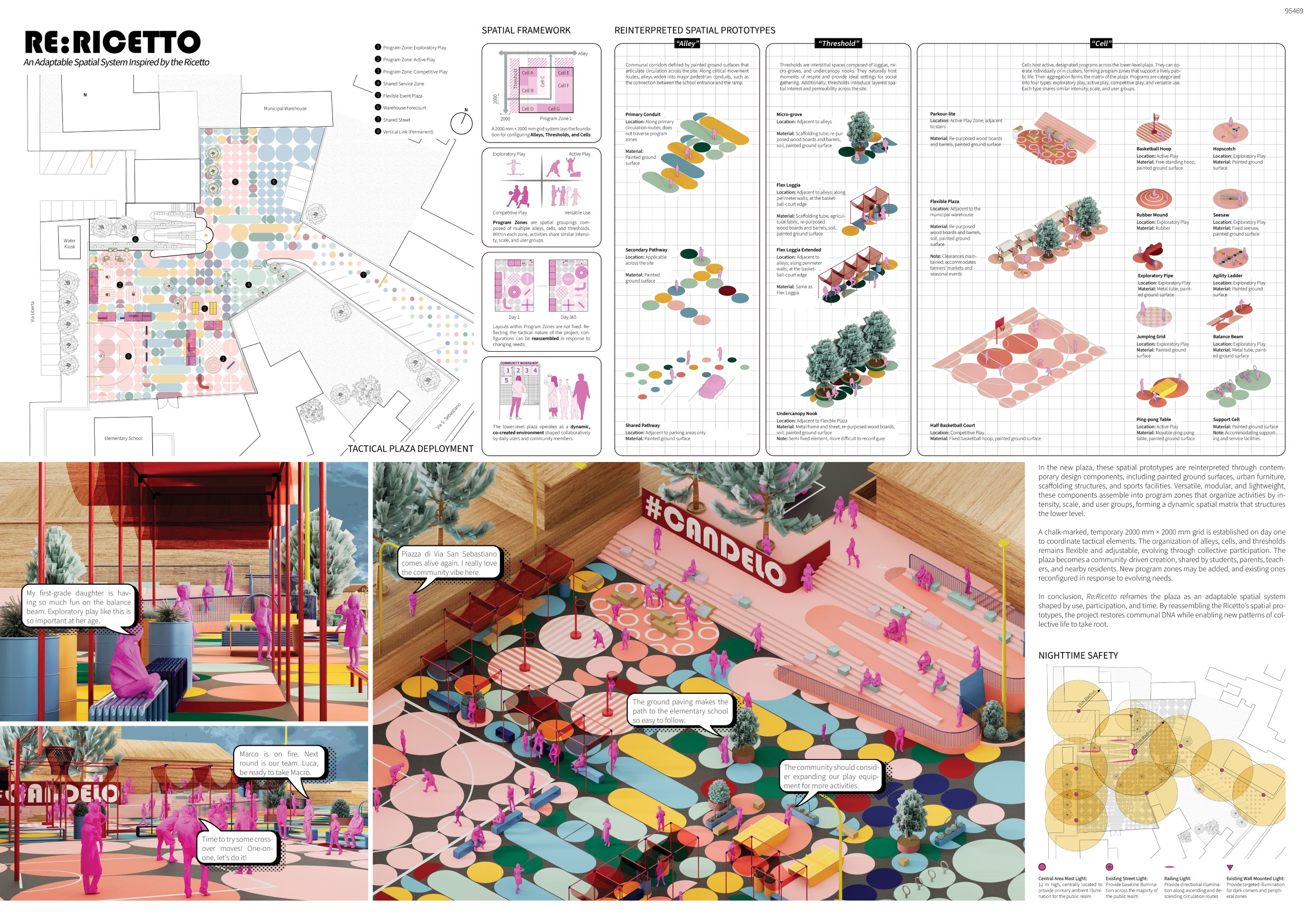
Re:Ricetto
Chuxiong Feng [United States]
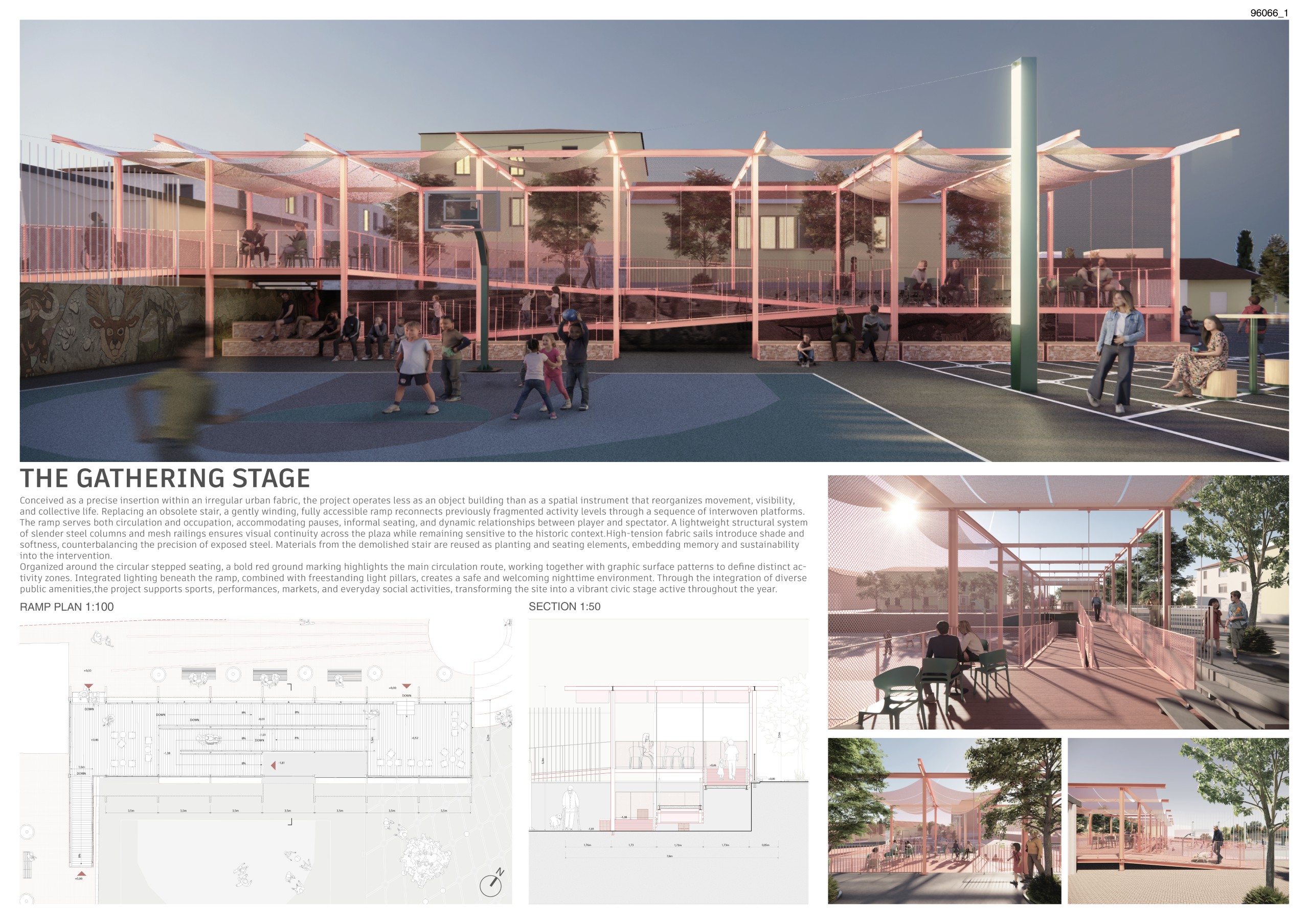
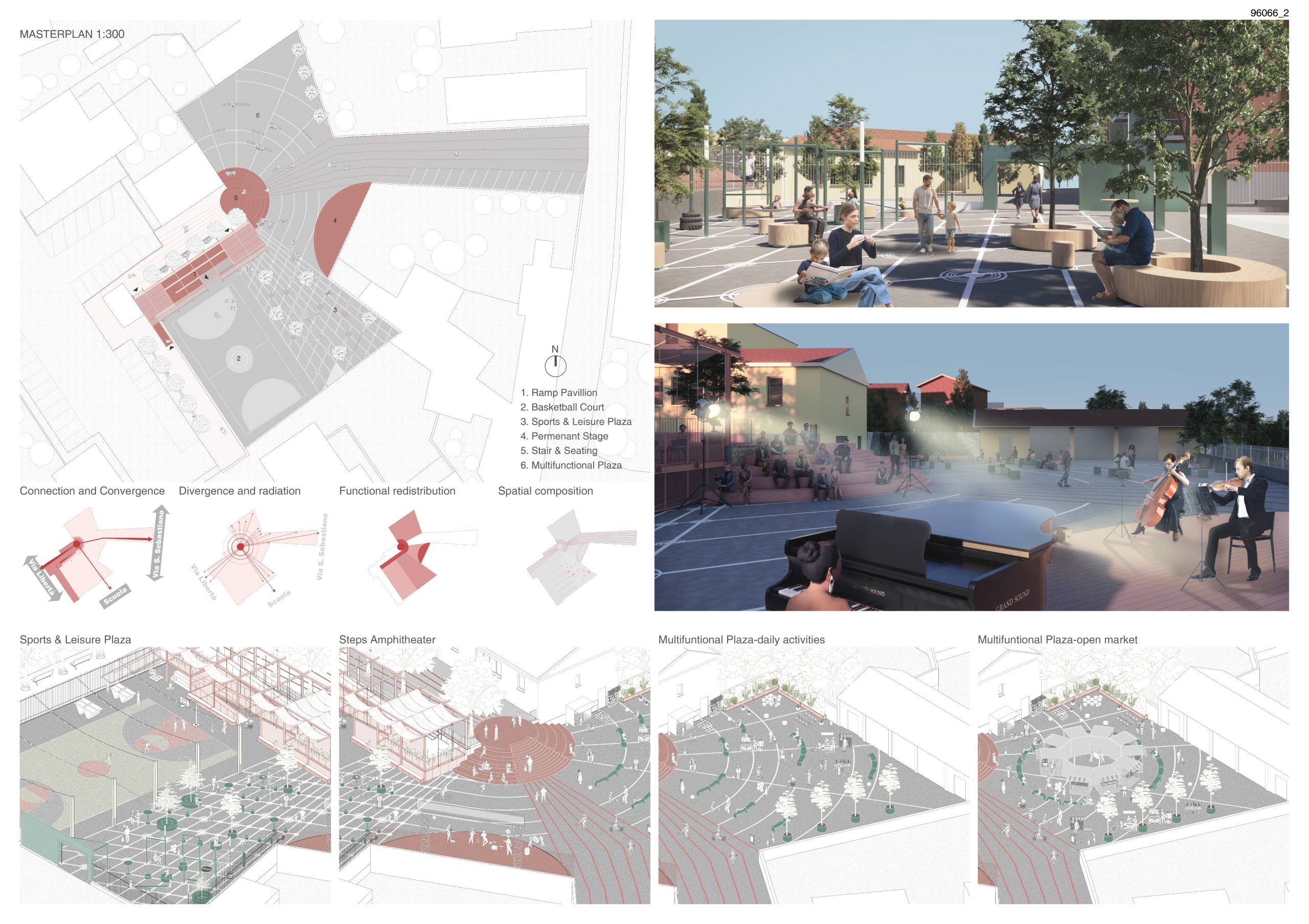
THE GATHERING STAGE
Mengyuan Li, Yujie Wang, Yue Zhong [China]
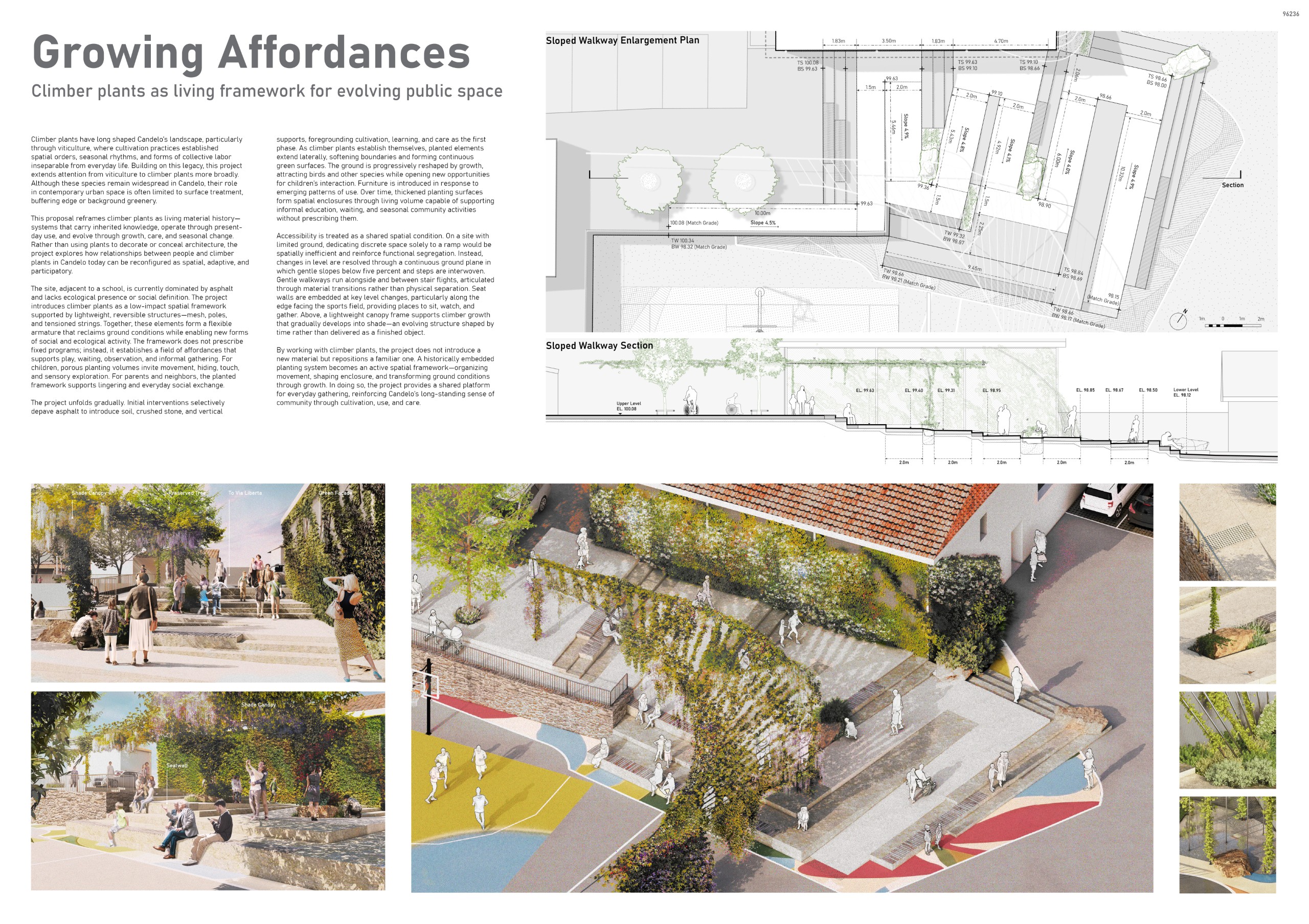
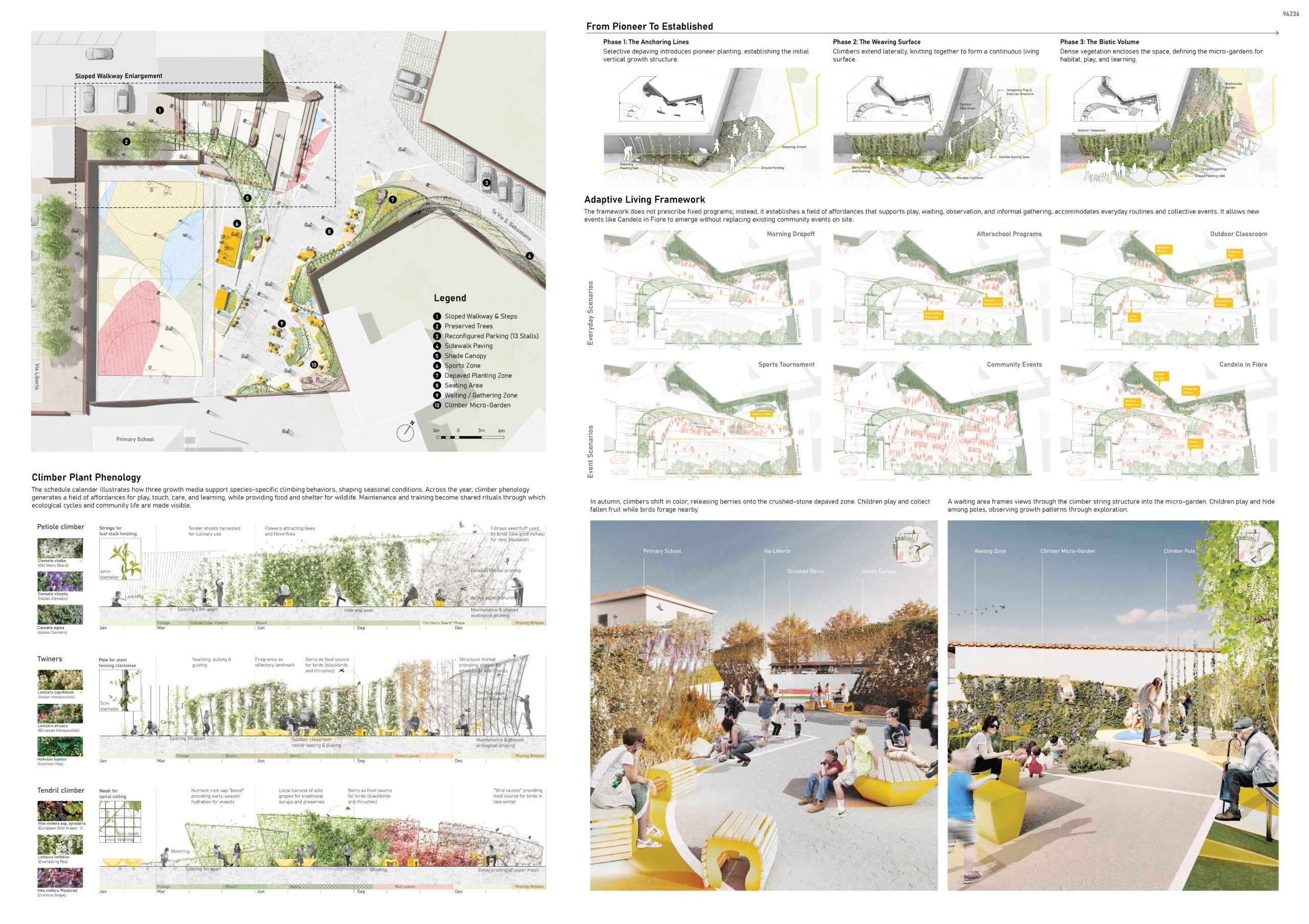
Growing Affordances: Climber plants as living framework for evolving public space
Zicheng Zhao, Yuehui Gong [China]
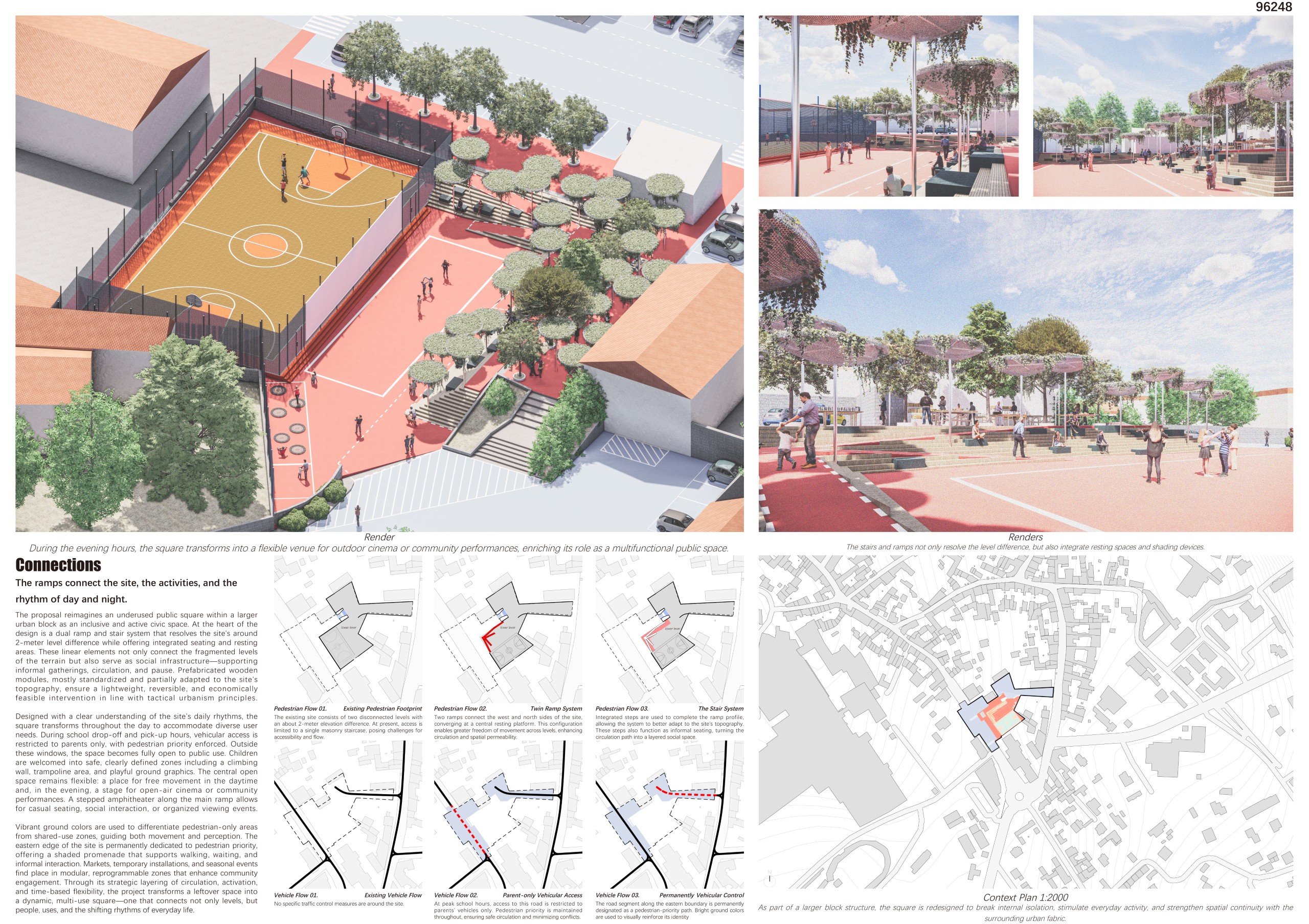
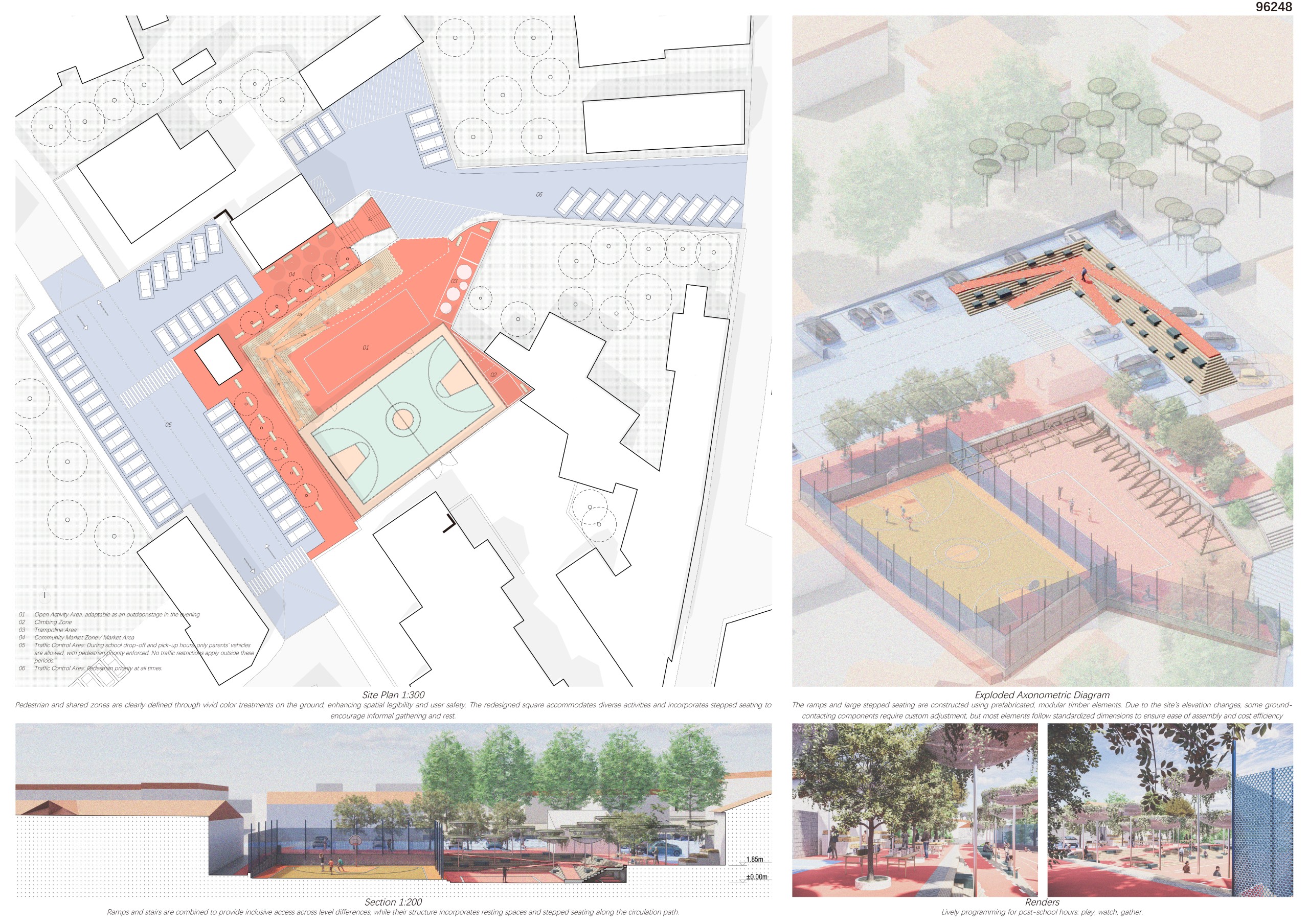
Connections
Jianmian Zhang [China]
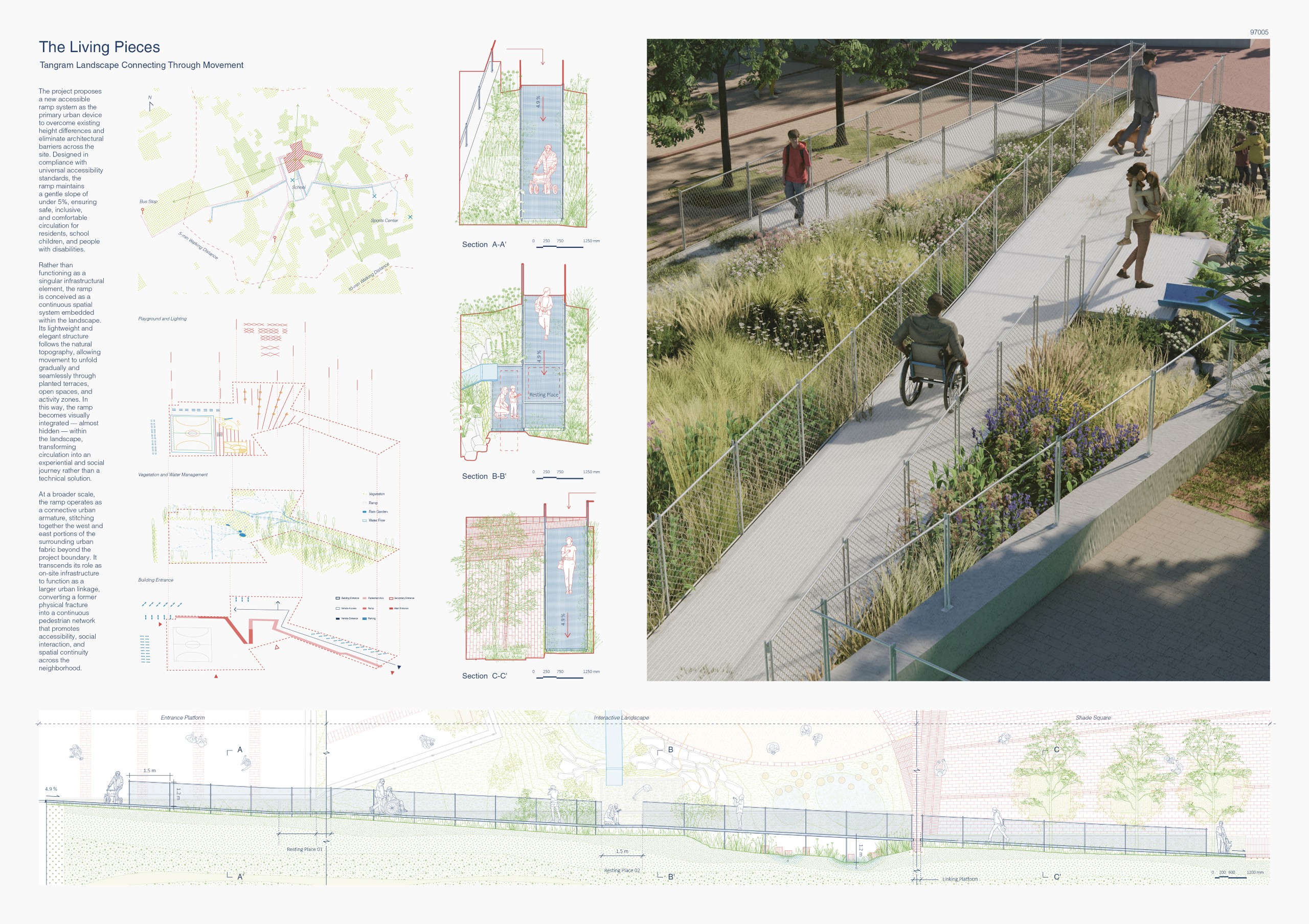
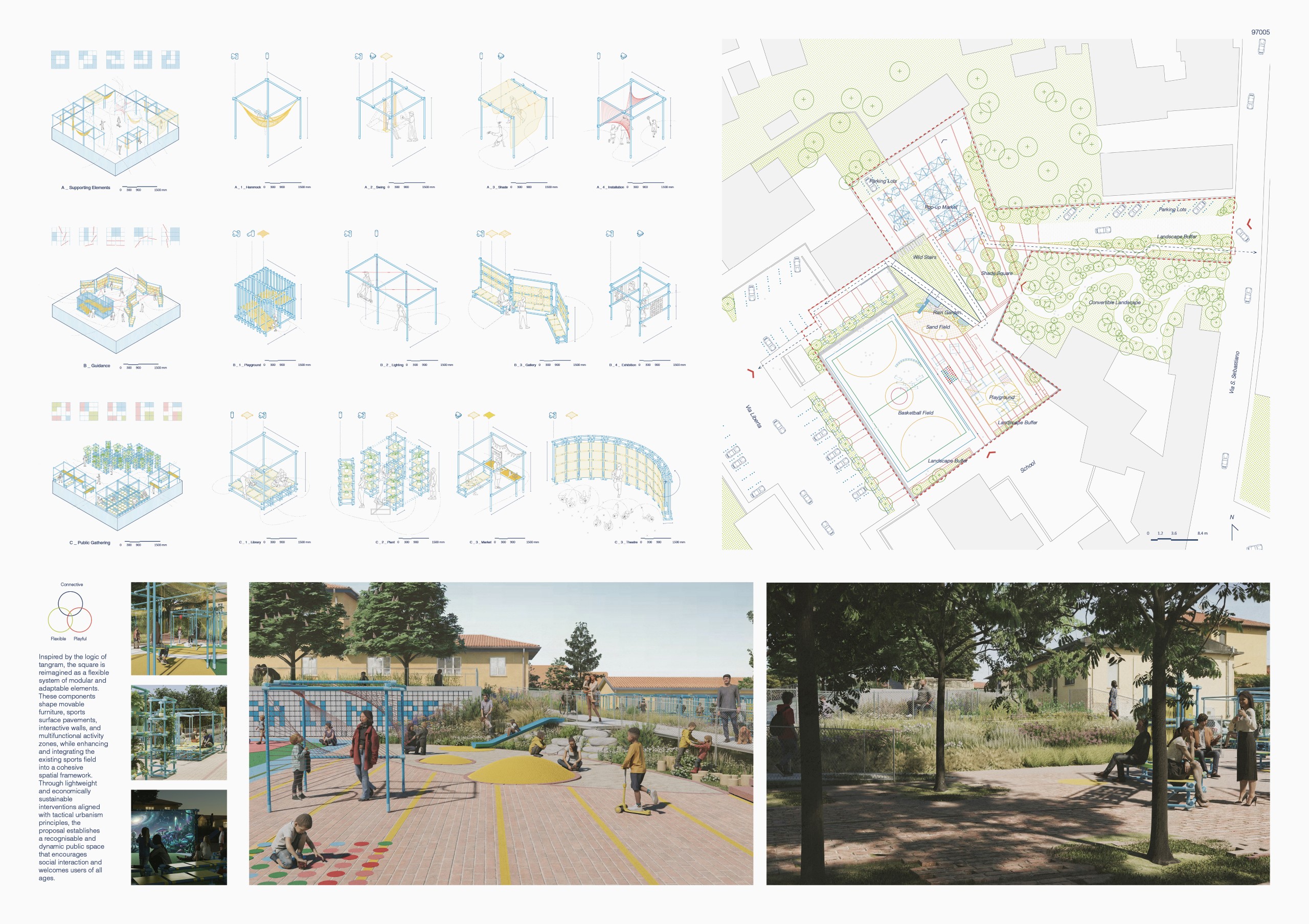
The Living Pieces
Kiesza Xinying Li, Yuqi Chen, Xingtong Yang [United States]
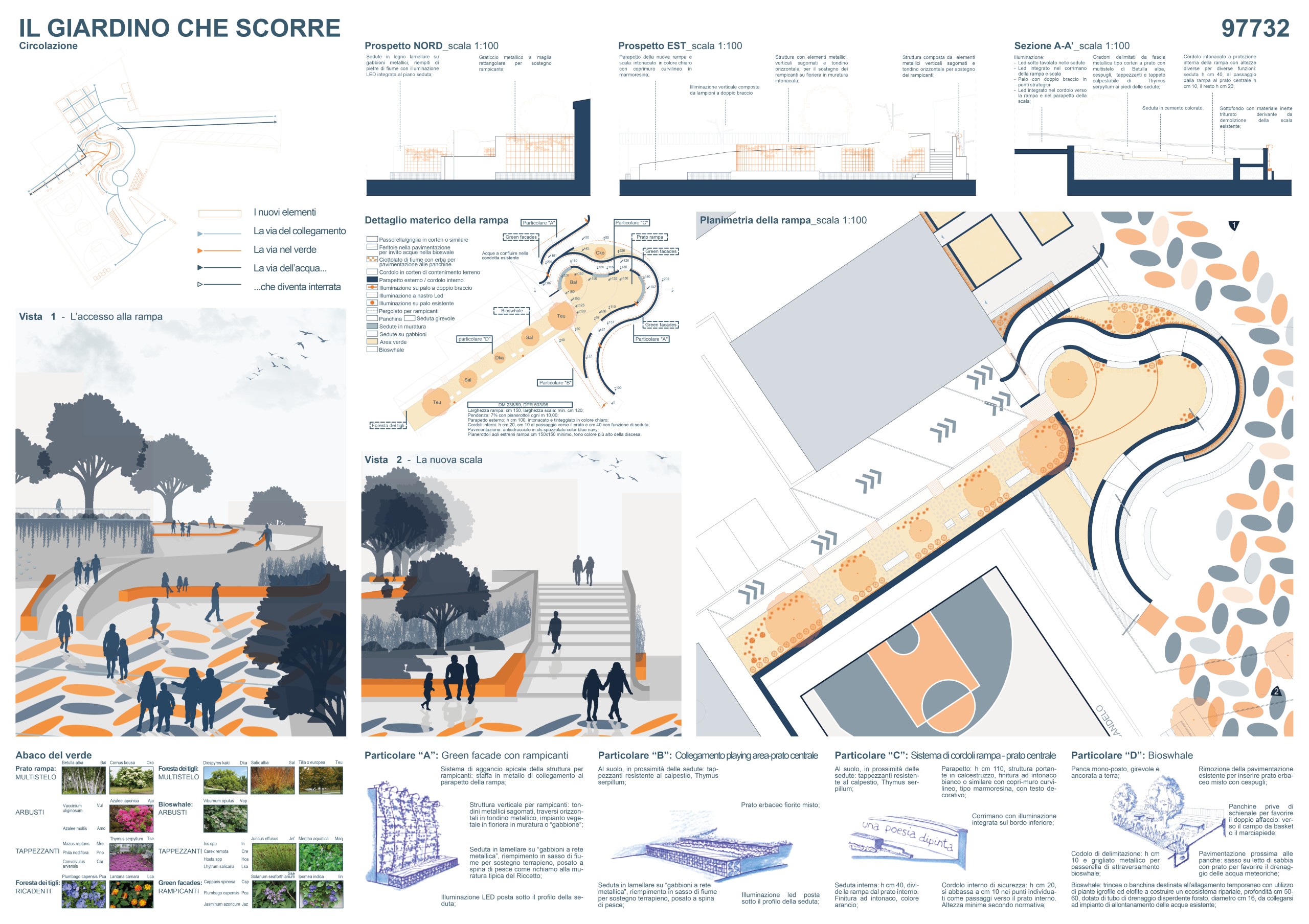
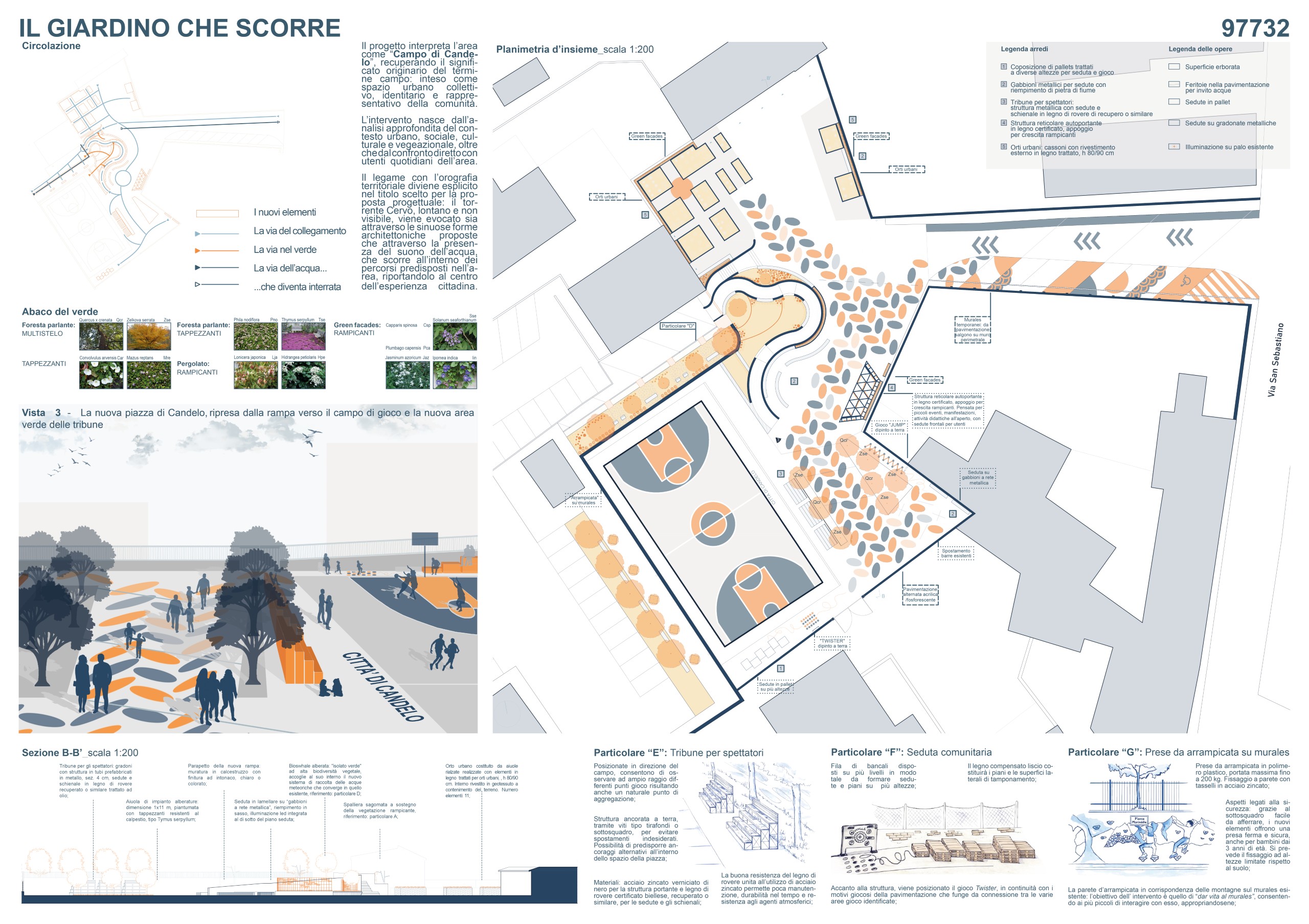
Giardino che Scorre
Alessandra Benigno, Francesco Ramella, Silvia Palazzi, Maria Letizia Trento, Stefano Mengoli, Lorenzo Sogni, Maria Stella Bianchini, Alice Lepre [Italy] – www.marialetiziatrento.it – www.stefanomengoli.it – archigeolucca.wordpress.com
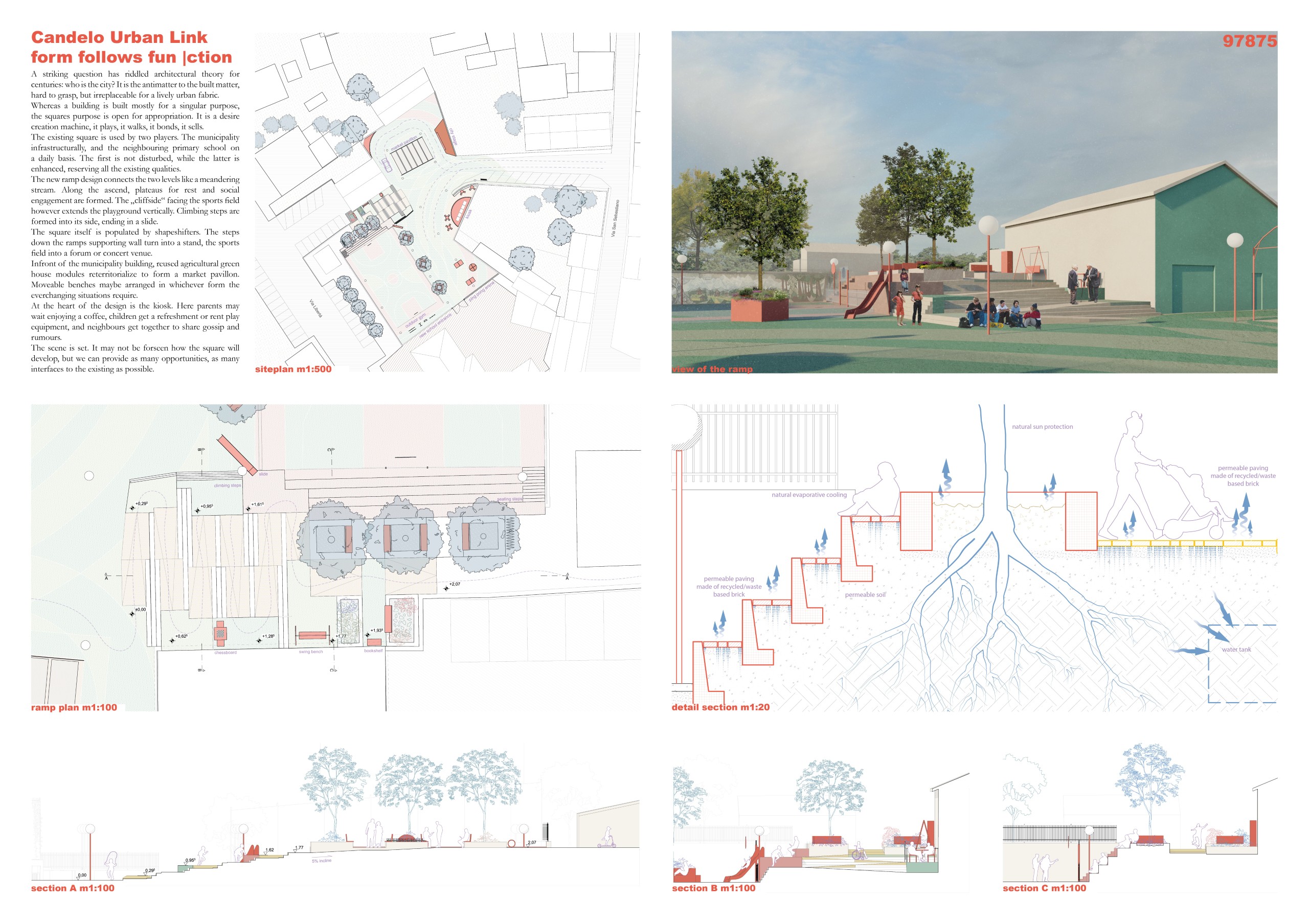
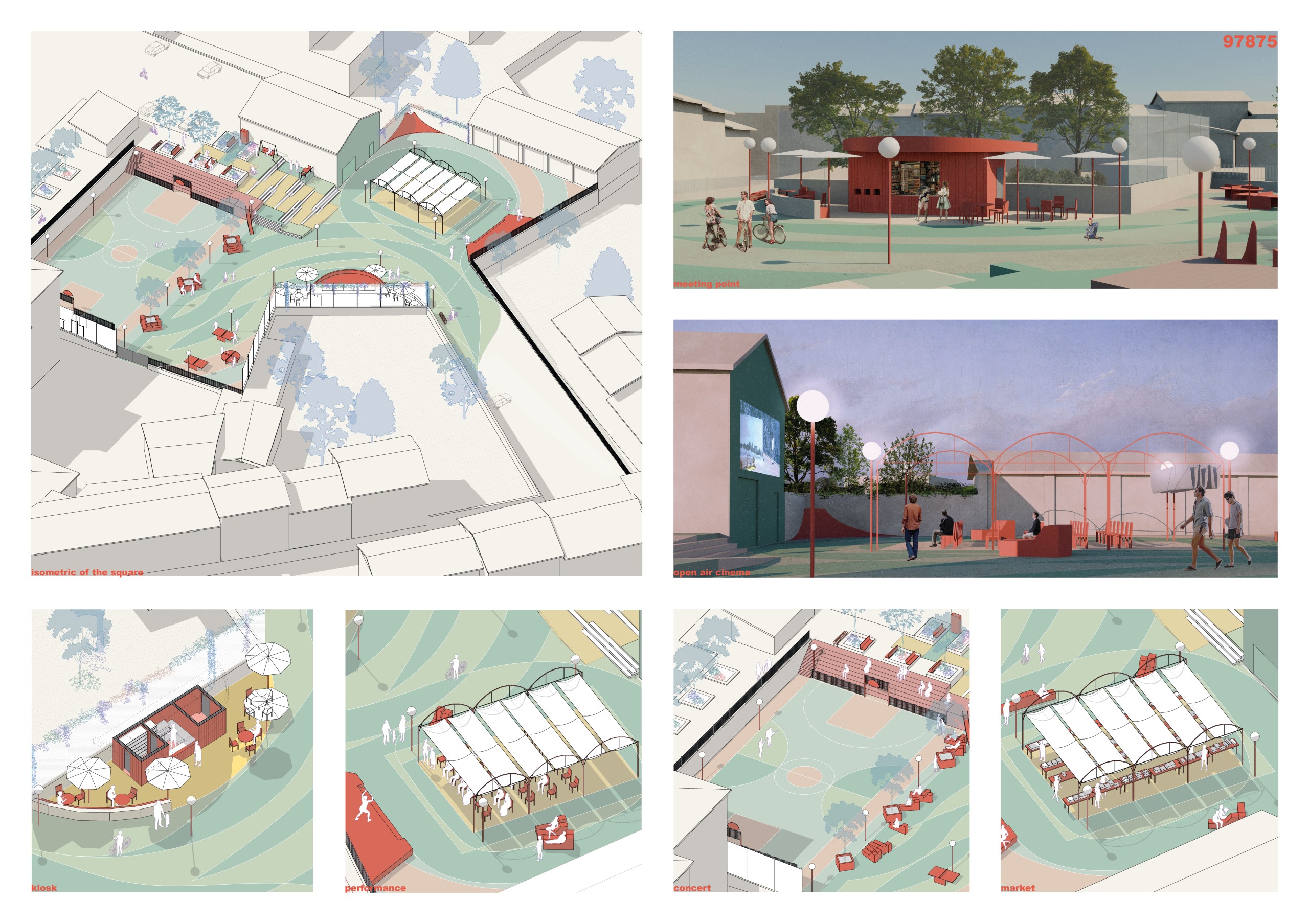
form follows fun|ction
David Brost, Leon Lensing [Germany]
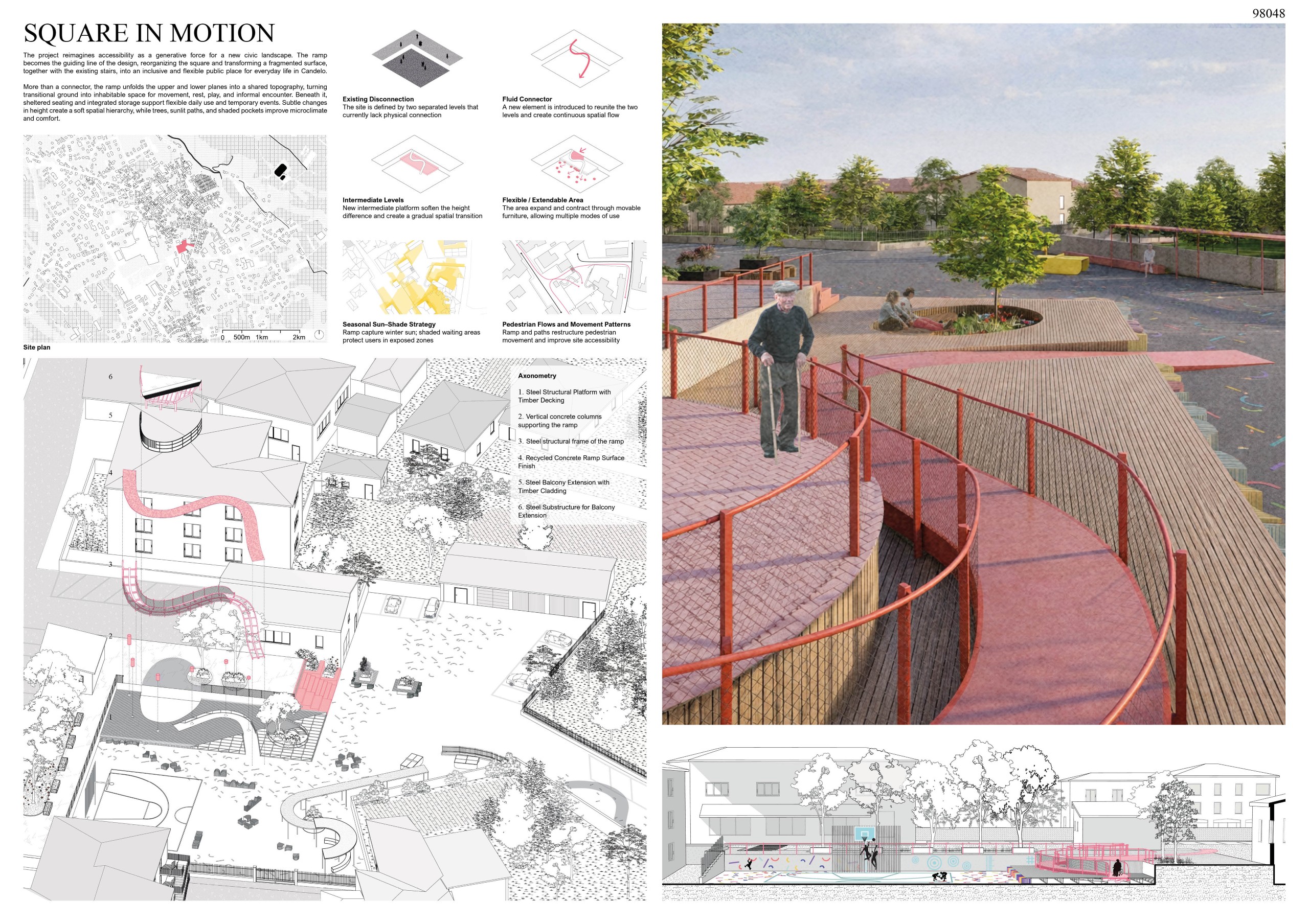
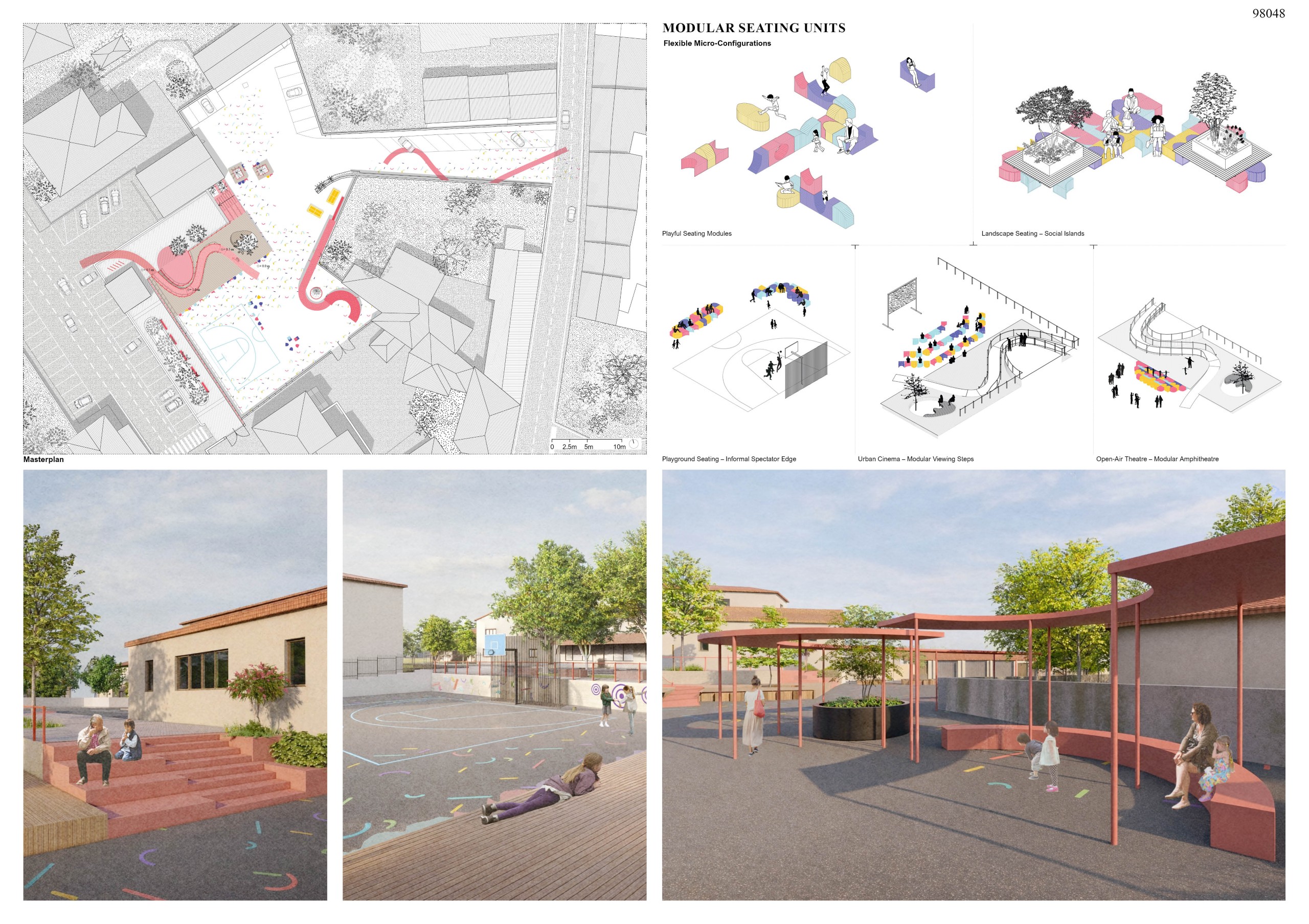
Square in motion
Valentina Negro, Soha Hijazi, Laura Moca, Lina Maria Garcia Niño [Italy – Lebanon – Colombia]
CandeLab: laboratorio urbano
Federica Li Castri, Corrado Scudellaro, Francesca Colombo [Italy]
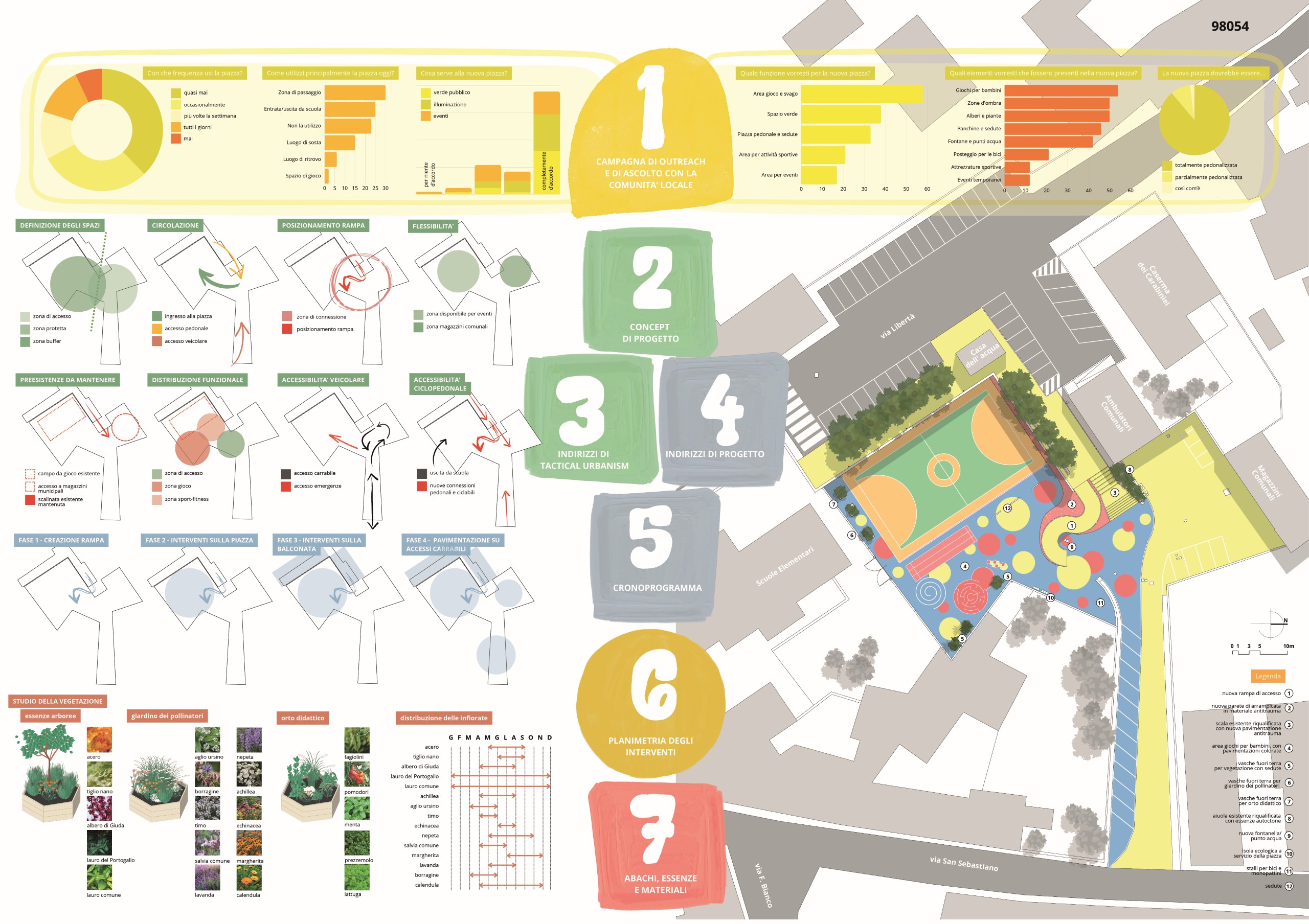
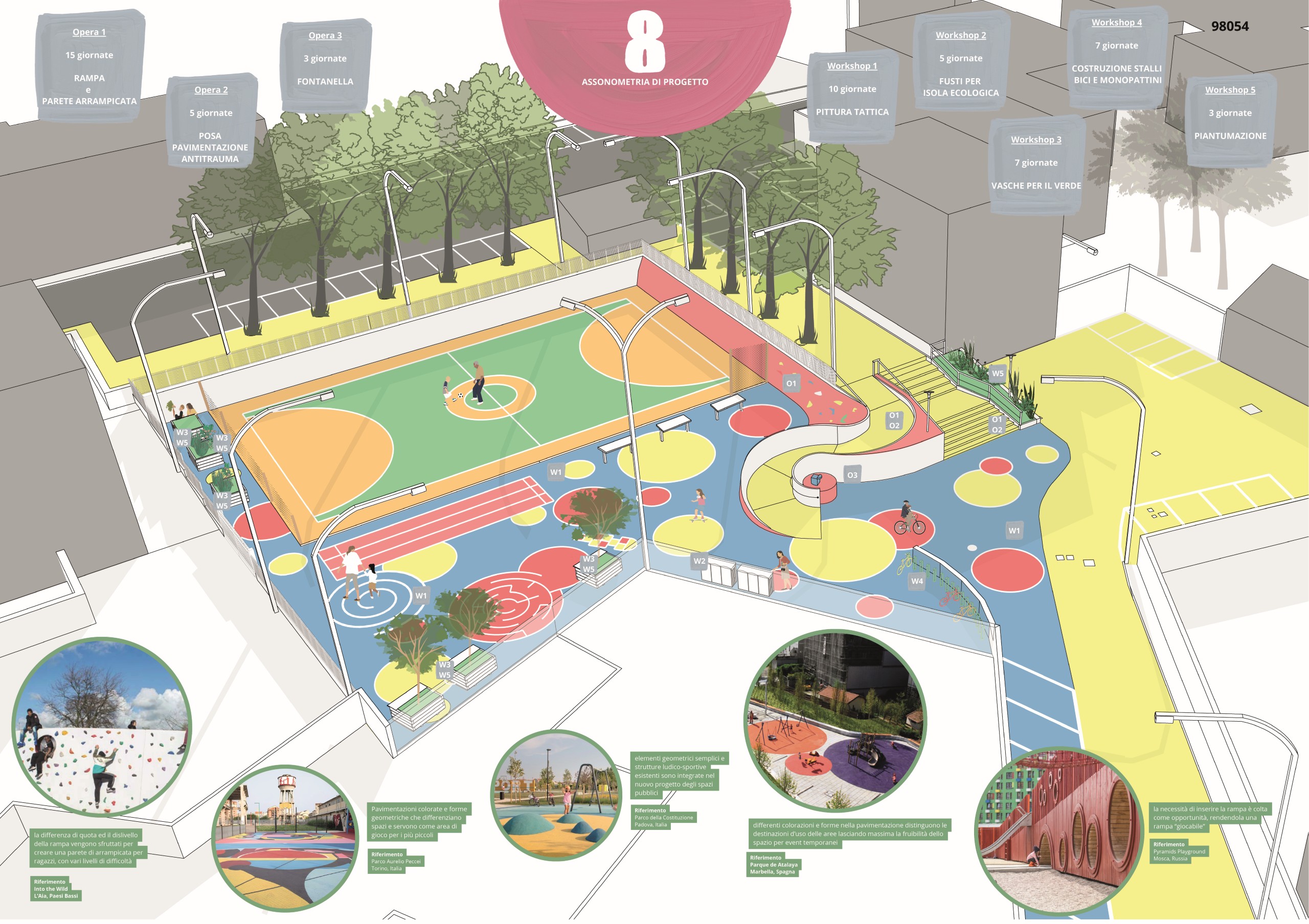
Where the Sea recreate Life
Nikoleta Mitríková [Slovakia]
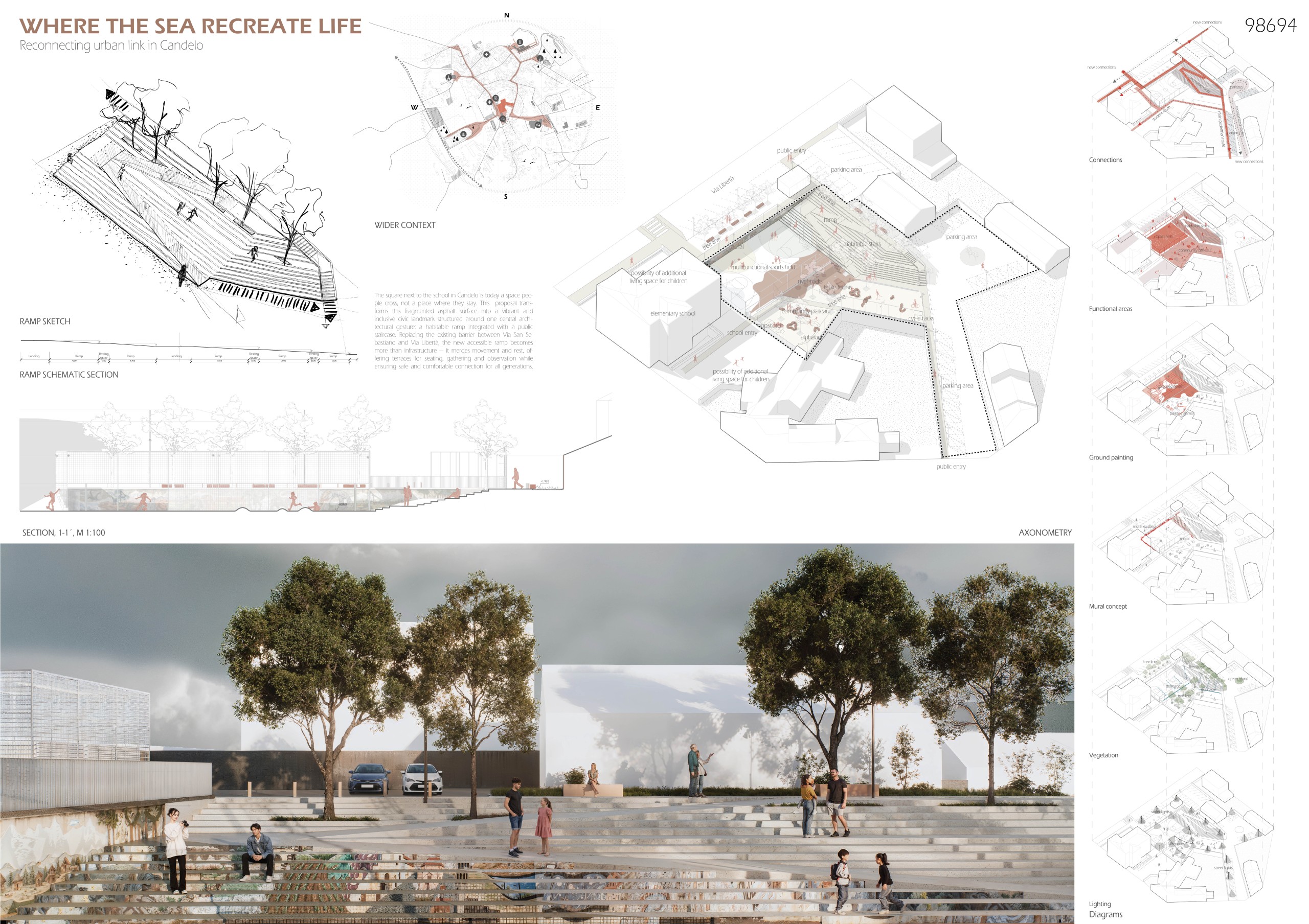
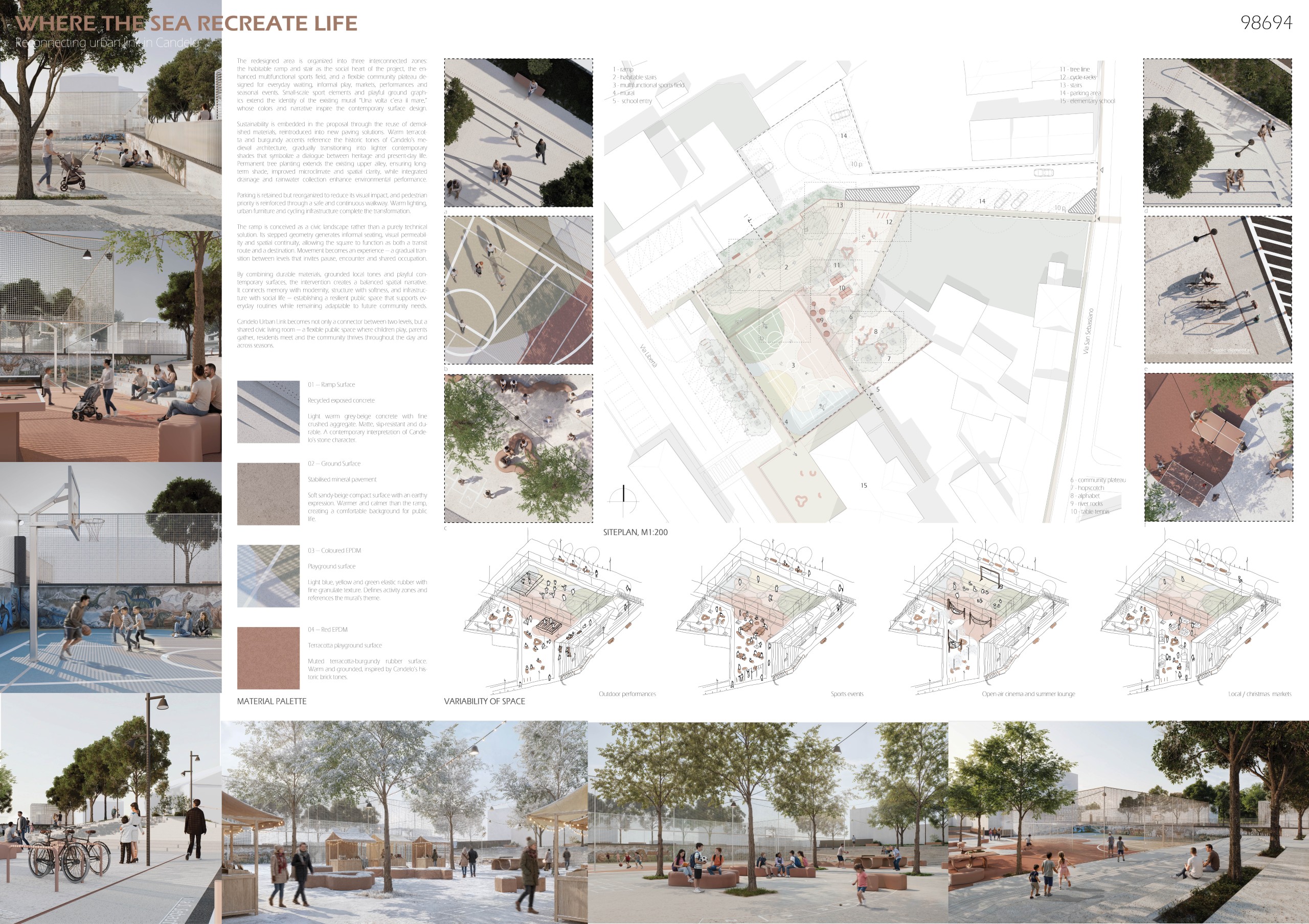
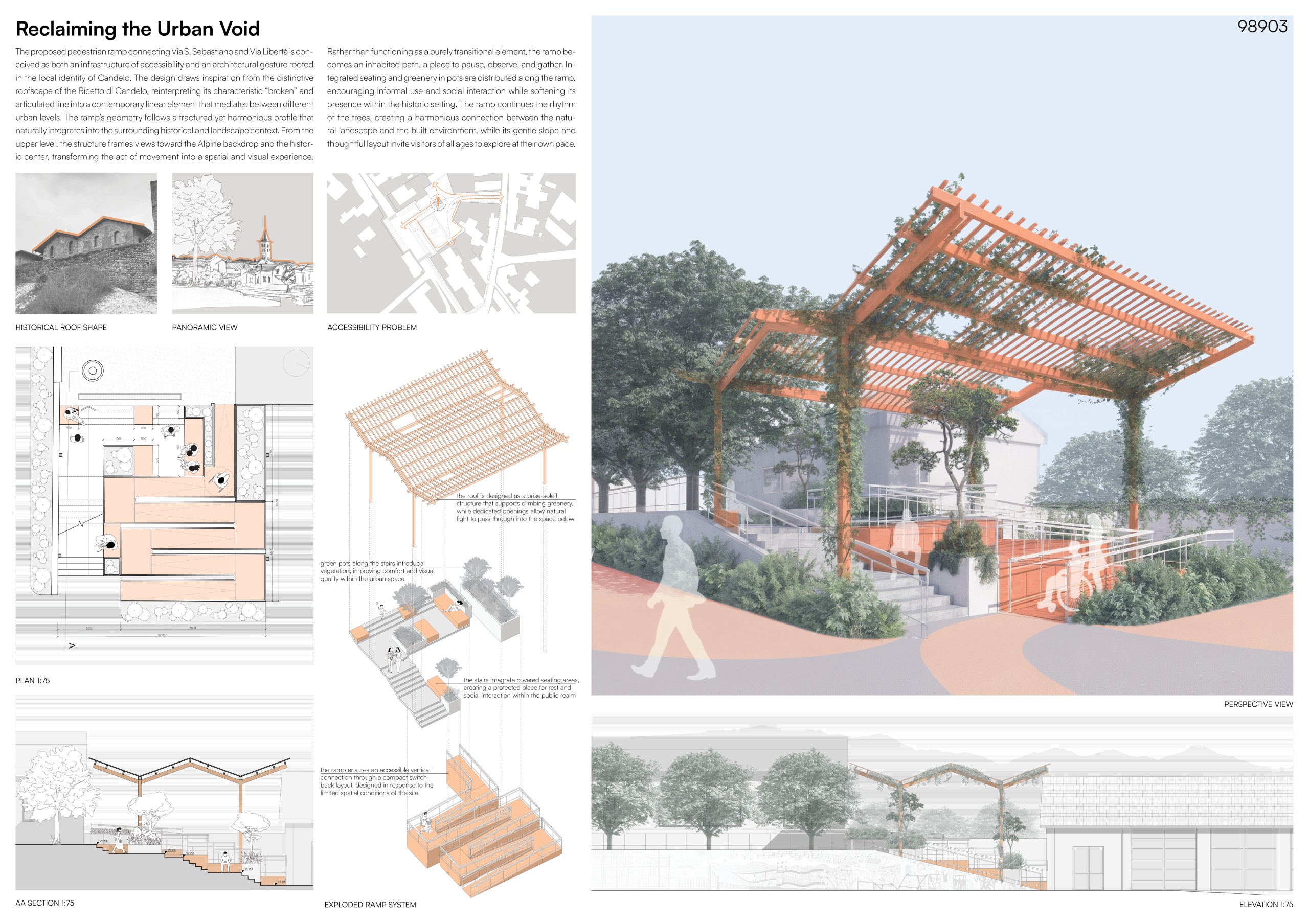
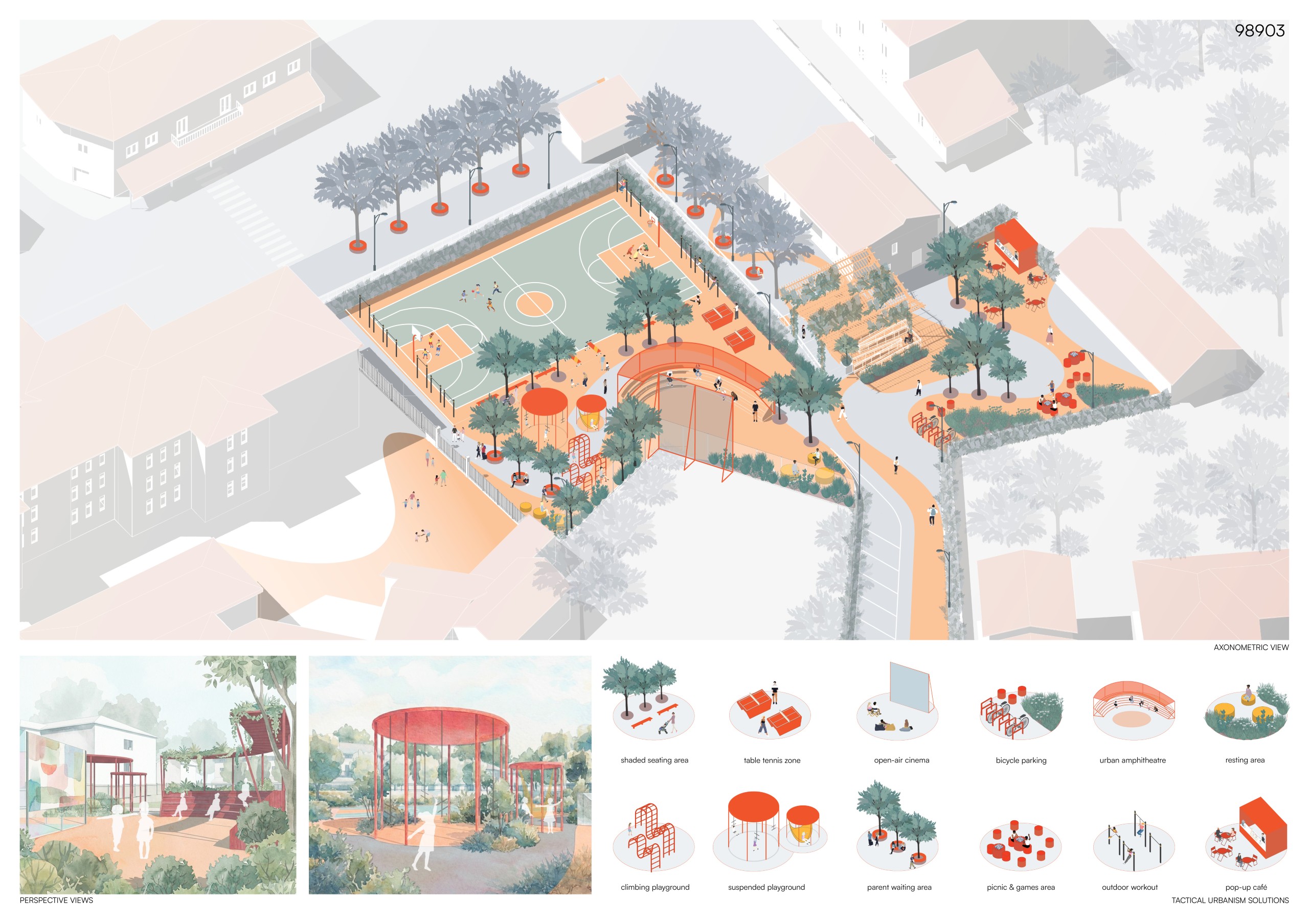
Reclaiming the Urban Void
Aleksandra Zakharova, Maicol Negrello [Italy]
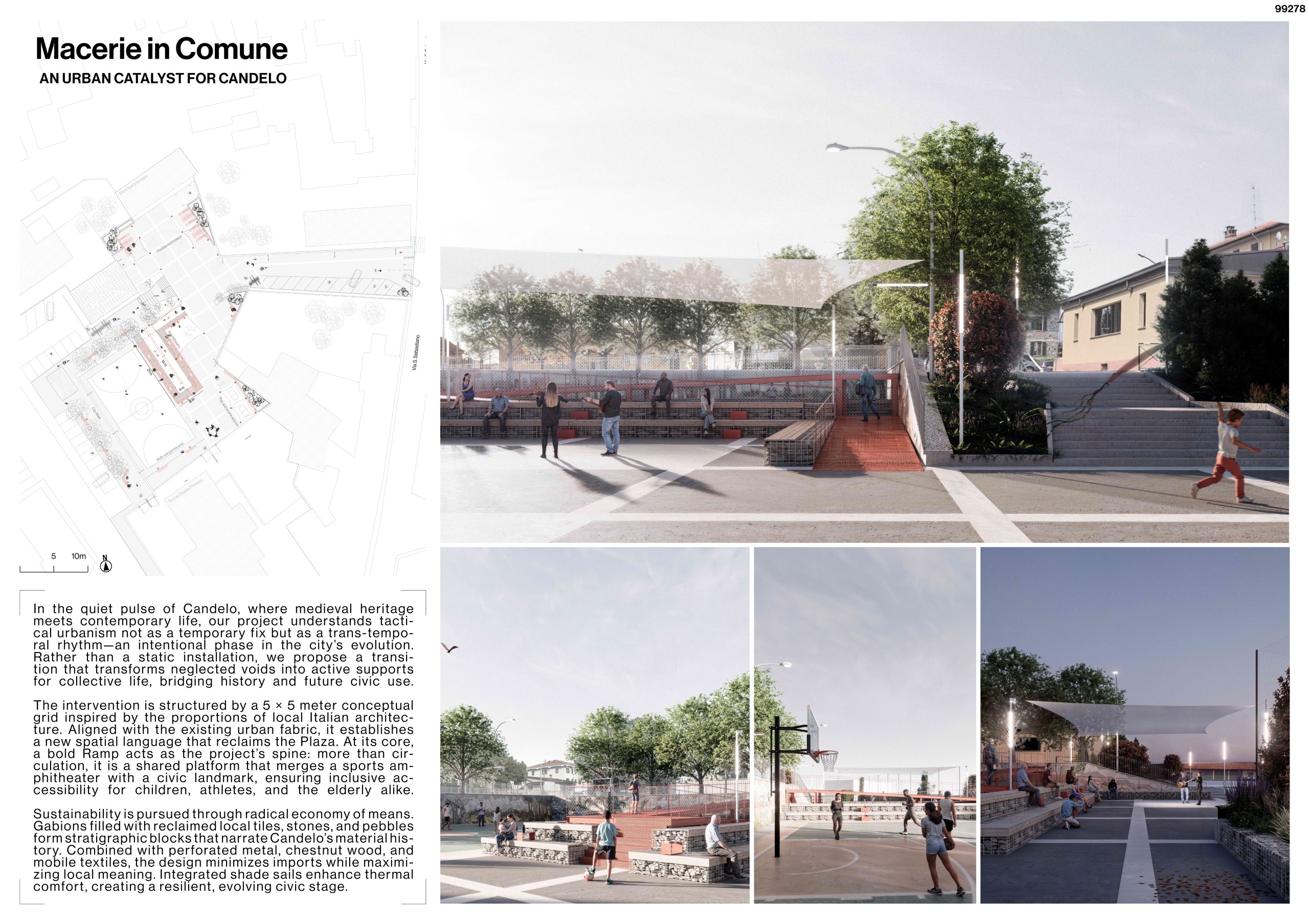
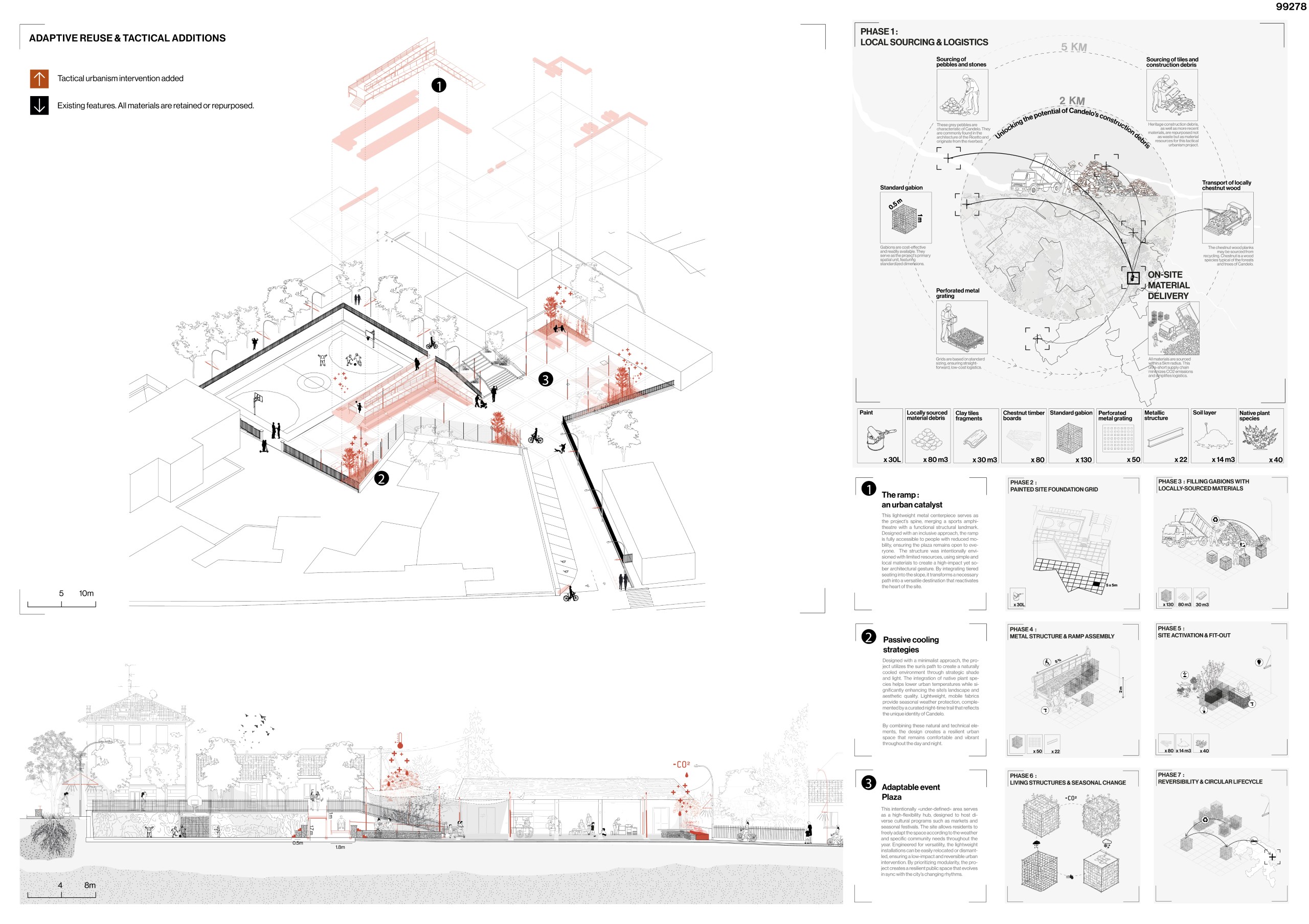
Macerie in Comune : An Urban Catalyst for Candelo
Adrien Morichon, Tomás Stuart [France – Chile]
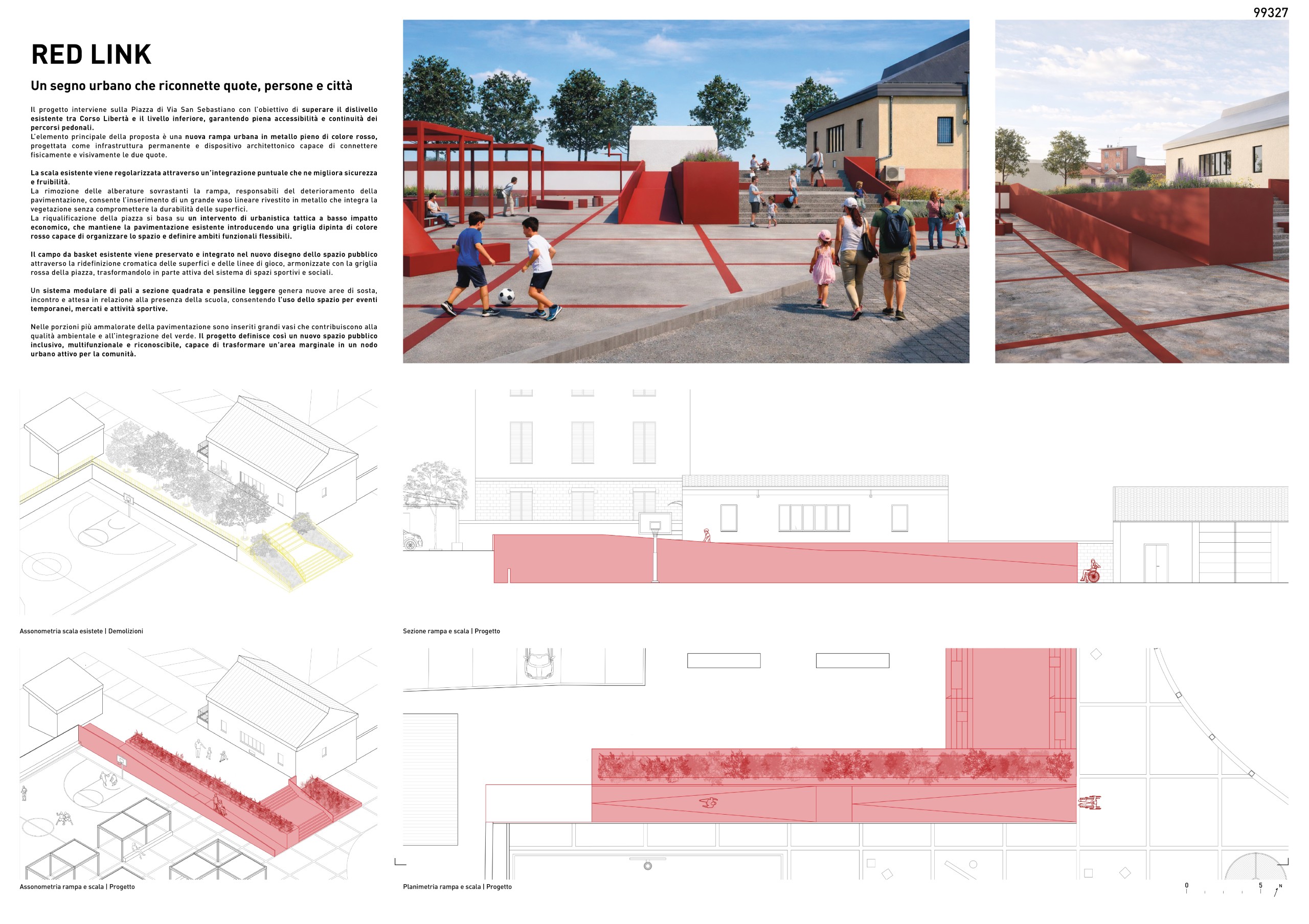
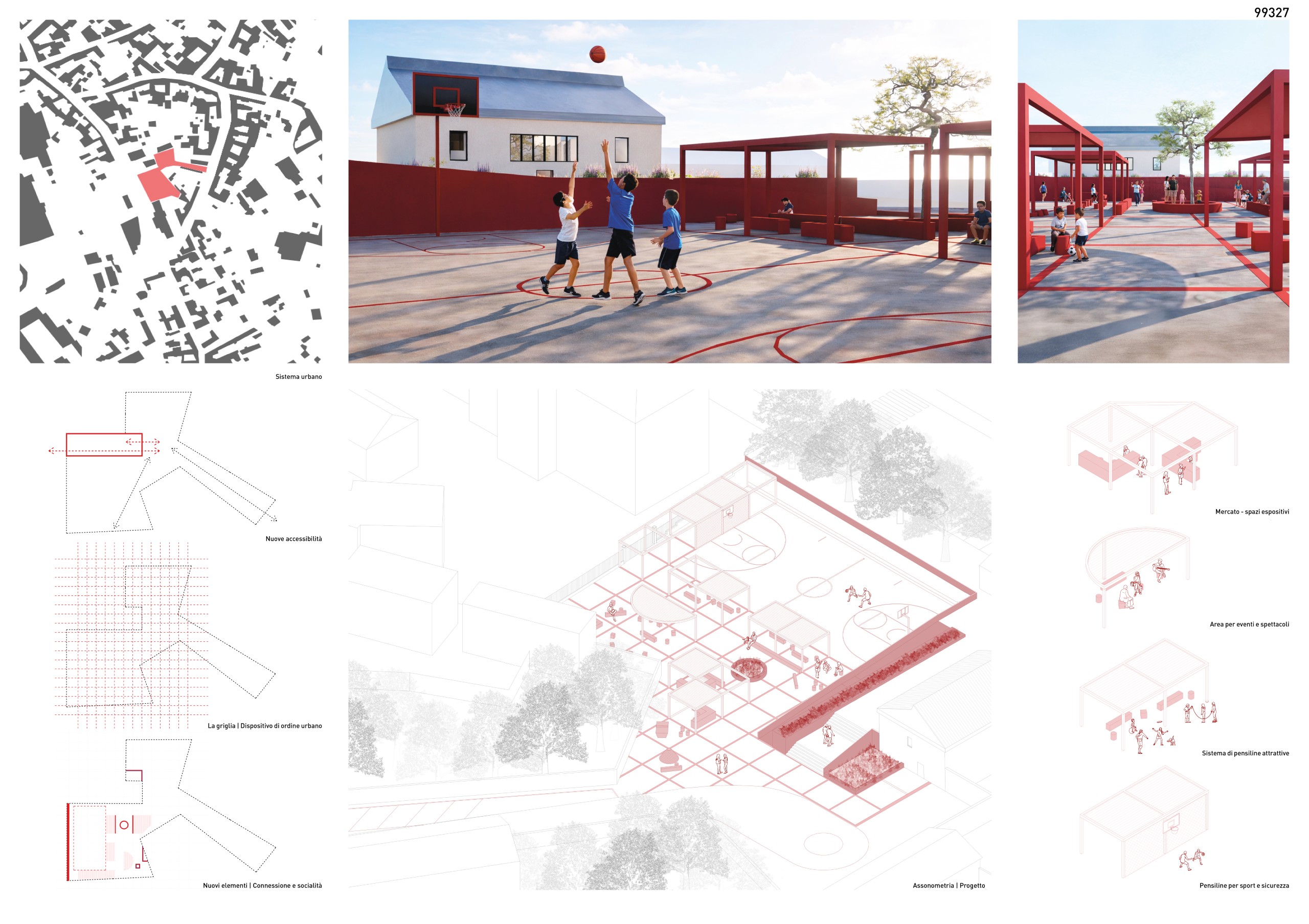
RED LINK
Francesco Paolo Palmese, Elisabetta Pedicini [Italy]
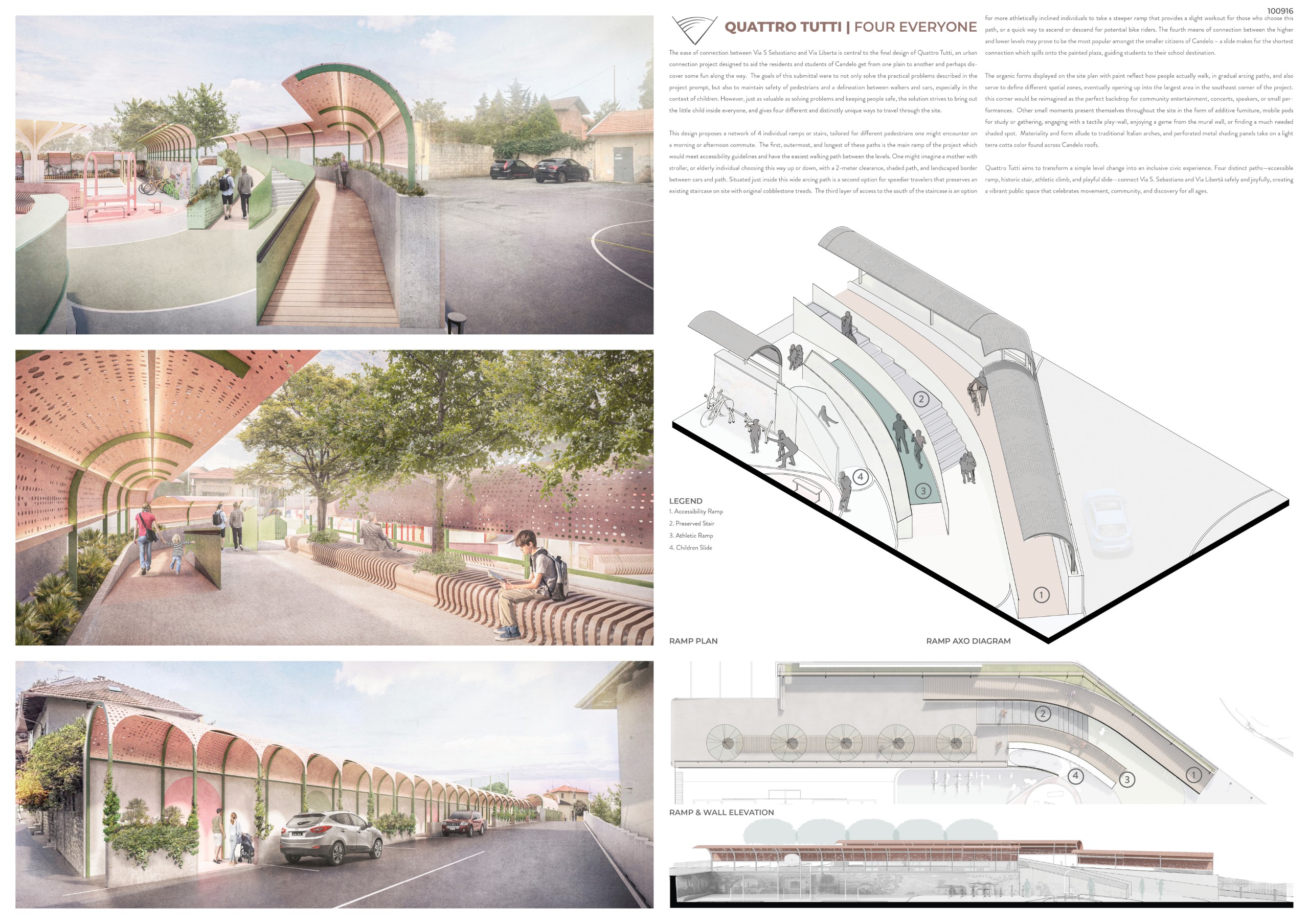
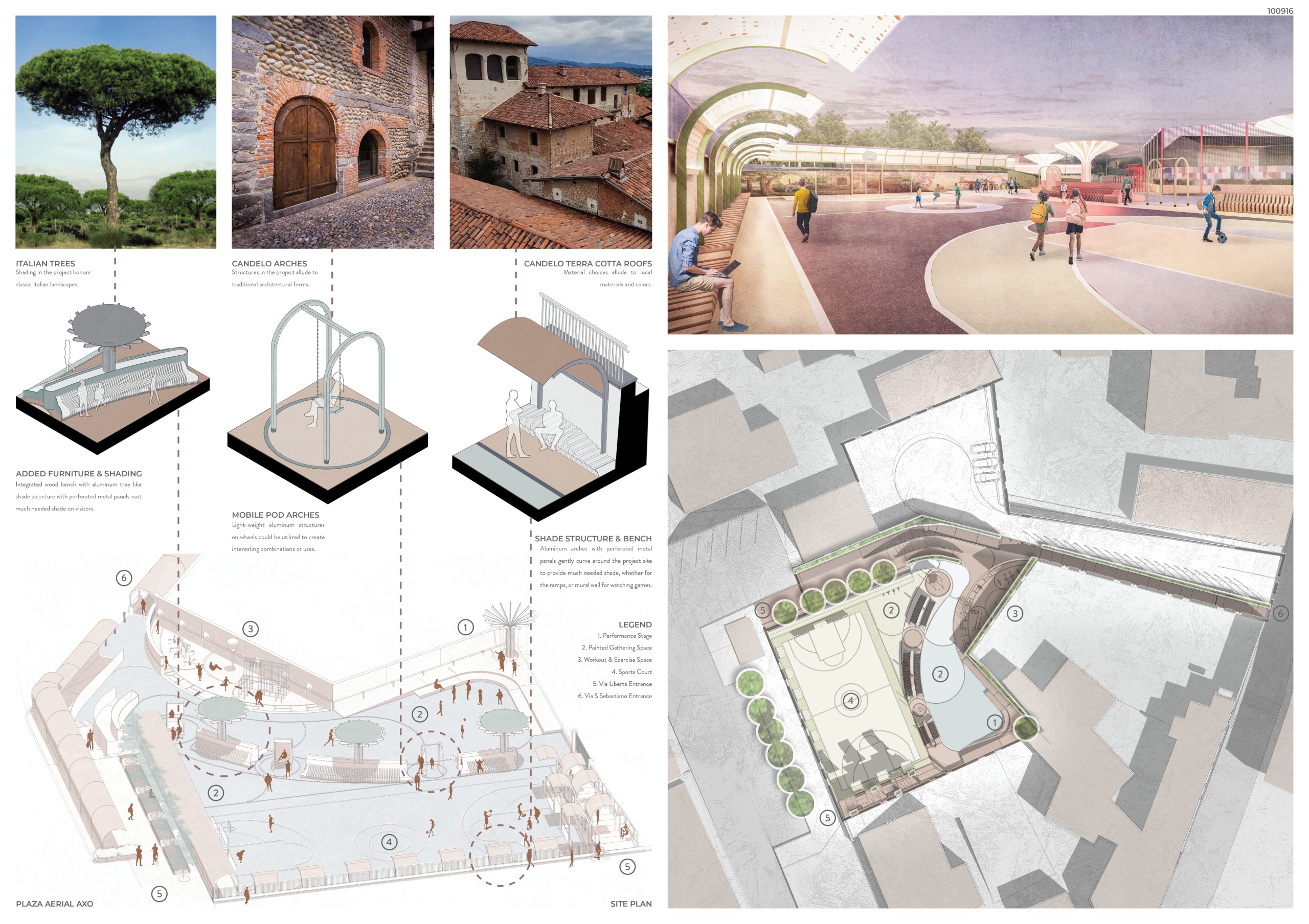
Quattro Tutti
Garrett DeLano, Renato Moita, Bradley Rodriguez, Eriberto Luna [United States] – www.arcthreestudio.com
The Landform Theater
XueLiang Dai [China]
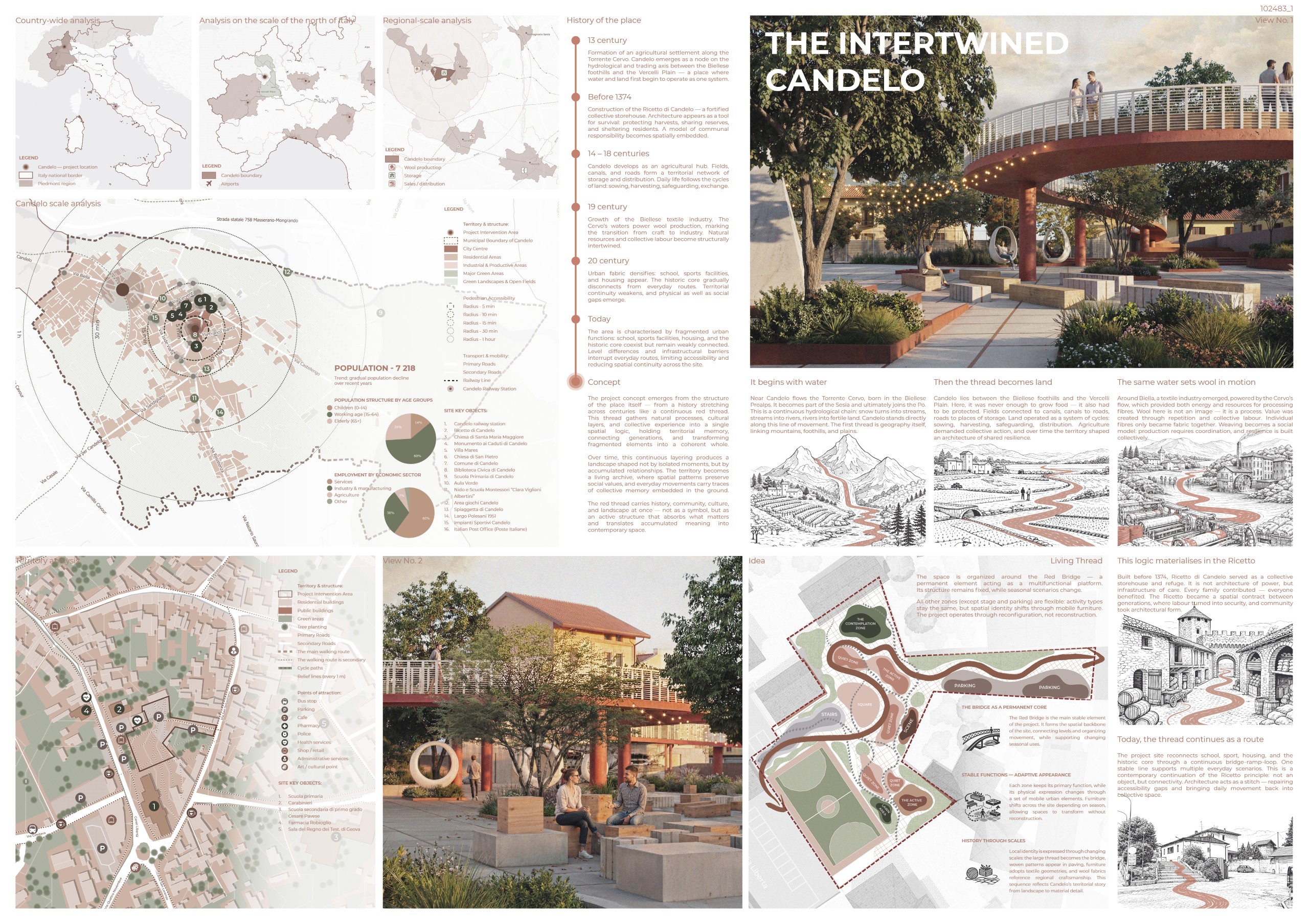
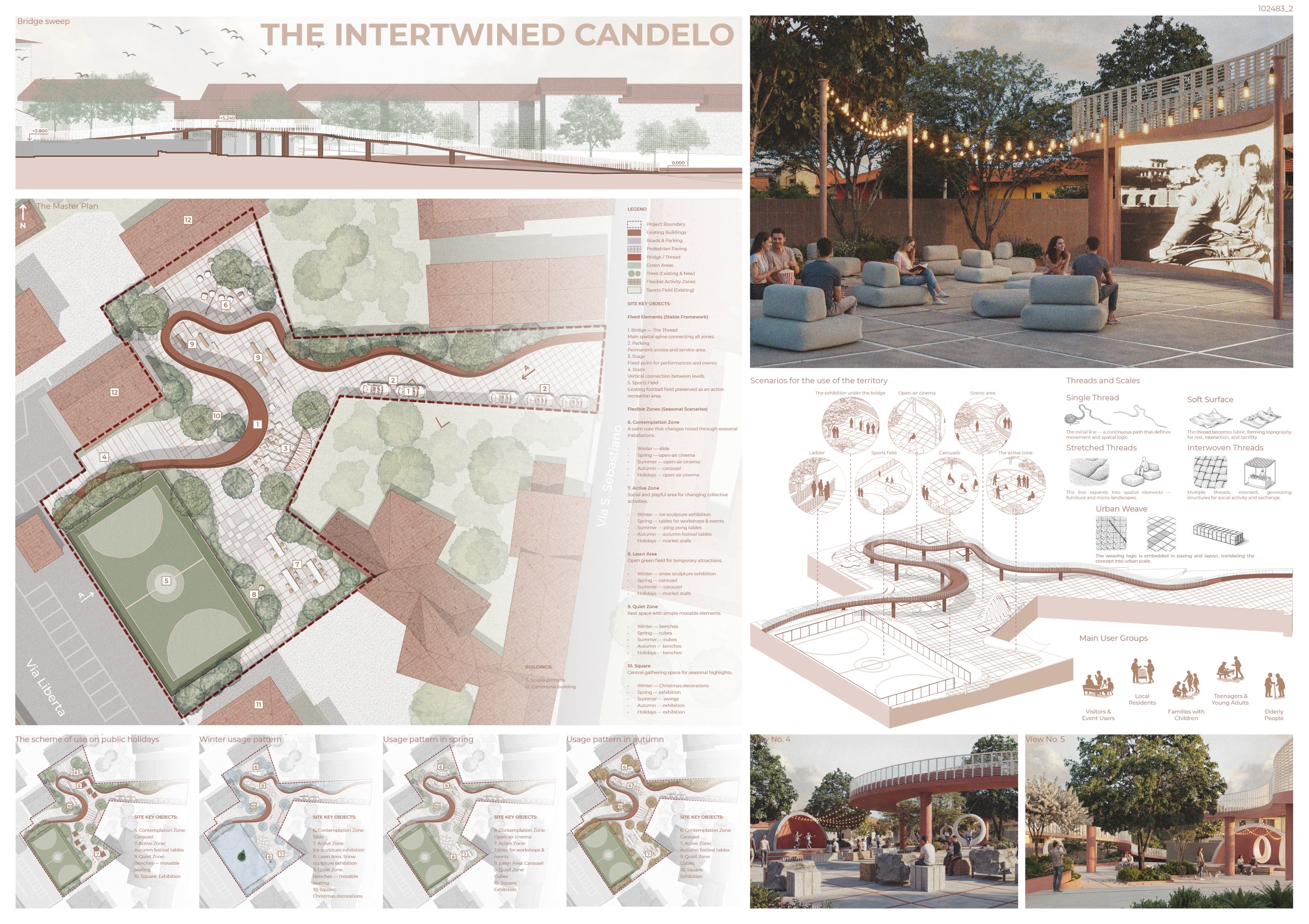
The Intertwined Candelo
Anton Khmelnitskiy, Daria Avkhimovich, Igor Avkhimovich [United Kingdom] – www.aistudio.co
Featured Projects
(ordered by request date)
While not all projects make it to the final stage, we believe many still deserve to be featured! That’s why we decided to create this special section to promote the most innovative designs and emerging talents from our global community.
Submit the request to publish your project on our website and Instagram accounts
Project Title
Team Name(s) [Country]
PROJECT DESCRIPTION
Your project description
The Memory Ways
Lorenzo Arena, Giulia Mini [Italy]
PROJECT DESCRIPTION
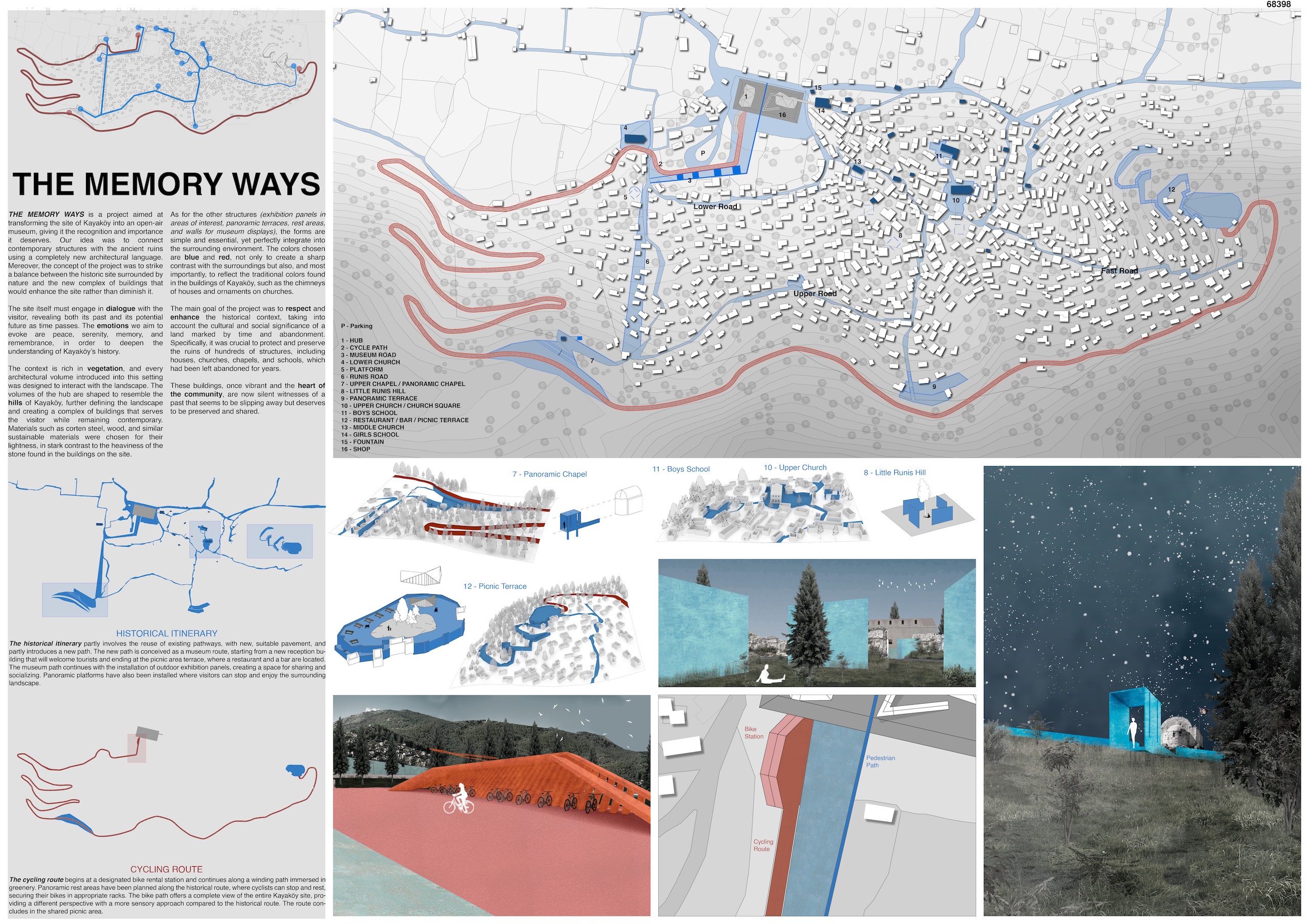
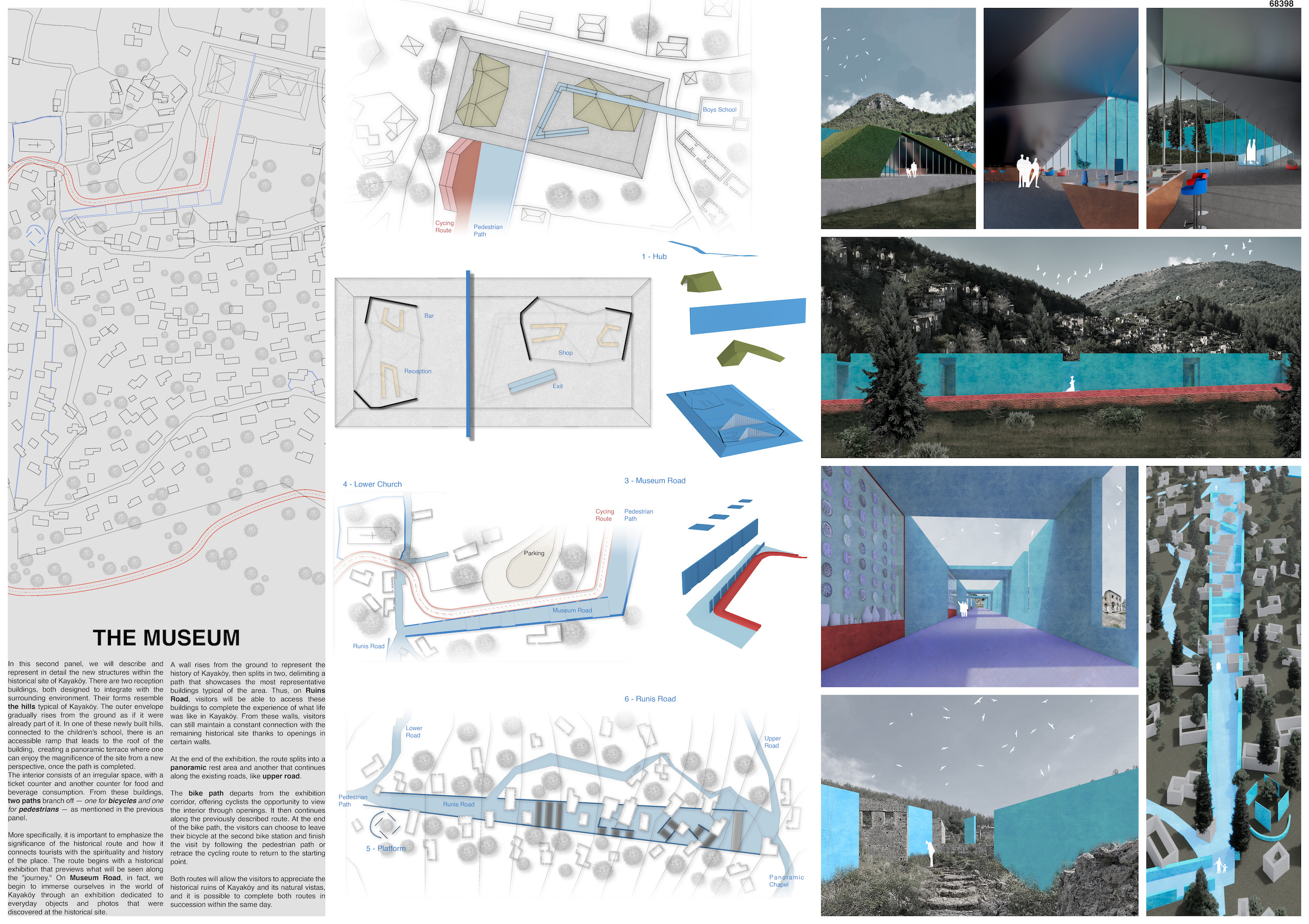
THE MEMORY WAYS is a project aimed at transforming the site of Kayaköy into an open-air museum, giving it the recognition and importance it deserves. Our idea was to connect contemporary structures with the ancient ruins using a completely new architectural language. Mereover, the concept of the project was to strike a balance between the historic site surrounded by nature and the new complex of buildings that would enhance the site rather than diminish it. The site itself must engage in dialogue with the visitor, revealing both its past and its potential future as time passes. The emotions we aim to evoke are peace, serenity, memory, and remembrance, in order to deepen the understanding of Kayaköy’s history.The context is rich in vegetation, and every architectural volume introduced into this setting was designed to interact with the landscape. The volumes of the hub are shaped to resemble the hills of Kayaköy, further defining the landscape and creating a complex of buildings that serves the visitor while remaining contemporary. Materials such as corten steel, wood, and similar sustainable materials were chosen for their lightness, in stark contrast to the heaviness of the stone found in the buildings on the site.
As for the other structures (exhibition panels in areas of interest, panoramic terraces, rest areas, and walls for museum displays), the forms are simple and essential, yet perfectly integrated into the surrounding environment. The colors chosen are blue and red, not only to create a sharp contrast with the surroundings but also, and most importantly, to reflect the traditional colors found in the buildings of Kayaköy, such as the chimneys of houses and ornaments on churches.The main goal of the project was to respect and enhance the historical context, taking into account the cultural and social significance of a land marked by time and abandonment. Specifically, it was crucial to protect and preserve the ruins of hundreds of structures, including houses, churches, chapels, and schools, which had been left abandoned for years. These buildings, once vibrant and the heart of the community, are now silent witnesses of a past that seems to be slipping away but deserves to be preserved and shared.